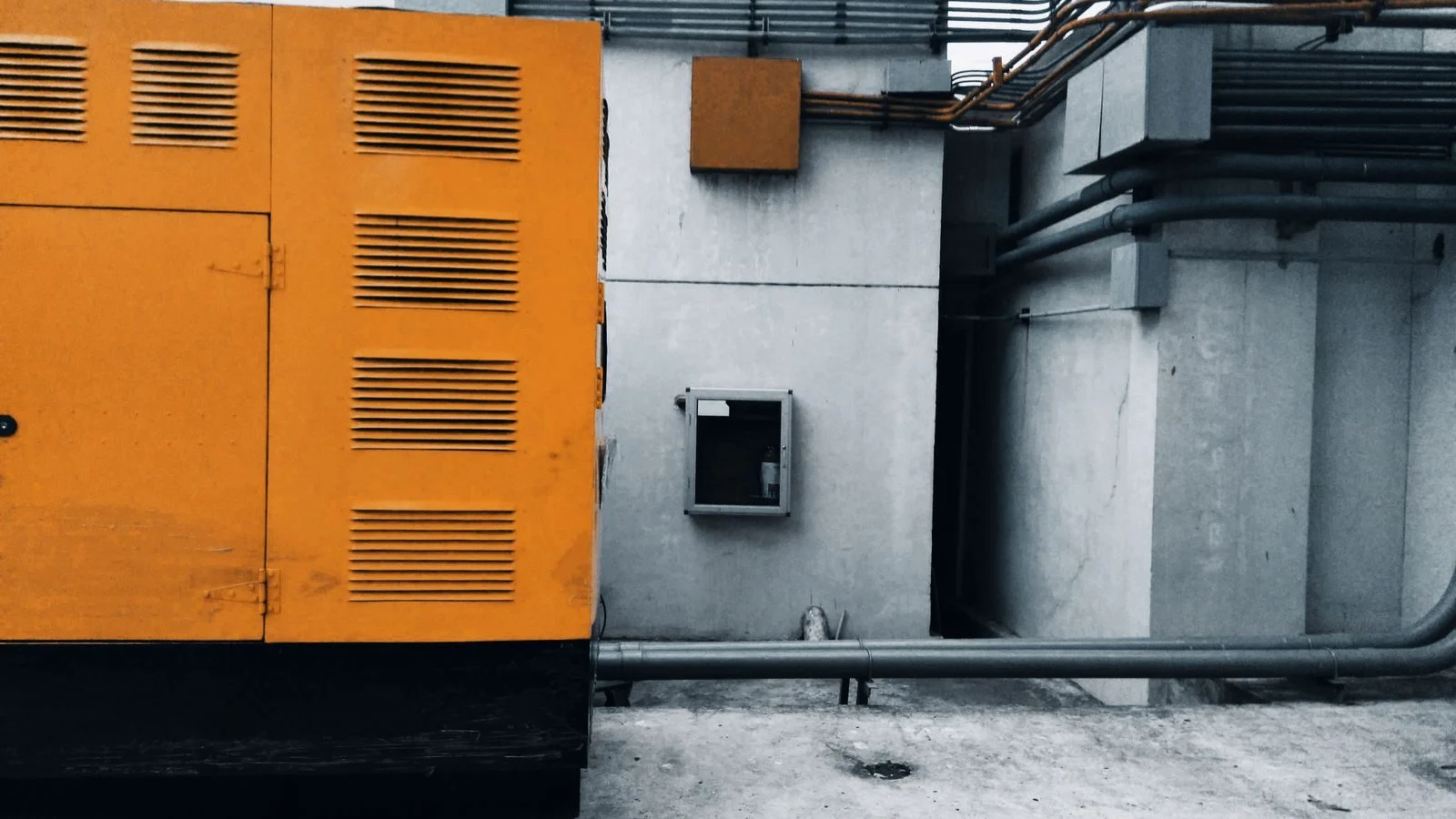
A whole-house generator, also called a standby generator, is a permanently installed machine that restores power automatically when the grid fails. It is the most convenient form of backup power and also the most expensive. This guide explains how the systems work and what you need to decide before asking for quotes.
Quick answer
A standby generator is sized in kilowatts (kW). Homes that only need essentials are usually served by 10 to 14 kW. Most homes with central air conditioning need 18 to 26 kW. Very large or all-electric homes move up to liquid-cooled units of 30 kW or more. The correct size comes from a load calculation, which your installer should carry out before quoting.
In this guide
How a standby generator works
A standby system has two main parts: the generator outside, and an automatic transfer switch next to your electrical panel.
- The transfer switch monitors utility power all the time.
- When power fails, it signals the generator to start, usually within a few seconds.
- Once the generator is up to speed, the switch disconnects the house from the grid and connects it to the generator.
- When utility power returns and is stable, the switch transfers the house back and the generator cools down and stops.
Because the switch physically separates the house from the grid, the generator can never send power back into utility lines. The whole sequence typically takes well under a minute, and it happens whether or not anyone is home.
What size do you need?
Installers size standby generators in one of two ways.
- Whole-house coverage: the generator is large enough to run everything, sized from a load calculation of the entire electrical service.
- Managed or essential-circuit coverage: a smaller generator runs selected circuits, or uses load-management modules that briefly hold off big appliances so they do not all start together.
| Generator size | Typically covers | Type |
|---|---|---|
| 10 to 14 kW | Essential circuits: refrigeration, heating, pumps, lights, one small air conditioner | Air-cooled |
| 18 to 26 kW | Most whole homes with gas heating and one or two central air units | Air-cooled |
| 30 to 60 kW | Large homes, all-electric homes, multiple air handlers | Liquid-cooled |
Air conditioning usually decides the size. A central air compressor needs a large surge of current to start. Fitting a soft-start device to the air conditioner, or choosing load management, often lets a smaller generator do the job. To get a feel for your own numbers before the installer visits, try our generator size calculator.
Natural gas or propane?
| Factor | Natural gas | Propane |
|---|---|---|
| Supply | Piped in, effectively unlimited | Stored in a tank on your property |
| Run time | As long as gas service continues | Limited by tank size |
| Power output | Slightly lower on most models | Slightly higher |
| What to check | Meter and pipe size can supply the generator | Tank is large enough for several days |
| Best where | A gas main is available | No gas service, or gas lines are vulnerable |
If you have natural gas, it is usually the simplest choice. Ask the gas utility to confirm that your meter can supply the generator along with your other appliances, because a larger meter is sometimes needed. With propane, tank size sets your run time. As a rough guide, a 20 to 24 kW air-cooled generator burns 2.5 to 4 gallons of propane an hour depending on load, so a 500-gallon tank, which holds about 400 gallons when full, lasts roughly four to seven days of continuous running. Check the fuel consumption table on the specification sheet of the model you are considering.
What installation involves
Installing a standby generator is not a do-it-yourself project. It involves electrical work at your service panel, gas plumbing and permits. A typical job includes:
- A site survey and load calculation to confirm the size and the location.
- Permits for the electrical and gas work, and sometimes approval from a homeowners association.
- A level base, either a concrete pad or a prefabricated composite one.
- Placement that meets the clearances in the installation manual and local code. Generators must be kept away from windows, doors, vents and anything that can burn, because of exhaust and heat.
- The transfer switch installed next to the main panel.
- The gas connection, sized for the generator’s demand at full load.
- Commissioning and inspection, including a simulated outage.
Ask each installer whether the quote covers all of these, including permits and the gas work, and who will service the unit afterwards.
Maintenance and running
Standby generators look after themselves better than portable ones, but they are still engines.
- Exercise cycle: the generator starts itself for a few minutes every week or two to stay ready. Schedule it for a time that will not annoy you or the neighbors.
- Annual service: oil and filter change, air filter, spark plugs, battery test and a general inspection. Many owners use a service contract.
- During long outages: check the oil level daily. Air-cooled engines can use oil when run for days, and most manuals call for an oil change after a set number of running hours.
- Keep it clear: remove snow, leaves and plant growth from around the enclosure so it can breathe.
What it costs
We do not quote prices because they vary by region and change often. Expect installation to add substantially to the price of the generator itself. The pad, the transfer switch, electrical labor, gas plumbing and permits are all part of the job, and a long gas or electrical run adds more. Get at least two written quotes, compare what each includes, and ask about the warranty and who honors it locally.
Pros
- Starts automatically, even when you are away
- Runs for days without refueling on natural gas
- Can power the whole house, including central air
- Quieter and better protected than a portable unit
Cons
- Costs several times more than a portable setup
- Needs professional installation, permits and yearly service
- Depends on gas service or a large propane tank
- Not practical for renters or most apartments
Alternatives worth considering
If a standby system is more than you need, a large portable generator connected through a manual transfer switch or interlock covers the essentials for far less. You give up automatic starting and unlimited run time. Our comparison of portable vs standby generators sets out the trade-offs, and generators for home use covers the whole decision.
Frequently asked questions
How long can a whole-house generator run?
On natural gas, a standby generator can run for as long as the gas supply continues, with pauses to check and change the oil as the manual requires. On propane, run time depends on the size of the tank and how much load the generator is carrying.
How loud is a standby generator?
Most air-cooled home standby generators are rated in the mid to high 60s of decibels at 23 feet under normal load, roughly the level of a central air conditioner. They are noticeably quieter than an open-frame portable generator.
Can I install a standby generator myself?
It is not recommended, and in many places it is not permitted. The work involves your main electrical service, gas piping and code inspections, and manufacturer warranties often require installation by an authorized or licensed installer.
Do standby generators work in winter?
Yes. In cold climates installers fit a cold-weather kit, which usually includes a battery warmer and an oil heater, so the engine starts reliably. Keep snow cleared from the air intakes and exhaust.