There is no single best portable generator. A 45-pound inverter that is perfect for a campsite cannot start a well pump, and a 200-pound open-frame unit that keeps a house running is the wrong thing to take tailgating. The best choice is the smallest, quietest generator that comfortably covers what you need to power.
Quick answer
For most homes, a 5,000 to 7,500 running-watt portable generator with a 240 V outlet, electric start and a carbon monoxide shutoff covers the essentials: refrigerator, furnace blower, sump or well pump, lights and electronics. For camping and RVs, choose an inverter generator of 2,000 to 4,500 watts instead. It is far quieter and safer for electronics.
In this guide
The main types of portable generator
Almost every portable generator falls into one of four groups. Knowing which group fits your use narrows the choice more than any brand name will.
| Type | Typical running watts | Best for | Main trade-off |
|---|---|---|---|
| Small inverter | 1,600 to 2,500 | Camping, tailgating, a few essentials | Limited output, 120 V only |
| Mid-size inverter | 3,000 to 5,000 | RVs, quiet home backup for essentials | Higher price per watt |
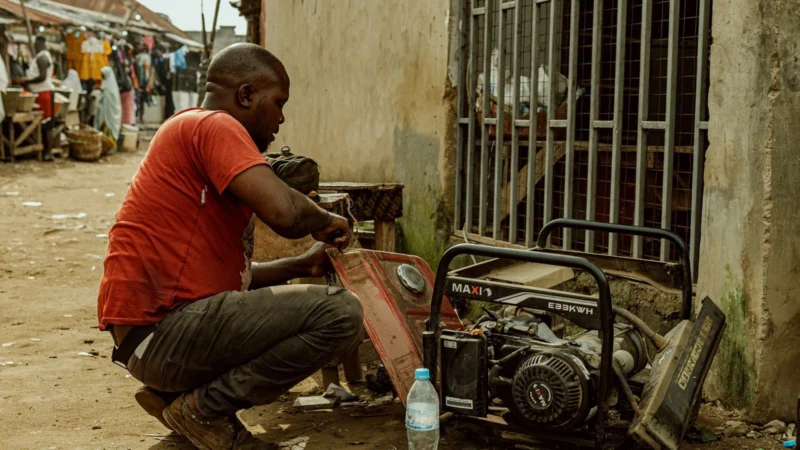
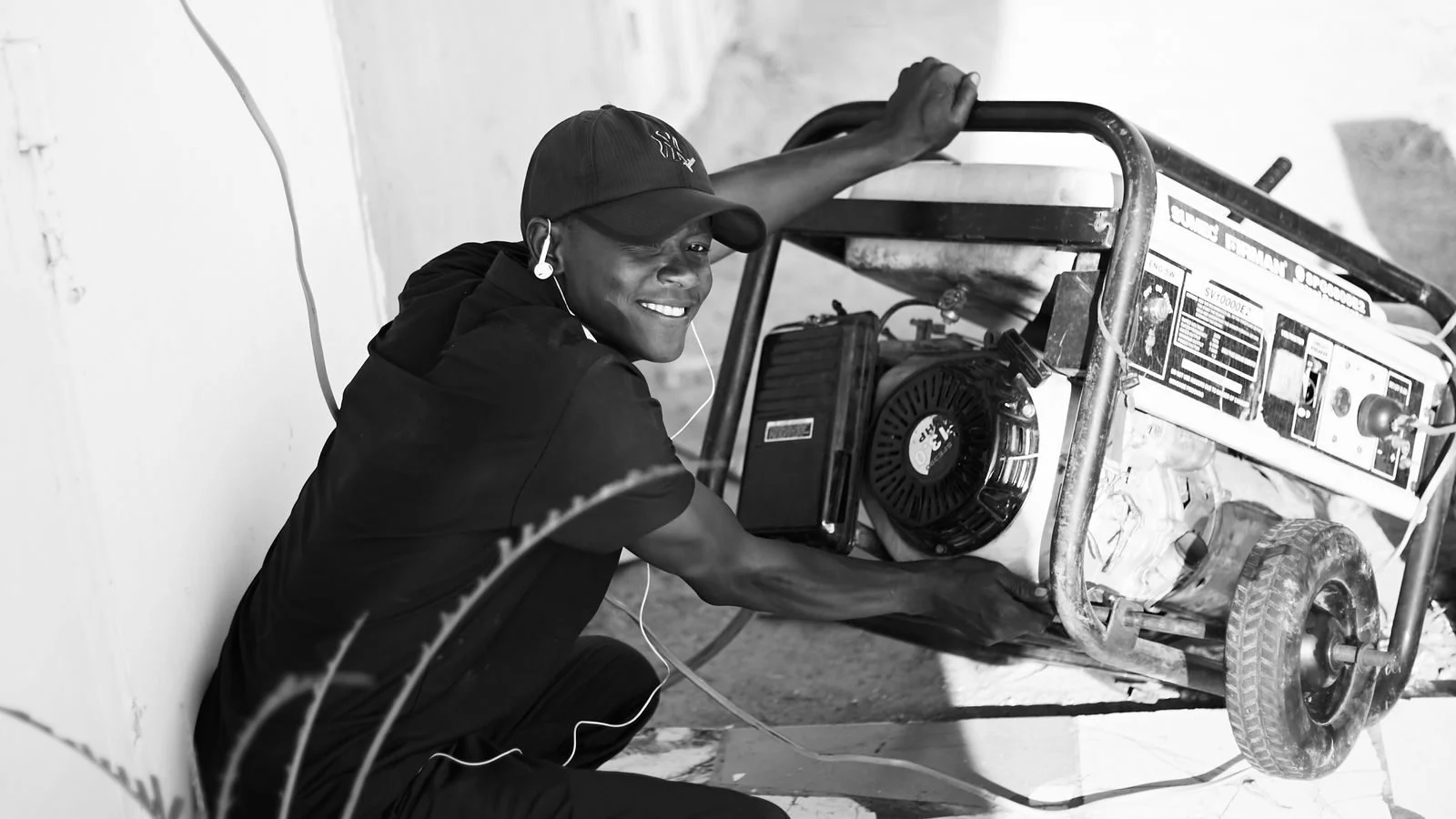
| Open-frame portable | 4,000 to 9,500 | Home backup, job sites | Loud and heavy |
| Large open-frame | 10,000 to 15,000 | Larger homes, 50 A transfer switches | Very heavy, thirsty at light loads |
Inverter generators produce power electronically, so the engine can slow down when demand is low. That makes them quieter and more fuel-efficient, with clean power for electronics. Open-frame (conventional) generators run at a constant 3,600 rpm and give you the most watts for the money. Our inverter vs conventional comparison covers the differences in detail.
Which class of generator suits you?
These are classes of generator rather than individual models. Product lines change every year, so use the features listed here as your checklist when you compare what is currently on sale.
Small inverter generator (about 2,000 to 2,500 W)
Best for: Campsites, tailgating, charging and a refrigerator in an outage
- Running watts
- 1,600 to 2,000
- Weight
- About 40 to 55 lb
- Outlets
- 120 V household, USB
- Noise
- Roughly 50 to 60 dB(A)
What we like
- Light enough to carry in one hand
- Quiet enough for most campgrounds
- Sips fuel at light loads
- Two can often be linked for more power
What to consider
- Will not run 240 V appliances
- Cannot start most well pumps or central air
Our take: The easiest generator to own. If your needs are modest, start here.
Mid-size inverter generator (about 3,000 to 4,500 W)
Best for: RV air conditioners, quiet backup for home essentials
- Running watts
- 3,000 to 4,500
- Weight
- About 80 to 130 lb
- Outlets
- 120 V household plus a 30 A RV outlet
- Starting
- Often electric or remote
What we like
- Runs a 13,500 BTU RV air conditioner
- Much quieter than an open-frame unit
- Many models run on gasoline or propane
What to consider
- Heavy enough to need wheels
- Costs more than an open-frame generator of the same output
Our take: The sweet spot for RV owners and for households that value quiet.
Open-frame portable generator (about 5,000 to 7,500 W)
Best for: Refrigerator, furnace, sump or well pump, lights and electronics
- Running watts
- 5,000 to 7,500
- Weight
- About 120 to 200 lb
- Outlets
- 120 V household plus a 120/240 V 30 A twist-lock
- Starting
- Recoil or electric
What we like
- Covers the essentials in most homes
- 240 V output for a well pump or transfer switch
- Lowest cost per watt
What to consider
- Loud: typically 70 dB(A) or more
- Needs two people or a wheel kit to move
- Power is less clean unless the maker states low distortion
Our take: The class most households should look at first for outage backup.
Large open-frame generator (about 9,000 to 12,000 W)
Best for: Larger homes, electric water heaters, several big appliances at once
- Running watts
- 9,000 to 12,000
- Weight
- About 200 to 300 lb
- Outlets
- 120/240 V 50 A plus 30 A
- Starting
- Electric, often remote
What we like
- Can feed a 50 A inlet and transfer switch
- Handles large motor starting loads
- Often available in dual- or tri-fuel versions
What to consider
- Uses a lot of fuel even at light loads
- Too heavy to lift into a vehicle
- Still cannot match a standby generator for convenience
Our take: Worth it only if a mid-size unit truly cannot cover your loads.
Dual-fuel portable generator
Best for: Households that would rather store propane than gasoline
- Fuels
- Gasoline or propane
- Output on propane
- Roughly 10 percent lower
- Sizes
- From 2,500 W inverters to 12,000 W open-frame
What we like
- Propane keeps for years without going stale
- A second fuel option when gas stations are closed
- Cleaner running means less carburetor trouble
What to consider
- Slightly less power on propane
- Propane cylinders take up space
Our take: A sensible upgrade for emergency use, where the generator may sit for months.
Features that matter
Running watts and starting watts
Every generator has two ratings. Running (rated) watts is what it can supply continuously. Starting (peak or surge) watts is the short burst available to get motors turning. Size the generator on running watts, then check that the starting rating covers your largest motor. Our guide to what size generator you need walks through the arithmetic.
Outlets
- 120 V household outlets (5-20R): for extension cords and small loads.
- TT-30R: the 120 V, 30 A outlet used by most RVs.
- L14-30R: a 120/240 V, 30 A twist-lock that can feed a transfer switch with up to 7,200 watts.
- 14-50R: a 120/240 V, 50 A outlet for larger transfer switches, up to 12,000 watts.
If you plan to power house circuits, choose the outlet first. It decides which inlet box and cord you need. See how to connect a generator to your house safely.
Carbon monoxide shutoff
Many current generators have a sensor that stops the engine when carbon monoxide builds up around it. The U.S. Consumer Product Safety Commission advises looking for models certified to the PGMA G300 or UL 2201 safety standards. The sensor is a backup, not permission to run a generator indoors or in a garage.
Noise
Manufacturers usually quote noise in decibels measured about 23 feet (7 meters) away, often at a quarter of full load, so compare like with like. Small inverters are typically in the 50s, open-frame generators in the 70s. A difference of 10 dB sounds roughly twice as loud.
Other features worth having
- Electric start if anyone in the household would struggle with a pull cord.
- Low-oil shutdown, which is standard on most models and saves engines.
- Fuel gauge and hour meter to plan refueling and maintenance.
- Wheel kit and folding handles on anything over about 100 pounds.
- GFCI outlets for job-site and outdoor use.
- A dealer or service network near you, and a clear warranty.
Safety essentials
Keep the generator dry, let it cool before refueling, and never plug it into a wall outlet. Our generator safety guide covers each of these in detail.
Frequently asked questions
What size portable generator do I need to run a house?
Most households cover their essentials with 5,000 to 7,500 running watts. That is enough for a refrigerator, a gas furnace blower, a sump or well pump, lights and electronics, as long as you do not start everything at once. Central air conditioning and electric heating usually need a much larger unit or a standby generator.
Is an inverter generator worth the extra money?
If you will use it for camping, RVs or regular light use, yes. An inverter is quieter, lighter and uses less fuel at part load. For occasional emergency backup of large loads, an open-frame generator gives more power for the money.
Can a portable generator run sensitive electronics?
Inverter generators produce clean power that is suitable for electronics. Conventional generators vary. If you plan to run computers or modern appliances with electronic controls, look for a stated total harmonic distortion below 5 percent, or use an inverter model.
How long can a portable generator run continuously?
Until it needs fuel or its next oil check. Most run 8 to 12 hours on a tank at half load. Stop the engine and let it cool before refueling, check the oil every time, and follow the oil change interval in the manual during long outages.
Do I need a transfer switch?
Only if you want to power circuits in your house wiring, such as a furnace or well pump. A transfer switch or interlock installed by a licensed electrician is the safe, legal way to do that. If you only run a few appliances on extension cords, you do not need one.
Related guides