The single-cylinder gasoline engines on mowers, pressure washers, generators, tillers and pumps are simple, and they fail for simple reasons: old oil, a choked air filter, a worn plug and, above all, stale fuel. The schedule below reflects what the major engine makers recommend. Hours matter more than the calendar, so an hour meter is a worthwhile addition to any engine you use regularly.
Quick answer
Before each use, check the oil and look the machine over. Change the oil after the first 5 to 20 hours on a new engine, then every 50 to 100 hours or once a season. Clean the air filter every 25 to 50 hours and replace it yearly. Check the spark plug each season and replace it every one to three years. Use fresh fuel with stabilizer, and prepare the fuel system before storage.
In this guide
The schedule
| When | What to do |
|---|---|
| Before each use | Check oil level. Look for leaks, loose fasteners, damaged cords or guards. Make sure the air filter is clean and the cooling fins are clear. |
| First 5 to 20 hours (new engine) | Change the oil to flush out break-in debris. |
| Every 25 to 50 hours | Clean the foam pre-cleaner or paper element; more often in dust. |
| Every 50 to 100 hours, or each season | Change the oil. Check the spark plug. Clean debris from cooling fins, muffler and controls. |
| Every 100 hours, or yearly | Replace the air filter. Replace the fuel filter if fitted. Clean the spark arrestor. Sharpen mower blades. |
| Every 200 to 300 hours | Replace the spark plug. Have valve clearance checked. |
| Before storage of 30 days or more | Stabilize the fuel or drain the tank and carburetor; change oil if due; clean and cover. |
Engine oil
Most small engines hold between 15 and 48 ounces of oil, have no oil filter, and run hot. The oil does all the work of cooling and cleaning, and it wears out fast.
- Warm the engine for a couple of minutes so the oil flows, then shut it off and disconnect the spark plug lead.
- Drain through the drain plug, or tip the engine toward the filler neck on engines without one, keeping the air filter and carburetor uppermost.
- Refill slowly with the oil in the manual. SAE 30 is traditional for warm weather on many engines; 10W-30 or synthetic 5W-30 cover a wider range. Check the dipstick the way the manual describes, screwed in or not.
- Do not overfill. Too much oil fouls the plug and smokes.
Recycle used oil at an auto parts store or municipal site.
Air filter
A dirty filter is the quickest way to foul a plug and waste fuel. Foam elements are washed in warm soapy water, squeezed dry and lightly oiled if the manual calls for it. Paper elements are tapped clean and replaced when they look dirty against the light; do not wash them or blow them out with high-pressure air. In dusty conditions, check the filter every few hours of use.
Spark plug
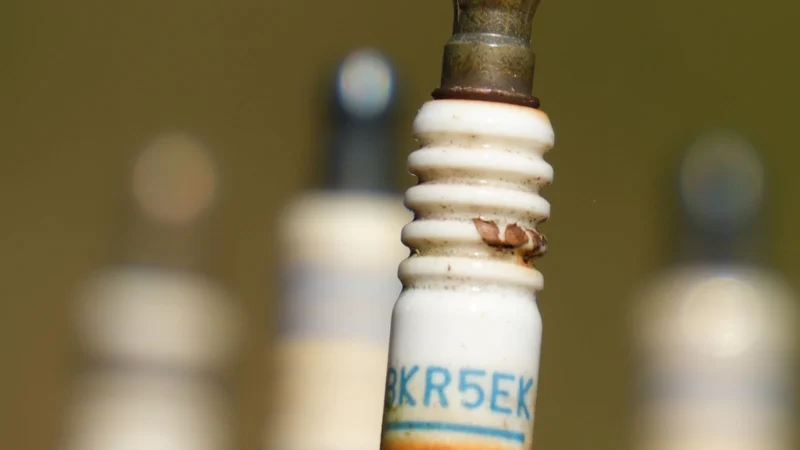
Remove the plug once a season. A light tan color means all is well. Black soot suggests a rich mixture, a dirty filter or too much choke. Oily deposits suggest overfilled oil or worn rings. Clean the electrode with a wire brush, check the gap against the manual (often 0.028 to 0.030 inches) and replace it if the electrodes are rounded. A new plug every couple of seasons is one of the cheapest things you can do for an engine.
Fuel
Gasoline starts to degrade within weeks, and the ethanol in most pump fuel attracts water. Buy fuel in small quantities, add stabilizer to the can when you fill it, and run the engine dry or stabilize the fuel before any long break. For the details, see how long gasoline lasts. If an engine surges or only runs on choke, the carburetor is already gummed; see small engine won’t start for the fix.
Cooling fins, muffler and controls
Air-cooled engines overheat when grass, dust and oil residue coat the cooling fins under the shroud. Clean them each season with a brush and compressed air. Check that the muffler is tight, clean the spark arrestor screen if fitted, and make sure throttle and choke cables move freely and return.
Equipment-specific items
- Mowers: sharpen and balance the blade yearly, check the blade bolt torque, grease wheel bearings and clean the deck underside.
- Pressure washers: change the pump oil if the pump has a sight glass, clean the inlet screen, and use pump antifreeze before winter storage.
- Generators: run under load monthly and keep the battery charged. The generator maintenance checklist has the full routine.
- Pumps: flush the pump with clean water after each use and check the seals for leaks.
Storage
- Either add stabilizer to a nearly full tank and run the engine for several minutes, or drain the tank and run the carburetor dry.
- Change the oil if it is near due. Used oil contains acids that attack bearings over the winter.
- Clean the whole machine. Debris holds moisture and attracts rodents.
- Store in a dry place away from furnaces, water heaters and anything with a pilot light.
See small engine tune-up kits on Amazon
Frequently asked questions
How often should I change the oil in a lawn mower?
Every 50 hours or once a season, whichever comes first, and after the first 5 hours or so on a new engine. Mowers used commercially or in dusty, hot conditions should be changed more often.
Can I use car oil in a small engine?
Usually yes, if it meets the specification and viscosity in the engine manual. Many small-engine makers recommend standard automotive detergent oils, with synthetic oil acceptable. Do not use two-stroke oil in a four-stroke engine or vice versa.
Why does my small engine need a new spark plug so often?
It does not need one often; one every two or three seasons is typical. Plugs fail early when the air filter is dirty, the oil is overfilled or the fuel is stale, so a plug that fouls repeatedly is a symptom of something else.