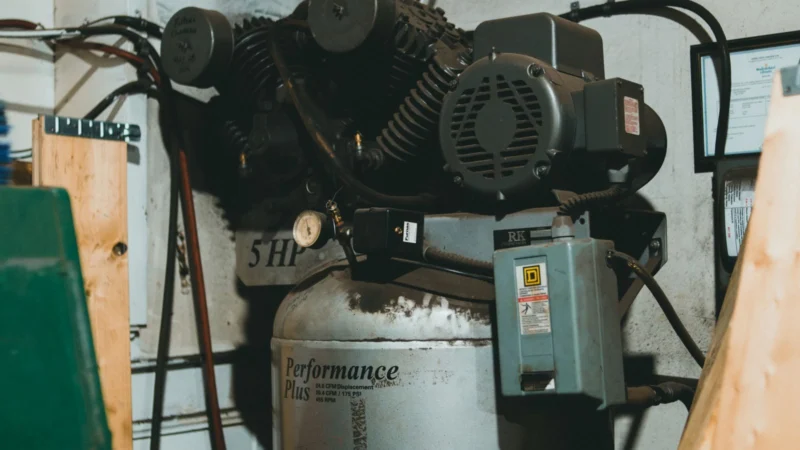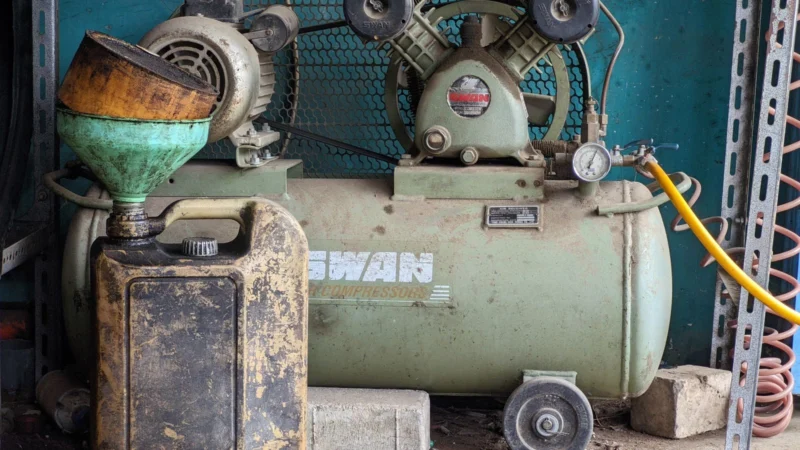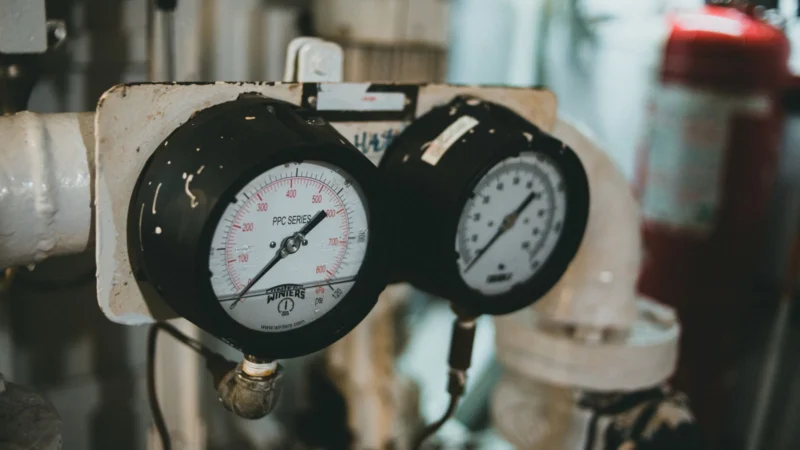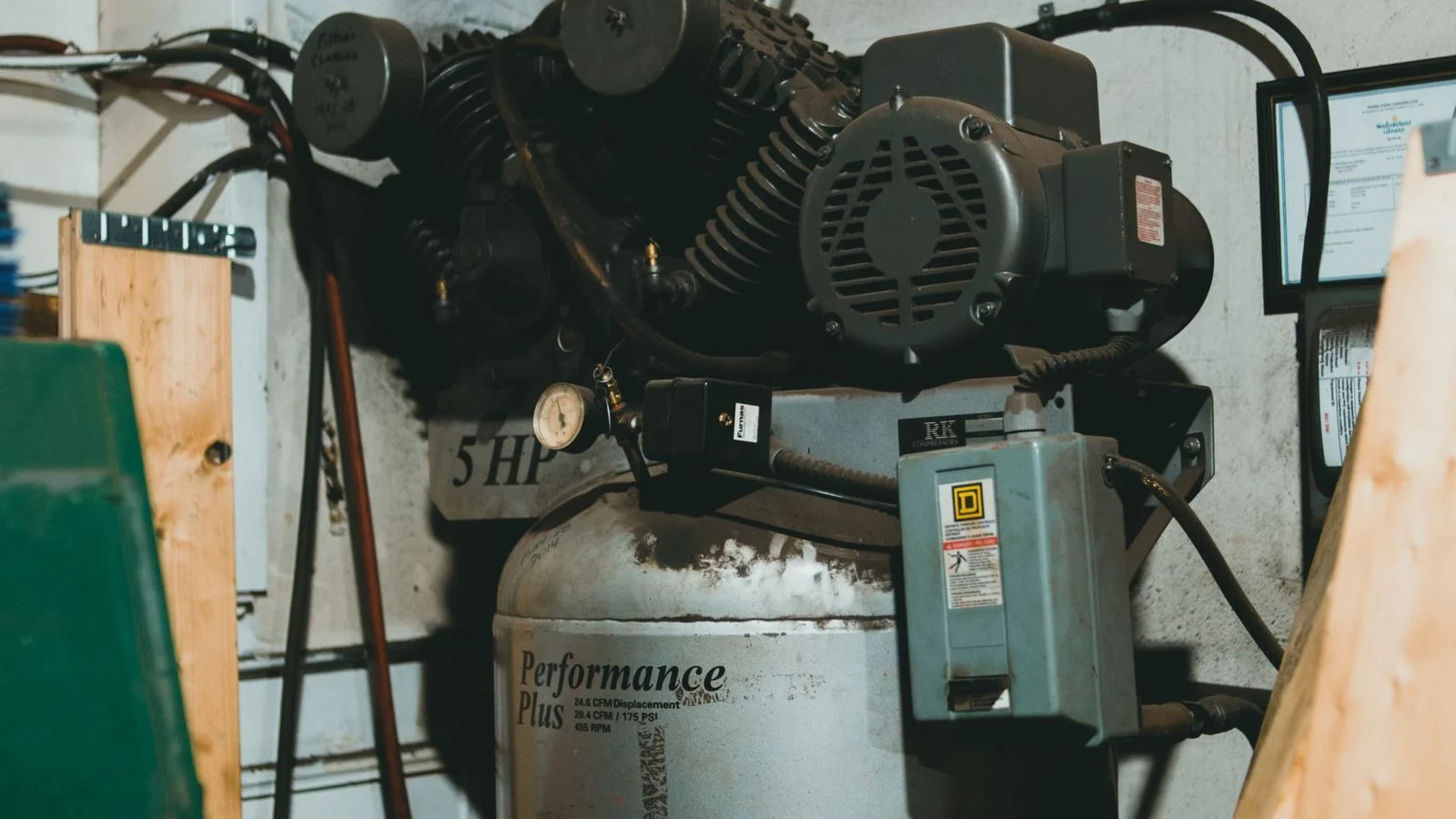
The pump on top of a compressor tank does the real work, and pumps come in two basic designs. A single-stage pump compresses air to its final pressure in one stroke. A two-stage pump compresses it part way, cools it, then compresses it again. That second step is what separates a home-garage compressor from one that can run a body shop.
Quick answer
A single-stage compressor is the right choice for a home garage or light trade use: intermittent tools, pressures up to about 135 to 155 PSI, and a lower price. A two-stage compressor is the right choice when tools run continuously, when you need 175 PSI, or when the compressor will work for hours at a time, as in a professional shop. Do not confuse two-stage with twin-cylinder; many single-stage pumps have two cylinders.
In this guide
How each pump works
In a single-stage pump, each cylinder draws in air at atmospheric pressure and compresses it in one stroke straight into the tank, typically to a maximum of 125 to 155 PSI. If the pump has two cylinders, they work in parallel, both doing the same job.
In a two-stage pump, a large first-stage cylinder compresses the air to an intermediate pressure, roughly 90 PSI. The air then passes through an intercooler tube, where it cools and shrinks, and into a smaller second-stage cylinder that compresses it to the final pressure, usually 175 PSI. Compressing air in two steps with cooling in between takes less energy and generates less heat, which is why two-stage pumps deliver more air per horsepower and last longer under continuous use.
| Factor | Single-stage | Two-stage |
|---|---|---|
| Maximum pressure | About 125 to 155 PSI | About 175 PSI |
| Typical delivered air | Up to about 14 CFM at 90 PSI | 14 to 30 CFM and more at 90 PSI |
| Efficiency | Lower; air leaves the cylinder very hot | Higher; intercooling reduces work and heat |
| Duty cycle | Often 50 to 75 percent | Often rated for continuous or near-continuous duty |
| Tank sizes | 2 to 80 gallons | 60 gallons and up |
| Power supply | 120 V up to about 2 HP; 240 V above | 240 V single-phase or three-phase |
| Price | Lower | Higher |
| Best for | Nailers, impact wrenches, ratchets, inflation, occasional grinding | Sanders, grinders, spray guns, blasting, multiple users, all-day use |
Pressure: do you actually need 175 PSI?
Almost no hand tool needs more than 90 PSI at the tool. The value of a 175 PSI tank is storage: at higher pressure the same tank holds more usable air, so the pump cycles less often and a burst tool can draw longer before the pressure drops below the regulator setting. For continuous tools, the higher pressure is a side benefit; the real reason to go two-stage is airflow and duty cycle.
Heat and duty cycle
Compressing air makes heat, and heat is what wears out a compressor pump and breaks down its oil. A single-stage pump pushing air to 150 PSI in one stroke runs hot, which is why most are rated for intermittent duty. A two-stage pump sheds much of that heat in the intercooler and runs cooler, so it can work for long periods without damage. If you have ever watched a single-stage compressor run non-stop behind a sander, that is the problem a two-stage pump solves.
Cost and practicality
Two-stage compressors cost more, weigh more, need a 240 V circuit and a permanent home. For a home mechanic running an impact wrench, a ratchet and a blow gun, that is money and space spent on capacity that is never used. A 20 to 30 gallon single-stage unit on wheels, or a 60 gallon single-stage for a serious home shop, covers most people. Our CFM sizing guide shows how to match the compressor to your tools, and our 60-gallon compressor guide compares the two designs at that size.
Oil-lubricated or oil-free?
A separate question, often confused with stages. Oil-free pumps use coated pistons and need no oil changes; they are lighter and cheaper but louder and shorter-lived. Oil-lubricated pumps, which include nearly all two-stage pumps, run quieter and cooler and last longer, at the cost of regular oil changes and a little oil mist in the air that a filter removes. For a stationary shop compressor, oil-lubricated is the usual choice.
Which should you buy?
| Your situation | Choose |
|---|---|
| Nailers, inflation and a blow gun | Small single-stage, 2 to 8 gallons |
| Home garage: impact wrench, ratchet, occasional grinder | Single-stage, 20 to 30 gallons, 5 to 7 CFM at 90 PSI |
| Serious home shop with a sander or spray gun used now and then | Single-stage 60 gallon, or two-stage if the budget allows |
| Professional shop, bodywork, blasting, multiple users | Two-stage, 60 to 80 gallons or larger, 15 CFM or more at 90 PSI |
See two-stage compressors on Amazon
See single-stage compressors on Amazon
Frequently asked questions
Is a two-cylinder compressor the same as two-stage?
No. Many single-stage pumps have two cylinders of the same size working in parallel. A two-stage pump has cylinders of different sizes working in series, with an intercooler between them. Look for the different-sized cylinders and the finned intercooler tube.
Can a single-stage compressor run a sander?
Briefly. A large single-stage unit with a 60 gallon tank can run a dual-action sander for a few minutes before the pump falls behind, which is fine for occasional use. For regular bodywork, a two-stage compressor is the practical answer.
Do two-stage compressors last longer?
Generally yes. They run cooler and are built for continuous duty with cast-iron cylinders and heavier bearings. With regular oil changes and a drained tank, a two-stage pump is commonly expected to outlast several consumer single-stage units.