An air compressor has only a handful of enemies: water in the tank, dirty oil, a blocked intake and heat. All four are cheap to deal with and expensive to ignore. The routine below applies to piston compressors from a small pancake unit to a two-stage shop machine; oil-free models skip the oil items but need everything else.
Quick answer
Drain the tank after every use. Check the oil level weekly on oil-lubricated pumps and change the oil every 3 months or at the interval in the manual. Clean or replace the intake filter monthly, check belt tension and listen for leaks, and pull the safety valve ring every few months to prove it works. Never weld, patch or modify a tank; a tank that is rusting through is replaced.
In this guide
The schedule
| When | What to do |
|---|---|
| After each use | Drain water from the tank. Switch off and release pressure if the compressor will sit. |
| Weekly | Check pump oil level. Look and listen for leaks at fittings and hoses. Wipe dust off the pump and motor. |
| Monthly | Clean or replace the intake filter. Check belt tension and condition. Test the safety relief valve. Check the drain valve works freely. |
| Every 3 months, or 100 to 300 hours | Change the pump oil (first change sooner on a new pump; see manual). Check pressure switch cut-in and cut-out. Tighten fasteners. |
| Yearly | Inspect the tank inside and out for rust and pitting. Replace the intake filter element. Check the check valve and unloader. Inspect wiring and the motor cooling fan. |
| Before winter | Drain the tank thoroughly and consider a lighter oil if the manual allows. |
Draining the tank
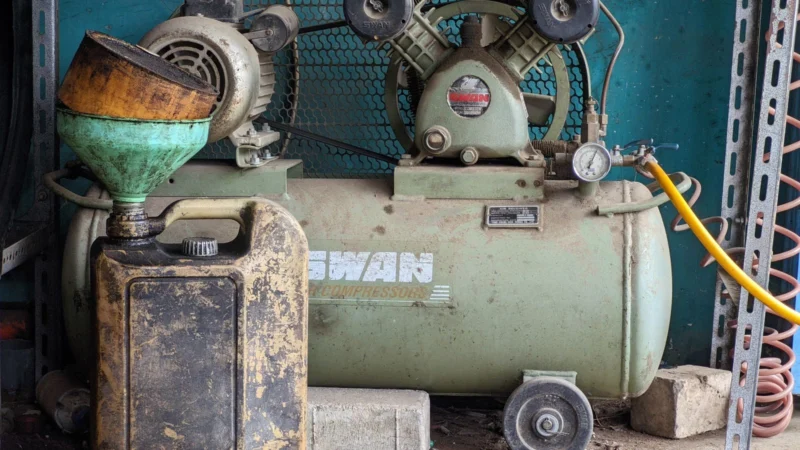
Compressing air squeezes water vapor out of it, and that water collects in the bottom of the tank. Left there, it rusts the tank from the inside, which eventually makes the tank unsafe, and it passes along the hose into your tools and paint. Open the drain valve at the bottom of the tank after every session, with a little pressure in the tank to push the water out, until it blows dry. If the valve is awkward to reach, fit an extension or an automatic drain, because a drain that is hard to use does not get used.
Oil
Oil-lubricated pumps run hot, and their oil breaks down faster than engine oil. Check the sight glass or dipstick weekly with the compressor off and level, and keep the level in the middle of the glass. Change it at the interval in the manual, commonly every three months or every 100 to 300 hours depending on the oil, and sooner on a new pump to flush break-in debris. Use compressor oil of the viscosity the maker specifies, not motor oil, unless the manual says otherwise; detergent motor oils can foam and carry over into the air. Synthetic compressor oils run cooler and last longer.
Intake filter
Everything the pump breathes goes through this filter, and a shop is a dusty place. A blocked filter cuts airflow, makes the pump run hotter and longer, and lets grit past to the cylinder. Tap out or wash foam elements monthly, replace paper elements when dirty, and keep the compressor out of the sanding and blasting zone.
Belts
On belt-driven units, press the belt midway between the pulleys. About half an inch of deflection is typical; check the manual. A loose belt slips, squeals and wears; an over-tight belt loads the bearings. Replace cracked or glazed belts, check that the pulleys are aligned, and keep the belt guard on.
Safety relief valve
The brass valve on the tank or manifold is what prevents a pressure switch failure from turning the tank into a bomb. With the tank pressurized, pull the ring until it hisses, then let it snap back and reseat. Do it every few months. A valve that will not open, or will not reseal, must be replaced before the compressor is used again.
Leaks
A compressor that cycles on by itself overnight has a leak. Brush soapy water on fittings, the drain valve, the check valve and hose connections and look for bubbles. Leaks waste electricity and keep the pump running, and a leaking check valve lets tank pressure bleed back into the pump, which makes the motor struggle to start under load.
Pressure switch and unloader
When the compressor stops, the unloader valve releases the pressure trapped in the pump and line so the motor can restart freely. If the motor hums and trips the breaker on restart, the unloader or the check valve is usually at fault. The pressure switch sets cut-in and cut-out pressures; leave the factory settings unless the manual describes adjustment, and never raise the cut-out above the tank’s rated pressure.
Tank inspection
Once a year, drain the tank, remove the drain valve and look inside with a flashlight for rust scale and pitting, and check the outside for rust around the welds and feet. Tanks are pressure vessels. Surface rust outside can be cleaned and painted; pitting or scaling inside, or any leak, means the tank is finished. Do not weld, patch, braze or epoxy a compressor tank. Replace it, or replace the compressor.
Air quality for painting and tools
Fit a filter and regulator at the outlet, and a water separator or refrigerated dryer if you paint or run air tools that dislike moisture. Drain separator bowls daily. A lubricator feeding a few drops of air-tool oil keeps impact wrenches and ratchets alive; keep lubricated air away from paint lines.
Storage and winter
Drain the tank, release the pressure, and store the compressor somewhere dry. In an unheated space, water left in the tank or lines can freeze and split fittings. Some manuals allow a lighter oil grade for winter starting.
Frequently asked questions
How often should I drain my air compressor tank?
After every use, or daily if it runs all day. In humid weather the tank collects a surprising amount of water in a single session. An automatic drain is worth fitting on any compressor that is used regularly.
Can I use motor oil in my air compressor?
Only if the manual says so. Most makers specify a non-detergent compressor oil of a particular viscosity, or their own synthetic. Detergent motor oil can foam and carry over into the air lines.
Why does my compressor keep running and not build pressure?
Usually a large leak, a failed check valve, worn piston rings or a blown head gasket between the valves. Check for leaks with soapy water first, then the pump valves and rings.