Agricultural machinery is every powered machine and implement used to grow, harvest and handle crops and livestock, and nearly all of it is built around one thing: the tractor. Understand the tractor and the way it passes power to other tools, and the rest of the farm equipment world starts to make sense.
This guide is a plain-English map of that world. You will see the main families of farm machinery, how tractors are sized, how the PTO and the three-point hitch work, why most farm engines are diesel, and what to think about before you buy, rent or repair. Safety gets its own section, because tractor overturns are the leading cause of death on American farms.
Tractor classes come from John Deere’s official website. Safety figures come from NIOSH, the US government’s workplace safety institute. We have not tested this equipment.
Agricultural machinery at a glance
One tractor, many implements, and an engine that has to last
Tractor classes are from John Deere’s official website. Safety data is from NIOSH. All checked in October 2026.
Quick answer
Agricultural machinery falls into a few families: tractors, tillage tools, planting equipment, crop care equipment, hay tools, harvesters and handling equipment. The tractor supplies the power through its drawbar, its three-point hitch, its hydraulics and its power take-off shaft. Choose a tractor by the work and the implements you need, not by horsepower alone. Most farm engines are diesel because diesel delivers strong pulling power and long life. Whatever you run, a rollover bar and a seat belt are the most important safety equipment you can have.
How we put this guide together
We have not tested farm machinery. Tractor classes and horsepower ranges come from John Deere’s official tractor pages. Safety statistics come from NIOSH publications. PTO speeds and hitch categories are long-standing industry conventions. Product box details come from current Amazon listings. This is an introduction for landowners, new farmers and students, not a substitute for an operator’s manual or dealer advice.
In this guide
- What Counts as Agricultural Machinery?
- Tractors: The Heart of the Farm
- How a Tractor Delivers Its Power
- The Implements, Step by Step Through a Season
- Gas or Diesel? The Engines in Farm Machinery
- Machinery for Small Farms and Homesteads
- New, Used or Rented?
- Tractor Safety: The Part That Matters Most
- Keeping Farm Machinery Running
- Useful Gear for Tractor Owners
- Common Mistakes With Farm Machinery (and the Fix)
- Pro Tips for New Machinery Owners
- Real-Life Scenarios: What Would You Need?
- Agricultural Machinery: FAQ
- Your Farm Machinery Checklist
What Counts as Agricultural Machinery?
The term covers far more than tractors. Here are the main families and what each one does.
| Family | Examples | The job |
|---|---|---|
| Tractors | Compact, utility, row crop and specialty tractors | Supply power to everything else |
| Tillage | Plows, disc harrows, cultivators, rotary tillers | Prepare and loosen the soil |
| Planting | Seed drills, row planters, transplanters | Put seed or plants in the ground at the right depth and spacing |
| Crop care | Sprayers, fertilizer spreaders | Feed and protect the crop |
| Hay and forage | Mowers, rakes, balers, forage harvesters | Cut, dry, gather and pack feed |
| Harvesting | Combines, pickers, diggers | Bring the crop in |
| Handling | Front loaders, skid steers, trailers, augers | Lift, move and store |
| Water | Irrigation pumps, pipes and sprinklers | Deliver water to crops and stock |
| Power | Generators, including PTO-driven units | Keep barns, pumps and coolers running |
Some of these machines have their own engines. A combine and a self-propelled sprayer are examples. Most of the rest are implements, which means they are pulled, carried or driven by a tractor.
Key insight: on most farms the tractor is the engine and the implements are the tools. You buy the tractor to suit the implements, not the other way round.
Tractors: The Heart of the Farm
Tractors are sorted by size and by the work they are built for. John Deere, one of the largest tractor makers, groups its range into four classes. Other brands use similar bands.
| Class | Horsepower | Typical users and jobs |
|---|---|---|
| Compact tractors | 22.4 to 65.9 HP | Small farms, landscapers and landowners. Mowing, loader work, small tillage |
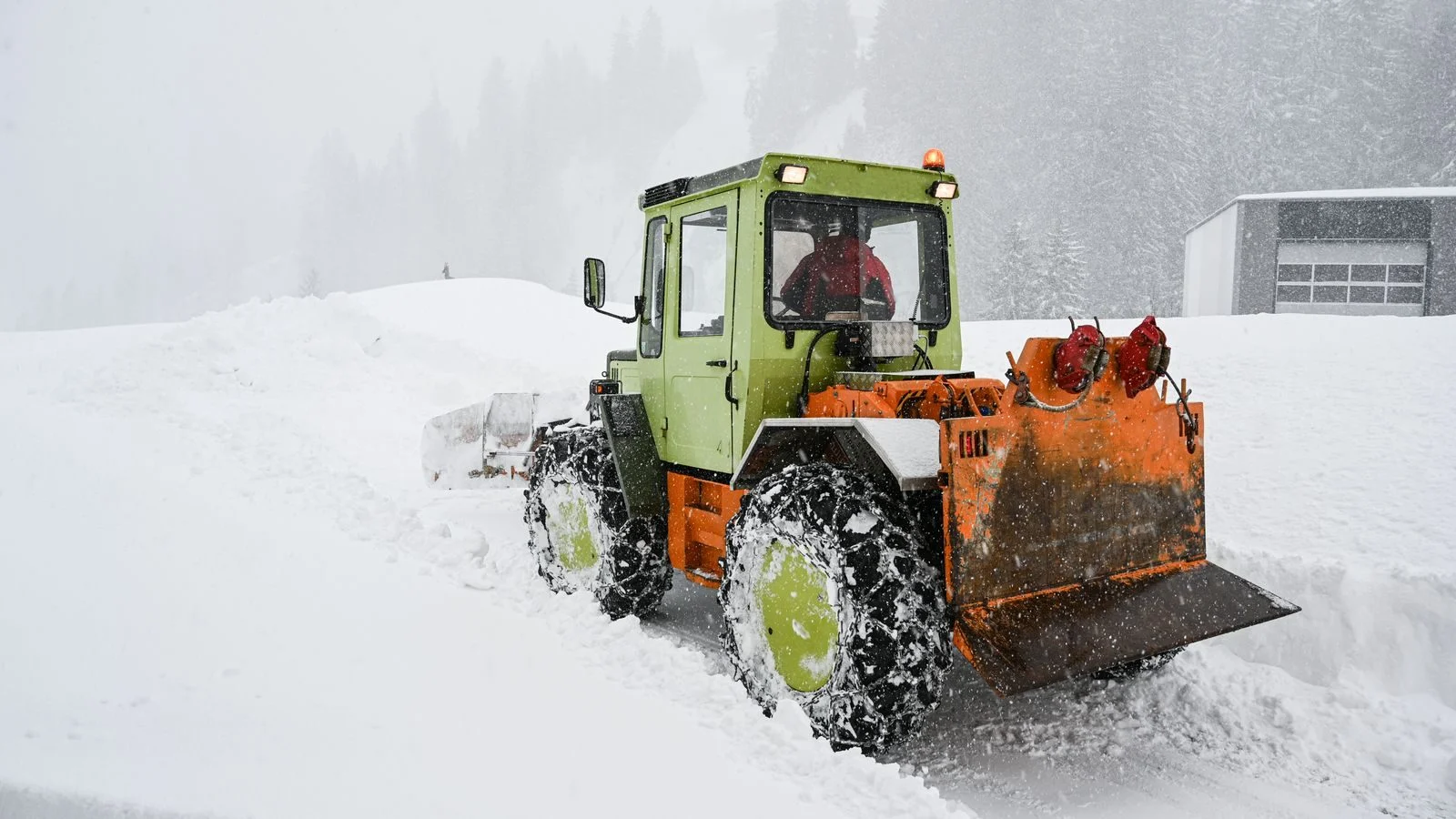
| Utility tractors | 50 to 260 HP | Livestock and hay farms, municipalities. Hauling, mowing, baling, snow removal |
| Row crop and 4WD tractors | 95 to 830 HP | Grain and row crop farms. Heavy tillage, planting, pulling large implements |
| Specialty tractors | 75 to 155 HP | Orchards, vineyards and other specialty crops |
Horsepower is only one measure. Three others matter just as much.
- PTO horsepower. The power available at the shaft that drives implements. It is always lower than engine horsepower.
- Weight. A tractor pulls with its weight as much as its engine. A light tractor spins its wheels.
- Hydraulic capacity. It decides what a loader can lift and how fast implements respond.
So a 60-horsepower compact tractor and a 60-horsepower utility tractor are not the same machine. The utility tractor is heavier, with a stronger frame and hitch, and it will pull more.
How a Tractor Delivers Its Power
A tractor is useful because it can power other machines in four ways.
The drawbar
The simplest method. A pin through the drawbar tows trailers, wagons and pull-type implements.
The three-point hitch
Two lower lift arms and one top link carry an implement and raise or lower it with hydraulic power. Hitches come in standard categories, so an implement of the right category fits any tractor of that category.
| Category | Typical tractor power | Top link pin | Lift arm pin |
|---|---|---|---|
| 0 | Up to about 20 HP | 5/8 inch | 5/8 inch |
| 1 | About 20 to 45 HP | 3/4 inch | 7/8 inch |
| 2 | About 40 to 100 HP | 1 inch | 1 1/8 inch |
| 3 | About 80 to 225 HP | 1 1/4 inch | 1 7/16 inch |
| 4 | About 180 HP and above | Larger still | Larger still |
Most compact and small utility tractors are Category 1. That is why Category 1 implements are the easiest to find new and used.
The power take-off
The power take-off, or PTO, is a splined shaft at the rear of the tractor that spins to drive an implement directly. Mowers, balers, tillers, augers and PTO generators all use it.
There are two standard speeds: 540 rpm and 1,000 rpm. Smaller tractors use 540. Larger tractors offer 1,000, and many have both. An implement must be run at the speed it was built for.
Hydraulics
Hydraulic oil under pressure lifts loaders, tilts blades and drives hydraulic motors. Rear “remotes” are the couplers that send that oil to an implement.
The Implements, Step by Step Through a Season
Implements are easier to remember if you follow a crop from bare ground to the barn.
- Break the ground. A moldboard plow or a chisel plow does the first, deep pass. This is called primary tillage.
- Make a seedbed. A disc harrow or a field cultivator breaks up clods and levels the surface. This is secondary tillage.
- Plant. A grain drill sows small grains in narrow rows. A row planter places crops such as corn at exact spacing and depth.
- Feed and protect. A spreader applies fertilizer, and a sprayer applies liquids.
- Cut and cure hay. A mower cuts it, a rake gathers it into rows, and a baler packs it into round or square bales.
- Harvest. A combine cuts the crop, separates the grain and cleans it in one pass. The name comes from combining those jobs.
- Move and store. Loaders, wagons and augers carry the crop to storage.
Some farms skip the first two steps. In no-till farming, a special drill or planter sows straight into last year’s residue, which saves fuel and helps hold the soil in place.
Gas or Diesel? The Engines in Farm Machinery
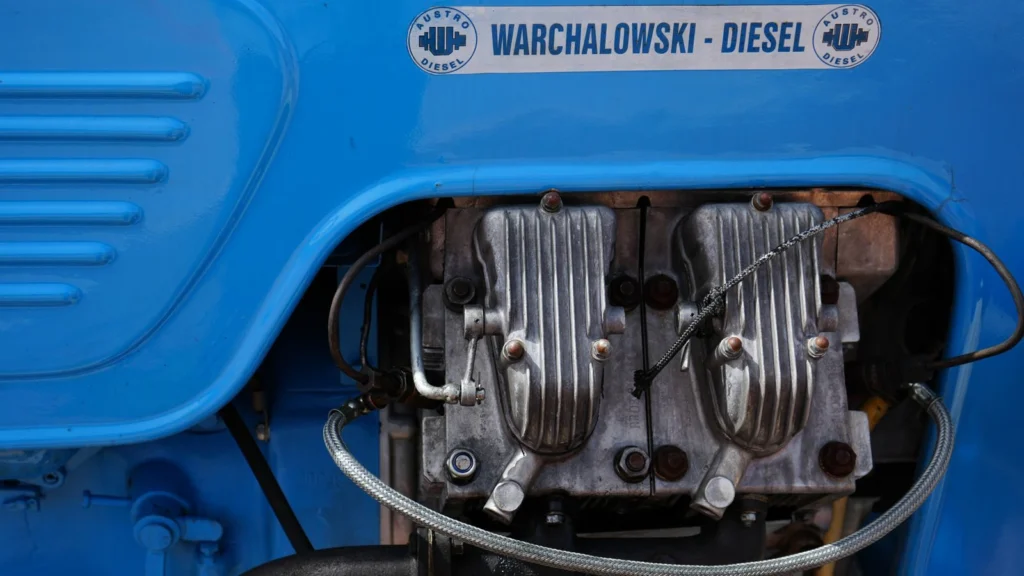
Open the hood of almost any modern tractor and you will find a diesel engine. There are good reasons.
| Point | Diesel | Gasoline |
|---|---|---|
| Pulling power at low speed | Strong | Weaker |
| Fuel use under heavy load | Lower | Higher |
| Engine life | Long, when maintained | Shorter in heavy work |
| Cold starting | Needs glow plugs or a block heater in deep cold | Easier |
| Where you find it | Tractors, combines, large pumps and generators | Tillers, small pumps, older small tractors, utility vehicles |
| Upkeep | Clean fuel and filters are critical | Simple, but fuel goes stale |
Diesel suits a tractor because farm work is long hours at steady, heavy load. That is where a diesel is at its best. Our guide to gas vs diesel engines explains the differences in depth.
Gasoline still has a place. Walk-behind tillers, transfer pumps, small generators and many older compact tractors run on it. Those engines are simple and cheap, and they are covered in our small engine maintenance schedule.
Two things catch new diesel owners out.
- Cold weather. Diesel fuel can thicken in the cold, and the engine needs help to start. See cold weather diesel starting.
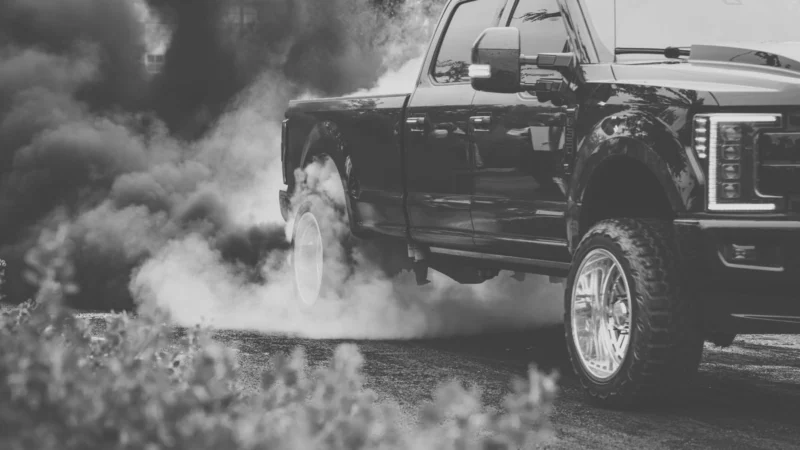
- Exhaust smoke. The color of the smoke tells you a lot about the engine’s health. See diesel engine smoke colors.
Machinery for Small Farms and Homesteads
You do not need a 300-horsepower tractor to work a few acres. A small property usually runs on a short list.
- A compact tractor. Deere’s compact class runs from 22.4 to 65.9 horsepower. With a loader and a mower it covers most chores.
- A rotary tiller or a small disc for garden plots and food plots.
- A rotary cutter, often called a brush hog, for rough mowing.
- A box blade or rear blade for driveways and grading.
- A water pump for irrigation or drainage. Our guide on how to choose a water pump covers sizing.
- A generator for the barn, the well and the freezers. See what size generator you need.
Buy implements that match the tractor’s hitch category and PTO horsepower. An implement that is too big is hard on the tractor and unsafe on slopes.
New, Used or Rented?
Farm machinery is expensive, and there is more than one way to get the use of it.
| Route | Good points | Things to watch |
|---|---|---|
| New | Warranty, dealer support, current safety features | Highest cost |
| Used | Lower cost, and older machines are simpler to repair | No warranty, unknown history, may lack a rollover bar |
| Rented or hired | No upkeep, right machine for an occasional job | Availability at busy times, cost adds up with frequent use |
For a used tractor, look at the hours, the service records, leaks, tire wear and how it starts from cold. Check that the PTO, hitch and hydraulics all work under load. And check for a rollover protective structure, because many older tractors have none.
Tractor Safety: The Part That Matters Most
Farming is dangerous work, and tractors are the main reason. NIOSH, the US workplace safety institute, puts it plainly: tractor overturns have long been the leading cause of death on American farms.
The same research points to the fix.
- A rollover protective structure, or ROPS, used with a seat belt is 99% effective in preventing injury in a rollover, according to NIOSH.
- ROPS have been standard on new tractors since 1985.
- NIOSH estimates that only about 6 in every 10 tractors in the United States have one.
The rules that save lives
Use a tractor with a rollover bar and wear the seat belt. Never carry passengers unless the tractor has a second seat built for it. Keep every PTO shield in place, and shut the PTO off before you get down. A shaft turning at 540 rpm makes nine turns every second, far faster than anyone can react. Stay off steep slopes, and slow down for turns and ditches.
Road travel needs care as well. In most US states, a vehicle built to travel at 25 mph or less must show a slow-moving vehicle emblem on public roads. Check the rules where you live.
If you own an older tractor without a rollover bar, ask your dealer about a retrofit. NIOSH describes a National ROPS Rebate Program that helps with the cost in participating states.
Keeping Farm Machinery Running
Machinery that works hard needs regular care. The operator’s manual sets the schedule. These habits apply almost everywhere.
- Do a walk-round before each use. Look for leaks, loose bolts, low tires and damaged guards.
- Check the oil, coolant and hydraulic fluid.
- Grease the fittings on the schedule in the manual. Loaders and PTO shafts need it often.
- Keep the air filter clean. Dust is the enemy of every farm engine.
- Change fuel filters on time, and drain any water from the fuel system.
- Store diesel properly and treat it for cold weather.
- Keep a log of hours and services.
Our diesel engine maintenance schedule sets out the intervals for a typical diesel.
Useful Gear for Tractor Owners
Tractors and large implements are bought from dealers, not online. These smaller items had active Amazon listings when we checked in October 2026, and each one solves a common problem.
For daily greasing
Lincoln 1134 Pistol Grip Grease Gun
A manual grease gun for the fittings on loaders, hitches, PTO shafts and implements. Regular greasing is the cheapest maintenance there is.
- PressureUp to 7,500 PSI
- Flex hose18 inches
- Rigid extension6 inches
- GripPistol, one-hand use
- Weight2.8 lb
- BrandLincoln
- Why it works: the pistol grip lets you hold the coupler on a fitting with one hand and pump with the other.
- Who it is best for: anyone with a tractor, a loader or a mower deck.
- What it solves: worn pins and bushings, which are usually the result of missed greasing.
- Handy extras: both a flexible hose and a rigid extension are included for hard-to-reach fittings.
- Keep in mind: grease cartridges are sold separately. Use the grease type your manual specifies.
As an Amazon Associate we earn from qualifying purchases. Specs come from the Amazon listing, checked October 2026.
For road travel
Slow Moving Vehicle Triangle Sign, Aluminum, 14 x 16 Inches
The orange and red triangle that tells drivers behind you that your vehicle is slow. It belongs on the back of any tractor or implement that uses a public road.
- Size14 x 16 inches
- MaterialAluminum
- Thickness40 mil
- SurfaceReflective
- MountingPre-drilled holes
- UseTractors, UTVs, golf carts
- Why it works: it is the recognized warning emblem for slow vehicles, and it reflects headlights at night.
- Who it is best for: anyone who drives a tractor, a utility vehicle or towed equipment on the road.
- What it solves: rear-end collisions, which happen when a fast car meets a slow machine.
- Handy extras: aluminum does not rust, so it survives years outdoors.
- Keep in mind: screws or ties are not included. Replace any emblem once it fades, and check your state’s mounting rules.
As an Amazon Associate we earn from qualifying purchases. Specs come from the Amazon listing, checked October 2026.
For faster implement changes
SpeeCo 3-Point Tractor Quick Hitch, Category 1
A frame that stays on the tractor’s three-point hitch so you can back up to an implement and lift, without wrestling each pin into place.
- Hitch category1
- Lift capacity2,000 lb
- Recommended powerUp to 50 HP
- MaterialForged steel
- BushingsNot required
- Weight72 lb
- Why it works: it turns a three-pin hookup into a single lift, which saves time every time you change implements.
- Who it is best for: compact tractor owners who swap between a mower, a blade and a tiller.
- What it solves: climbing between the tractor and a heavy implement to line up pins.
- Handy extras: an adjustable top link bracket and a powder coat finish.
- Keep in mind: it suits Category 1 implements with standard spacing. Check your implements fit before you buy, and keep within the lift rating.
As an Amazon Associate we earn from qualifying purchases. Specs come from the Amazon listing, checked October 2026.
Diesel owners in cold regions also use a winter fuel treatment such as Power Service Anti-Gel Diesel Fuel Supplement. Follow the dosing on the bottle.
Common Mistakes With Farm Machinery (and the Fix)
Pro Tips for New Machinery Owners
- Start with the jobs. List the work you need done, then the implements, then the tractor that runs them.
- Buy the operator’s manual if a used machine does not come with one.
- Build a relationship with a dealer. Parts and advice matter for decades.
- Learn to read the hour meter. Service intervals are in hours, not miles.
- Add weight properly. Use wheel weights or ballast as the manual describes, not improvised loads.
- Take a safety course. Many extension services and farm groups run tractor safety training.
Real-Life Scenarios: What Would You Need?
These are typical situations that new owners describe in forums and reviews. They are examples to help you think it through, not quotes from real people.
🏡 The five-acre property
You need to mow rough grass, move mulch and gravel, and clear snow from a long driveway.
A compact tractor with a loader, a rotary cutter and a rear blade covers all of it.
Class: compact tractor, Category 1 hitch
🐄 The small livestock farm
You make hay for your own animals, haul feed and bale a few fields each summer.
You need PTO power for a mower and a baler, and enough weight to pull loaded wagons.
Class: utility tractor
🚜 The inherited tractor
A relative leaves you a 1970s tractor that runs well but has no rollover bar.
The engine may have years left. The safety equipment is the gap.
Next step: ask a dealer about a ROPS retrofit before you use it
Agricultural Machinery: FAQ
What is agricultural machinery?
It is the powered equipment and implements used in farming. That includes tractors, tillage tools, planters, sprayers, hay equipment, harvesters, loaders, pumps and generators.
What are the main types of tractors?
John Deere groups its tractors into compact tractors of 22.4 to 65.9 HP, utility tractors of 50 to 260 HP, row crop and four-wheel-drive tractors of 95 to 830 HP, and specialty tractors of 75 to 155 HP.
Why are most tractors diesel?
Diesel engines deliver strong pulling power at low speed, use less fuel under heavy load and last a long time when maintained. Farm work is long hours at steady load, which suits a diesel.
What is a PTO on a tractor?
PTO stands for power take-off. It is a splined shaft that spins to drive implements such as mowers, balers and tillers. The two standard speeds are 540 rpm and 1,000 rpm.
What is a three-point hitch category?
It is a size standard for the hitch that carries implements. Category 1 suits tractors of about 20 to 45 HP, Category 2 about 40 to 100 HP, and Category 3 about 80 to 225 HP. The category sets the pin sizes.
What is the most important tractor safety feature?
A rollover protective structure used with a seat belt. NIOSH says the combination is 99% effective in preventing injury in a rollover, and that tractor overturns are the leading cause of death on American farms.
Your Farm Machinery Checklist
- List the jobs you need done through a full year.
- List the implements those jobs require.
- Choose a tractor class that runs those implements.
- Check PTO horsepower, hitch category and hydraulic capacity.
- Decide between new, used and rented.
- Confirm the tractor has a rollover bar and a seat belt.
- Keep all PTO shields in place.
- Fit a slow-moving vehicle emblem for road travel.
- Set up a greasing and service routine.
- Get the operator’s manual and read the safety section first.
The bottom line
Agricultural machinery makes sense once you see the tractor as the power source and everything else as a tool it drives. Match the tractor to the implements, look after the engine, and never work without a rollover bar and a seat belt.
As an Amazon Associate we earn from qualifying purchases.
Sources: John Deere’s official tractor pages (deere.com) for tractor classes and horsepower ranges; NIOSH publications on tractor overturns, rollover protective structures and the National ROPS Rebate Program; long-standing industry conventions for PTO speeds and three-point hitch categories; Amazon listings for the products named in this guide. All checked October 2026.