A bull dozer is a tracked diesel tractor with a wide steel blade on the front, built to push soil, rock and debris. Most people write it as one word, bulldozer, and on a job site everyone just says “dozer”. Whatever you call it, it is the machine that shapes the ground before anything else can be built.
Dozers come in a huge range. The smallest weigh about as much as a delivery truck and can grade a backyard. The largest weigh more than 100 tons and work in mines. Picking the right size, the right blade and the right tracks is what decides whether a job goes quickly or badly.
This guide explains bull dozers in plain English. You will learn how they work, how the size classes compare, what the blade and track options mean, when to rent and when to buy, what to check on a used machine, and the safety rules that apply. Size figures come from Caterpillar specifications as listed by Cat dealers. Safety rules come from OSHA. We have not operated or tested these machines.
Bull dozers at a glance
From 80 horsepower finish graders to 850 horsepower mining machines
Power and weight figures are Caterpillar specifications as listed by Cat dealers. They vary with configuration.
Quick answer
A bull dozer pushes material with a front blade and grips the ground with steel tracks. Small dozers of about 80 to 105 horsepower suit landscaping, home sites and finish grading. Medium dozers of 130 to 360 horsepower do most road, site and farm work. Large dozers above 450 horsepower work in mines and big earthmoving jobs. For occasional work, rent. Whatever the size, OSHA requires seat belts, rollover protection and a working reverse alarm or a signal person.
How we put this guide together
We have not operated or tested bulldozers. The size table uses Caterpillar specifications as published in Cat dealer listings, checked in October 2026. Weights change with the blade, tracks and options fitted. Safety requirements are quoted from OSHA standard 29 CFR 1926.602. Product details come from Amazon listings. This guide is general information. It is not operator training, and it does not replace the machine’s manual or your employer’s safety program.
In this guide
- What Is a Bull Dozer?
- Bull Dozer Size Classes
- Blade Types and What Each One Does
- Tracks: Standard or Low Ground Pressure
- What Bull Dozers Are Used For
- Rent, Hire or Buy?
- Moving a Bull Dozer
- Bull Dozer Safety and the OSHA Rules
- Daily Checks and Maintenance
- Buying a Used Bull Dozer
- Useful Gear for Dozer Owners and Operators
- Common Bull Dozer Mistakes (and the Fix)
- Pro Tips From the Job Site
- Real-Life Scenarios: Which Dozer Fits?
- Bull Dozers: FAQ
- Your Bull Dozer Checklist
What Is a Bull Dozer?
A bull dozer is three things bolted together: a diesel tractor, a set of tracks and a blade.
The tractor provides the power. The tracks spread the machine’s weight over a large area, so it can work on soft ground without sinking and push hard without spinning. The blade does the work. It cuts into the ground, carries a load of material in front of it and spreads that material where it is needed.
The word “bulldozer” is generally said to have first described the blade, not the whole machine. Early blades were attachments fitted to crawler tractors. Over time the name moved to the complete machine.
The main parts
- Blade. The curved steel plate at the front. Hydraulic cylinders raise, lower and, on some machines, tilt and angle it.
- Cutting edge and end bits. Replaceable hardened steel strips bolted to the bottom of the blade. They take the wear.
- Push arms or C-frame. The frame that connects the blade to the tractor.
- Undercarriage. The tracks and everything that carries them: track shoes, links, pins and bushings, rollers, idlers and sprockets.
- Final drives. The gear sets that turn the sprockets.
- Ripper. A heavy claw at the back of many medium and large dozers. It breaks up hard ground and rock so the blade can move it.
- Cab and rollover structure. The operator’s station, with a frame designed to protect the operator if the machine rolls.
How a dozer steers
A dozer has no steering wheel and no front wheels. It turns by driving one track faster than the other. Older machines did this with clutches and brakes. Many modern machines use a hydrostatic drive or a differential steering system, which keeps power going to both tracks through a turn. That gives smoother, stronger turns with a full blade.
Bull Dozer Size Classes
Caterpillar is the best-known dozer maker, and its range makes a useful yardstick. Cat groups its machines into small, medium and large dozers.
| Model | Class | Net power | Approx. operating weight | Typical work |
|---|---|---|---|---|
| D1 | Small | 80 hp | 17,855 lb | Landscaping, home sites, finish grading |
| D2 | Small | 92 hp | 18,382 lb | Residential and light commercial sites |
| D3 | Small | 104 hp | 20,640 lb | Site prep, finish grading |
| D4 | Medium | 130 hp | About 29,800 lb | General construction |
| D5 | Medium | 170 hp | 42,263 lb | Road building, site work |
| D6 | Medium | 215 hp | About 50,733 lb | The all-round production dozer |
| D7 | Medium | 265 hp | 65,644 lb | Heavy construction, land clearing |
| D8 | Medium | 363 hp | 87,083 lb | Heavy construction, ripping |
| D9 | Large | 452 hp | 110,225 lb | Quarries, large earthmoving |
| D10 | Large | 602 hp | 154,888 lb | Mining, heavy ripping |
| D11 | Large | 850 hp | 235,507 lb | Large mines |
Look at how fast the weight climbs. A D6 weighs about 25 tons. A D11 weighs well over 100 tons. Weight is what lets a dozer push, because a machine can only push as hard as its tracks can grip.
Other major makers build dozers across similar size ranges, including Komatsu, John Deere, Case and Liebherr. Model names differ, but the idea is the same: more weight and power for bigger jobs.
Tip: think in weight, not just horsepower
Rental yards and dealers often group dozers by operating weight. Weight tells you three practical things: how much the machine can push, how much it will sink on soft ground, and what it takes to haul it. A dozer that is too heavy to move legally on your trailer is the wrong dozer, whatever its power.
Blade Types and What Each One Does
The blade decides what a dozer is good at.
| Blade | Shape | Best for | Limits |
|---|---|---|---|
| Straight blade (S) | Short, flat, no side wings | Fine grading and hard, dense material | Carries a smaller load |
| Universal blade (U) | Tall and curved, with large side wings | Moving large volumes of loose material a long way | Poor at cutting hard ground |
| Semi-U blade (SU) | A straight blade with small side wings | General production work | A compromise between the two |
| Six-way blade (PAT) | Raises, tilts and angles under power | Finish grading, backfilling, ditches, crowned roads | Lighter built, common on small and medium dozers |
| Angle blade | Angles left or right, without power tilt | Side-casting material, such as when cutting a road into a slope | Less versatile than a six-way blade |
PAT stands for power-angle-tilt. Some makers call it a six-way blade, because it moves six ways: up, down, tilt left, tilt right, angle left and angle right. It is the blade most small dozers carry, because it lets one machine cut a ditch, crown a driveway and backfill a trench.
Large production dozers usually carry a semi-U or a universal blade. They are built to move as many cubic yards as possible on every pass.
Tracks: Standard or Low Ground Pressure
Dozers are sold with different track widths.
A standard track dozer is narrower and concentrates its weight. It grips hard ground and rock well, and it is easier to haul.
A low ground pressure dozer, often labeled LGP, has wider and longer tracks. The same weight is spread over more area, so the machine floats over mud, sand and wet clay instead of sinking. LGP machines are popular for finish grading and for work on soft sites.
The trade-off is wear and width. Wide track shoes wear faster on rock and put more strain on the undercarriage, and a wide machine may need a permit to haul.
Key insight: choose the narrowest track that gives you enough flotation. Wider shoes than the ground needs simply wear out the undercarriage faster.
What Bull Dozers Are Used For
- Land clearing. Pushing over brush and small trees and piling the debris.
- Stripping topsoil. Removing and stockpiling the top layer before construction.
- Rough grading. Cutting high spots and filling low ones to bring a site near its final shape.
- Finish grading. Trimming the surface to an exact level. Many modern dozers use GPS or laser grade control to do this.
- Building pads, roads and ponds. Shaping and compacting fill in layers.
- Backfilling. Pushing soil back into trenches and around foundations.
- Ripping. Breaking up hardpan, frozen ground or soft rock with the rear ripper.
- Push-loading. Helping scrapers load by pushing them from behind.
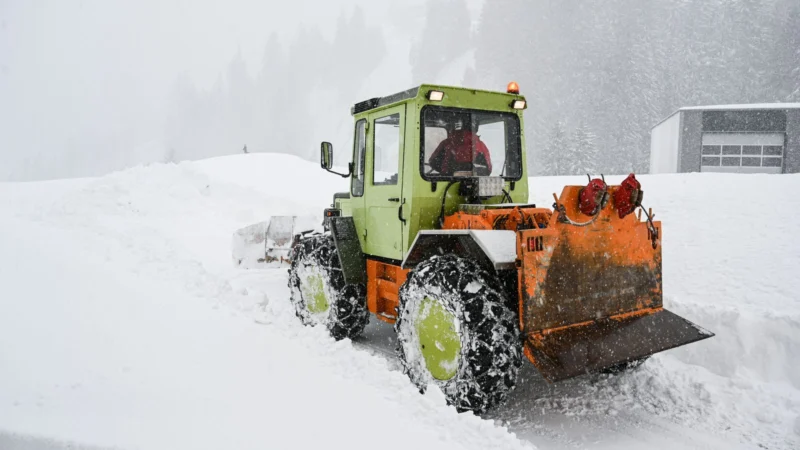
- Snow and emergency work. Opening roads and building firebreaks.
Dozer or another machine?
A dozer is not always the best tool. It pushes well but cannot lift, load a truck or dig a deep, narrow hole.
| Job | Best machine | Why |
|---|---|---|
| Pushing soil a short distance | Bull dozer | It moves the most material per pass |
| Digging trenches and footings | Excavator | It digs deep and places material exactly |
| Loading trucks | Wheel loader or excavator | They lift. A dozer cannot |
| Long, flat finish grading | Motor grader | Its long blade base smooths roads |
| Small, tight sites | Compact track loader | It fits where a dozer will not |
| Hauling soil a long distance | Scraper or dump trucks | Pushing gets inefficient beyond a few hundred feet |
For a wider look at the machines found on a job site, see our guide to construction equipment.
Rent, Hire or Buy?
Most people who need a dozer do not need to own one.
Renting
Rental makes sense for a single project: a driveway, a pond, a building pad. You pay for the days you use, and the rental company handles major repairs. Ask what the rate includes. Delivery, fuel, cleaning and wear on the cutting edges are often extra, and you are usually responsible for damage.
Hiring an operator
For most landowners, hiring a contractor with a dozer is faster and cheaper than renting one and learning as you go. A skilled operator moves more soil in a day than a beginner moves in a week, and gets the grade right the first time.
Buying
Buying makes sense when you have steady work for the machine. A contractor, a large farm or a land-clearing business can keep a dozer earning. Remember the costs beyond the price: transport, insurance, fuel, undercarriage wear, storage and a trained operator.
- Describe the job. What material, how much of it and how far does it have to move?
- Check the site. Is the ground soft or rocky? Is there room to turn? Are there slopes?
- Pick the size class. Small for home sites and finish work, medium for most site and road work.
- Pick the blade. A six-way blade for varied work. A semi-U for production pushing.
- Pick the tracks. Standard for hard ground, low ground pressure for soft ground.
- Plan the transport. Check the machine’s weight and width against your trailer, your truck and the law.
- Have buried utilities marked. Call 811 before any digging or grading.
- Decide who will operate it. Hire a trained operator if you are not one.
Moving a Bull Dozer
A dozer does not drive to the job. It rides on a trailer, and that brings rules.
Weight. Under federal rules, a combination with a gross combination weight rating of 26,001 pounds or more, towing a trailer rated over 10,000 pounds, needs a driver with a Class A commercial driver’s license. Even a small 18,000-pound dozer on a suitable trailer behind a heavy truck reaches that level.
Width. The standard legal width on most US highways is 8 feet 6 inches. Many dozers, and most low ground pressure models, are wider than that with the blade on. Wide loads need permits, and the rules differ in each state.
Securing the load. Heavy equipment must be chained down at set points, with the blade lowered. Follow the cargo securement rules and the machine’s manual.
For most renters, the simple answer is to pay the rental company to deliver and collect the machine.
Bull Dozer Safety and the OSHA Rules
A dozer is heavy, powerful and has large blind spots. OSHA’s construction standard for earthmoving equipment, 29 CFR 1926.602, lists bulldozers by name. Here are the main points.
What OSHA requires on earthmoving equipment
OSHA standard 1926.602 requires seat belts on the equipment it covers, and rollover protective structures under its subpart W. Machines must have a service braking system capable of stopping and holding the equipment fully loaded. Bulldozers and other two-way machines must have a horn that can be heard above the surrounding noise. A machine with an obstructed view to the rear may not be used in reverse unless it has a working reverse signal alarm that can be heard above the surrounding noise, or an employee signals that it is safe.
Good practice goes further than the minimum.
- Wear the seat belt. Rollover protection only works if you stay in the seat.
- Know where people are. Never move the machine unless you know the area around it is clear. Most serious dozer injuries on sites involve workers on foot.
- Work up and down slopes, not across them, and keep the blade low when you travel.
- Call 811 before you dig. Buried gas, power and water lines are marked for free.
- Stay clear of overhead power lines and of trees that could fall the wrong way.
- Lower the blade and the ripper to the ground before you leave the seat. Set the brake and shut the engine off.
- Use three points of contact when you climb on and off. Slips from wet tracks are a common injury.
- Protect your hearing. Wear ear protection in an open cab.
- Never carry riders.
Our equipment safety page covers the basics that apply to every engine-powered machine.
Daily Checks and Maintenance
A dozer works in the worst conditions any machine sees. A short check at the start of every shift prevents most breakdowns.
- Walk around the machine and look underneath for fresh leaks.
- Check engine oil, coolant, hydraulic oil and transmission oil levels.
- Check the fuel level and drain water from the fuel separator.
- Look at the air filter indicator and clean the pre-cleaner.
- Check the track tension. Tracks that are too tight or too loose wear quickly.
- Clear packed mud, rock and debris from the undercarriage.
- Look at the cutting edge, end bits and ripper tips for wear.
- Check hoses and cylinders for damage and leaks.
- Test the horn, the reverse alarm and the lights.
- Check the seat belt, the steps and the handrails.
- Grease the fittings listed in the manual.
- Make sure the fire extinguisher is in place and charged.
The undercarriage: where the money goes
The undercarriage is the most expensive part of a dozer to maintain. Makers and dealers often say it can account for around half of the repair cost over a machine’s life. A few habits make it last.
- Keep the tension right. Check it in the conditions you work in, because mud packed into the tracks tightens them.
- Clean it at the end of the day. Mud that dries or freezes overnight strains every part.
- Limit high-speed reverse. Reversing fast wears pins and bushings faster.
- Avoid constant turning one way. It wears one side more than the other.
- Do not spin the tracks. Take a smaller cut instead.
- Have a dealer measure wear at regular intervals, so parts can be turned or replaced at the right time.
The engine
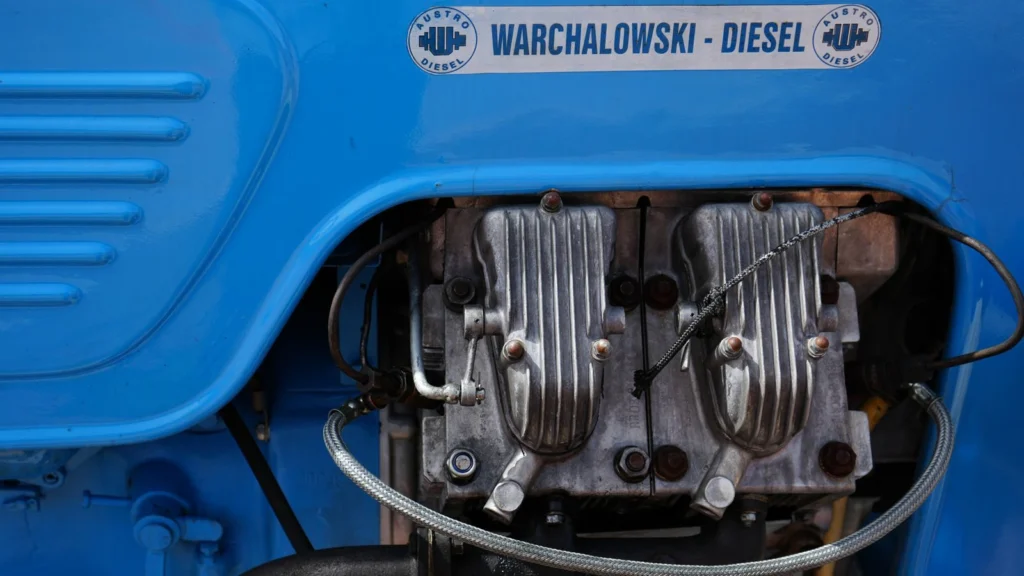
Every modern dozer is a diesel, and current models use exhaust after-treatment to meet emissions rules. Clean fuel, clean air and the right oil matter more than ever. Our diesel engine maintenance schedule explains the routine, and our guide to cold weather diesel starting covers winter fuel and block heaters. If the exhaust looks wrong, our guide to diesel engine smoke colors explains what each color means.
Buying a Used Bull Dozer
A used dozer can be a sound buy or a very expensive mistake. The difference is usually in the undercarriage and the drivetrain.
- Ask for the hour meter reading and the service records.
- Have the undercarriage measured. A dealer can report the wear on each part as a percentage.
- Look at the sprocket teeth. Sharp, hooked teeth mean heavy wear.
- Check the final drives for leaks and listen for noise.
- Start the engine cold and watch the exhaust.
- Check for heavy fumes from the engine breather.
- Push with the machine. It should pull strongly in both directions without slipping.
- Work the blade through every movement and look for loose pins and leaking cylinders.
- Check the blade and the frame for cracks and weld repairs.
- Check that the rollover structure is original and undamaged.
- Take oil samples from the engine, transmission and final drives for lab analysis.
- Confirm the serial number and ask whether any loan is still owed on the machine.
For a machine of this cost, pay for an independent inspection if you are not an experienced buyer.
Useful Gear for Dozer Owners and Operators
These are small items that support good habits. We have not tested them. Details are from the sellers’ listings.
The standard reference
Moving the Earth: Excavation Equipment, Methods, Safety, and Cost, Seventh Edition
A long-established reference book on earthmoving, published by McGraw Hill. It covers machines, methods, safety and cost for excavation and grading work.
- FormatBook
- EditionSeventh
- SubjectExcavation equipment and methods
- CoversMachines, methods, safety, cost
- PublisherMcGraw Hill
- Stock on listingLimited when checked
- Why it works: it explains how to plan a cut, choose machines and estimate production, in far more depth than any web page.
- Who it is best for: new contractors, estimators, students and landowners planning large projects.
- What it solves: guesswork about how long a job will take and which machine suits it.
- Keep in mind: it is a large technical book, not a quick-start guide, and it does not replace hands-on operator training.
As an Amazon Associate we earn from qualifying purchases. Details come from the Amazon listing, checked October 2026.
Daily inspection record
Heavy Equipment Daily Inspection Checklist Log Book
A log book for recording pre-use inspections of heavy equipment. A written record shows that checks were done and helps you spot faults that keep coming back.
- FormatLog book
- UseDaily pre-use inspection
- EquipmentHeavy equipment
- RecordsChecks, defects and notes
- KeptIn the cab or the office
- Stock on listingIn stock when checked
- Why it works: a checklist stops you skipping steps on a busy morning, and the record builds a service history.
- Who it is best for: owner-operators and small contractors without a digital inspection system.
- What it solves: forgotten checks and missing records when a machine is sold or a claim is made.
- Keep in mind: the listing gives few details about the page layout. Check that the items match your machine, and add your own where they do not.
As an Amazon Associate we earn from qualifying purchases. Details come from the Amazon listing, checked October 2026.
Greasing
Lincoln 1147 Lever-Action Grease Gun
A lever-action grease gun with an 18-inch whip hose. Blade pins, push arm pivots and ripper pins all need regular grease.
- TypeLever action
- Hose18 in whip hose with coupler
- Pump headCast
- FollowerDual lip
- FeatureJam-proof toggle
- BrandLincoln
- Why it works: a lever gun delivers a good volume of grease per stroke, which suits large pins.
- Who it is best for: operators who grease by hand at the start of each shift.
- What it solves: dry, worn blade pins and bushings.
- Keep in mind: grease is not included. Use the grease grade in the machine’s manual.
As an Amazon Associate we earn from qualifying purchases. Details come from the Amazon listing, checked October 2026.
Reverse alarm
ECCO 575 Back-Up Alarm, 107 dB, 12 to 24 Volt
A replacement reverse alarm. The listing gives a sound level of 107 decibels, a 12 to 24 volt DC range and the SAE J994 Type B standard.
- Sound level107 dB
- Voltage12 to 24 V DC
- Current draw0.3 A
- Standard on listingSAE J994 Type B
- HousingFiberglass-reinforced nylon
- Warranty2 years
- Why it works: it covers both 12 and 24 volt systems, so one alarm suits many machines.
- Who it is best for: owners whose reverse alarm has failed or is too quiet for the site.
- What it solves: a dead alarm, which leaves the machine out of line with OSHA’s rule on reversing with an obstructed view.
- Keep in mind: OSHA requires an alarm that can be heard above the surrounding noise. Check that this sound level suits your site, and have it wired by someone qualified.
As an Amazon Associate we earn from qualifying purchases. Details come from the Amazon listing, checked October 2026.
Used-buying tool
Oil Analysis Kit for Gasoline and Diesel Engines (Prepaid Lab Test)
A mail-in kit with a sample bottle and a prepaid mailer. The lab reports on wear metals, contamination and oil condition.
- TypePrepaid lab oil test
- EnginesGasoline and diesel
- IncludesBottle, card, return mailer
- Reports onWear metals and contamination
- UsePre-purchase or routine checks
- Stock on listingIn stock when checked
- Why it works: metal particles and coolant in the oil reveal wear that you cannot see or hear.
- Who it is best for: buyers of used machines, and owners who want to track engine health over time.
- What it solves: buying a machine with a hidden engine problem.
- Keep in mind: the listing describes engine oil testing. For transmissions and final drives, ask an equipment dealer about a full fluid analysis program.
As an Amazon Associate we earn from qualifying purchases. Details come from the Amazon listing, checked October 2026.
Common Bull Dozer Mistakes (and the Fix)
Pro Tips From the Job Site
- Push downhill when you can. Gravity adds to every pass.
- Use slot dozing. Pushing in the same track builds walls of soil that keep the load in front of the blade.
- Keep the blade full, not overflowing. Material spilling round the ends is wasted effort.
- Rip before you push in hard ground. It saves fuel and cutting edges.
- Work in layers. Spread fill in thin lifts and compact each one.
- Turn the cutting edge. Many edges can be flipped to use a second wear surface.
- Let the engine idle briefly before you shut down, as the manual advises, so the turbocharger cools.
Real-Life Scenarios: Which Dozer Fits?
These are typical situations. They are examples to help you choose, not reports from real customers.
🏡 The half-acre house pad
You need to strip topsoil, level a pad and shape a driveway on a rural lot.
A small dozer with a six-way blade does all three. For a one-off job, rent it with delivery or hire an operator.
Pick: small dozer, about 80 to 105 hp
🚜 The farm pond and field roads
You have a pond to dig out, terraces to repair and two miles of field road to shape.
There is real volume to move here. A medium dozer with a semi-U or six-way blade suits it, and an experienced operator will pay for themselves.
Pick: medium dozer, about 130 to 215 hp
🏗️ The site contractor
You clear, strip and grade commercial sites all year.
Steady work justifies owning. Choose the size by your typical job, and add grade control for finish work.
Pick: own a medium dozer, rent larger when needed
Bull Dozers: FAQ
What is a bull dozer used for?
A bull dozer pushes soil, rock and debris with a front blade. It is used for land clearing, stripping topsoil, rough and finish grading, building roads and pads, backfilling trenches and, with a rear ripper, breaking up hard ground.
How much does a bull dozer weigh?
It depends on the size. In Caterpillar's range, the small D1 weighs about 17,855 pounds, the mid-size D6 about 50,733 pounds and the giant D11 about 235,507 pounds. Weight changes with the blade, tracks and cab fitted.
What is a six-way blade on a dozer?
A six-way blade, also called a PAT or power-angle-tilt blade, moves up, down, tilts left and right and angles left and right under hydraulic power. It is the most versatile blade and is common on small and medium dozers.
Do I need a license to operate a bull dozer?
On private land there is generally no government operator's license for the machine itself, but employers must train operators, and insurers and rental companies may set their own rules. Hauling a dozer on public roads is different. Heavy truck and trailer combinations require a commercial driver's license.
Is it better to rent or buy a bull dozer?
Rent or hire a contractor for single projects. Buy only if you have steady work for the machine and can cover transport, insurance, fuel and undercarriage costs.
What does LGP mean on a dozer?
LGP means low ground pressure. The machine has wider and longer tracks that spread its weight, so it floats on soft, wet ground. It is a good choice for finish grading and muddy sites, but the wide shoes wear faster on rock.
Your Bull Dozer Checklist
- Define the job: material, volume and push distance.
- Choose the size class by weight and power.
- Choose the blade: six-way for varied work, semi-U for production.
- Choose standard or low ground pressure tracks for the ground.
- Decide whether to rent, hire an operator or buy.
- Plan the transport, license and permits.
- Call 811 and have buried utilities marked.
- Check the seat belt, rollover structure, horn and reverse alarm.
- Do a walk-around and fluid check every shift.
- Keep the undercarriage clean and correctly tensioned.
- On a used machine, have the undercarriage measured and the oils analyzed.
The bottom line
The right bull dozer is the one whose weight, blade and tracks match your material and your ground. For one-off jobs, rent or hire. Whoever runs it, the seat belt, the alarm and a clear work area are not optional.
As an Amazon Associate we earn from qualifying purchases.
Sources: Caterpillar dozer specifications as published in Cat dealer listings; OSHA standard 29 CFR 1926.602 (material handling equipment, earthmoving); 49 CFR 383.91 for commercial driver’s license groups; Amazon listings for the products named in this guide. All checked October 2026.