A Champion portable generator is simple to own, but the first hour decides how long it lasts. Most engines that fail early were started without enough oil, run flat out from new, or put away with fuel in the carburetor. All three are easy to avoid if you know the steps.
This is the guide we would want to find in the box. It walks a new owner through setup, the first start, the break-in period, daily use, the maintenance schedule, storage and the warranty rules. It is written in plain English, in the order you will need it.
We used one model as the worked example: Champion’s 3500-watt open-frame generator, model 201286, and its official owner’s manual. Other Champion portables follow the same pattern, but capacities and intervals differ. Always check the manual for your own model number. We have not tested this generator.
Champion portable generator care at a glance
Oil first, half load for five hours, never store it wet with fuel
Figures are from Champion’s owner’s manual for the 3500-watt model 201286.
Quick answer
Before the first start of a Champion portable generator, add the oil that comes in the box, fill the tank with fresh 87 octane gasoline containing no more than 10% ethanol, and move the generator outdoors, well away from the house. Start it with nothing plugged in. For the first 5 hours keep the load at or below half the running watts, then change the oil. After that, change the oil every 100 hours or once a year, and shut off the fuel and run the carburetor dry before storage.
How we put this guide together
We have not tested this generator. Every specification, interval and warning here comes from Champion Power Equipment’s official owner’s manual and product page for the 3500-watt generator, model 201286, checked in October 2026. Where we add general advice, we say so. Champion sells more than a hundred portable models, and they differ. Your own manual, and the labels on your generator, take priority over this guide.
In this guide
- Step 1: Unbox, Identify and Register
- Step 2: Choose Where It Will Run
- Step 3: Add the Oil
- Step 4: Add the Fuel
- Step 5: The First Start
- Step 6: Break In the Engine
- Step 7: Connect Your Loads the Right Way
- Step 8: Shut Down Properly
- The Maintenance Schedule
- Using It at Altitude
- Storage: Short, Medium and Long
- Troubleshooting Quick Reference
- Warranty and Support: The Rules to Know
- Useful Accessories for a Champion Portable
- Common Mistakes New Champion Owners Make (and the Fix)
- Pro Tips From the Manual
- Real-Life Scenarios: Doing It Right
- Champion Portable Generator: FAQ
- Your Champion Owner’s Checklist
Step 1: Unbox, Identify and Register
Open the box near where you will use the generator. These machines are heavy. The 3500-watt model in our example weighs 99.2 pounds.
- Find the owner’s manual, the oil and the oil funnel. Champion’s page says engine oil and a funnel are included with this model.
- Check for shipping damage before you add any fluids.
- Find the data label and photograph it. It shows the model number and the serial number.
- Keep your receipt.
- Register the generator on Champion’s website.
Registration matters more than it does with most products. Champion’s warranty statement asks you to register within 10 days of purchase and to include a copy of the receipt as proof. Proof of purchase is required for warranty service.
Read the model name correctly
Champion names its open-frame generators by running watts. The “3500W Generator” in our example makes 3,500 running watts and 4,375 starting watts. Champion names its inverter generators by starting watts, so a “4500-Watt” inverter makes 3,500 running watts. Check both numbers in the specifications.
Step 2: Choose Where It Will Run
Decide this before you add fuel, because a full generator is harder to move.
Carbon monoxide: the rule that has no exceptions
A generator’s exhaust contains carbon monoxide, a poison gas you cannot see or smell. It can kill in minutes. Run a generator outdoors only, never in a house, garage, basement, shed, porch or carport, even with the doors open. Safety agencies advise at least 20 feet from the house, with the exhaust pointing away from doors, windows and vents. Fit battery-powered carbon monoxide alarms inside your home. Champion’s CO Shield will shut the engine off if carbon monoxide builds up around it, but it is a backup, not a reason to relax the rule.
A good spot is:
- Outdoors and open on all sides.
- Level. The low-oil sensor can trip on a slope.
- Dry. Champion’s manual says not to spray the generator with water. Rain and electricity do not mix.
- Clear of anything that burns, such as dry grass and leaves.
- Reachable with your cords without running them through standing water.
What the CO Shield lights mean
Champion’s manual explains its two warning lights.
| Light | Meaning | What to do |
|---|---|---|
| Red, blinking | Carbon monoxide was building up, and the engine was shut off | Move the generator to an open area with the exhaust pointing away. Keep 5 feet clear of obstructions |
| Yellow | A fault in the CO Shield system | Contact Champion’s technical support |
The manual adds a useful detail. If the exhaust is blowing back toward the generator because of the wind, turn the generator 45 degrees.
Step 3: Add the Oil
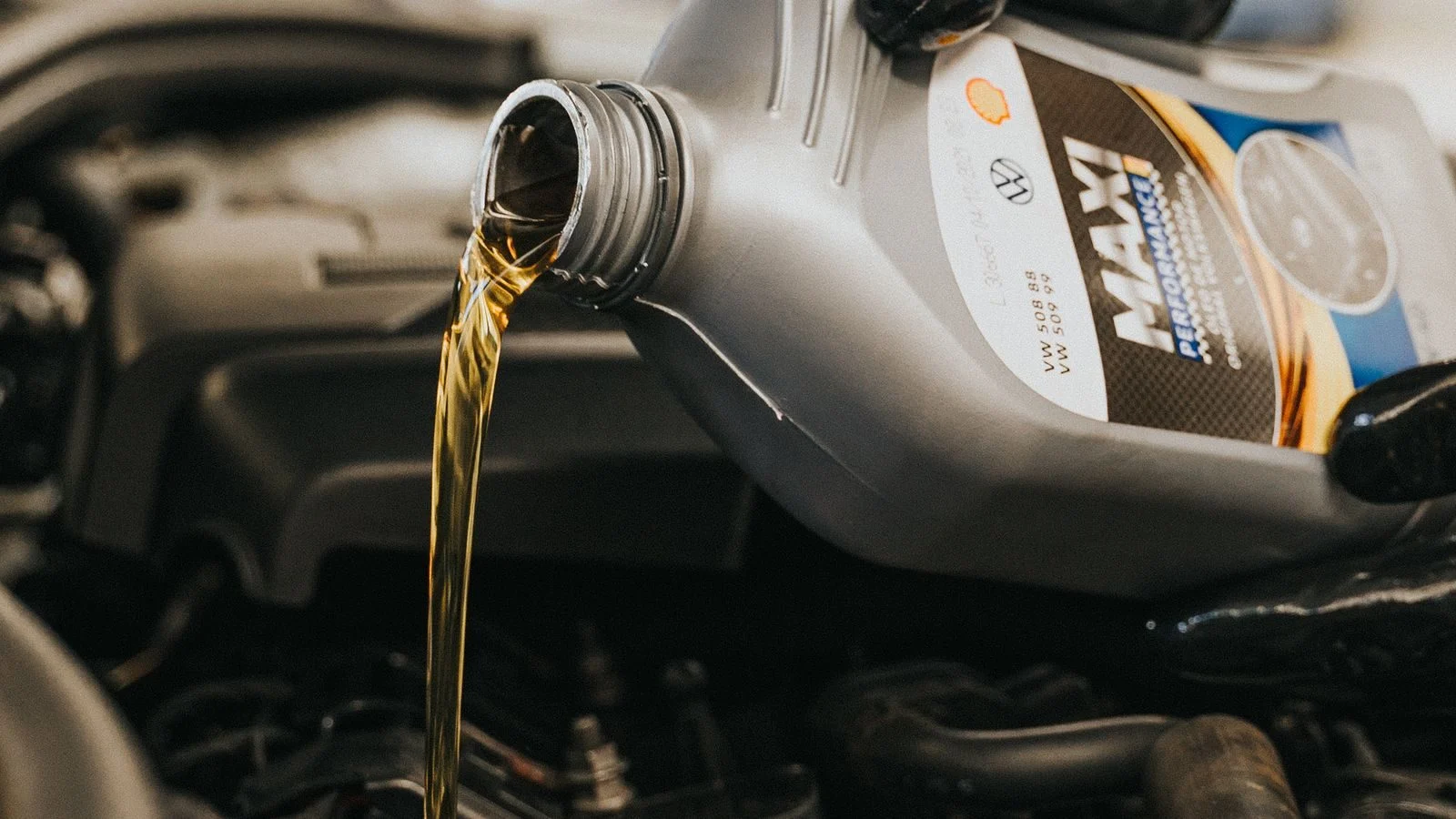
A new Champion ships without oil in the engine. It must be filled before the first start. Running an engine dry for even a few seconds can ruin it.
For the 3500-watt model, the manual gives an oil capacity of 0.6 US quart and recommends 10W-30.
- Put the generator on a level surface.
- Remove the oil fill cap and dipstick and wipe it clean.
- Add oil slowly through the funnel. Start with a little less than the full amount.
- Check the level as your manual describes, and top up until it reaches the full mark.
- Do not overfill. Too much oil causes smoke and can foul the spark plug.
- Refit the cap firmly.
Which oil in which weather
Champion’s manual has a temperature chart with several grades.
| Oil | When Champion lists it |
|---|---|
| 10W-30 | The recommended general-purpose grade |
| 5W-30 | An option for colder weather |
| 10W-40 | An option for hotter weather |
| Full synthetic 5W-30 | Helps starting below 41°F. Use only after the break-in period |
Champion says synthetic oil is fine after break-in, and it adds that synthetic oil does not extend the oil change interval.
Step 4: Add the Fuel
The manual is strict about gasoline, and for good reason. Fuel problems are the most common cause of generator trouble.
- Use clean, fresh, regular unleaded gasoline with a minimum octane rating of 87.
- No more than 10% ethanol. The manual says, in capital letters, not to use E15 or E85.
- Do not mix oil with the gasoline. This is a four-stroke engine.
- Fill it outdoors, with the engine off and cool.
- Pour from an approved container. The manual says not to pump fuel directly into the generator at a gas station.
- Leave at least a quarter of an inch at the top of the tank for expansion. Do not overfill.
The tank on the 3500-watt model holds 4.7 gallons. Champion lists up to 12 hours of run time at half load on a full tank.
Why ethanol matters
The manual explains the problem clearly. Ethanol blends absorb more water than plain gasoline. Over time the mixture can separate and leave water, or a watery sludge, in the tank, the fuel valve and the carburetor. Champion states that damage caused by fuel with more than 10% ethanol, by improperly stored gasoline or by the wrong stabilizer is not covered by the warranty.
Our guide to how long gasoline lasts explains how to store fuel safely.

Step 5: The First Start
The exact controls vary by model. The 3500-watt model in our example has a recoil start with Champion’s Cold Start feature. The order of steps below is the usual one for a pull-start Champion. Follow the starting page of your own manual.
- Unplug everything. The manual says never to start or stop the generator with devices plugged in.
- Check the oil level one more time.
- Turn the fuel valve on.
- Set the choke for a cold engine, as your manual shows.
- Turn the engine switch on.
- Pull the recoil cord slowly until you feel resistance, then pull firmly.
- Move the choke to the run position as the engine warms and smooths out.
- Let it run for a few minutes before you plug anything in.
If your model has electric start, the battery may need to be connected or charged first. Check the manual.
If it does not start
Stay calm and work through the list. The manual’s troubleshooting table names these causes: no fuel, the fuel valve closed, the engine switch off, a low oil level, a loose spark plug wire, a faulty plug, or a flooded engine. For a flooded engine, the manual says to let it stand for 10 minutes and try again.
Step 6: Break In the Engine
This is the step most owners skip, and it is the one that most affects engine life.
Champion’s manual sets out the break-in for this model:
- For the first 5 hours, keep the load at or below 50% of the running watts. On a 3,500-watt generator, that means 1,750 watts or less.
- Vary the load during that time. Do not run it at one steady load for hours.
- Change the oil after the first 5 hours.
The first oil change matters because a new engine sheds tiny metal particles as its parts bed in. Draining them out early protects the bearings and the cylinder.
Key insight: five gentle hours and one early oil change cost you almost nothing. Skipping them is the most common way to shorten the life of a new generator.
Step 7: Connect Your Loads the Right Way
Know your numbers
The 3500-watt model supplies 3,500 running watts and 4,375 starting watts, at 120 volts. The manual gives its rated current as 29.2 amps.
Add up the running watts of what you plug in, and keep the total under the running figure. Then check that the biggest motor can start. A refrigerator or a pump needs two to three times its running watts for a moment.
Know your outlets
Champion’s page lists three outlet types on this model.
| Outlet | Rating | Used for |
|---|---|---|
| 5-20R duplex | 120 volts, 20 amps | Ordinary household plugs |
| TT-30R | 120 volts, 30 amps | A 30-amp RV cord |
| L5-30R | 120 volts, 30 amps, locking | A locking generator cord |
This model is a 120-volt generator. It cannot run 240-volt appliances such as most well pumps, electric dryers or central air conditioners.
Add loads one at a time
- Start the generator with nothing connected.
- Plug in the largest motor first and let it reach speed.
- Add the next largest, and so on.
- Watch the display. Champion’s Intelligauge shows voltage, frequency and running hours. If the voltage sags, you have too much plugged in.
- Unplug everything before you shut down.
Use the right cords
This is general advice, not from Champion’s manual. Use outdoor-rated extension cords that are heavy enough for the load. A thin cord overheats and starves your appliance of voltage. For a 15-amp load, a 12-gauge cord is a sound choice for runs up to 50 feet. Check cords for damage before each use, and keep the connections out of puddles.
Powering house circuits
Never plug a generator into a wall outlet. That sends power back into the utility lines and can kill a line worker. To run hard-wired circuits, such as a furnace, you need a transfer switch or an interlock fitted by a licensed electrician. Our guide on how to connect a generator to your house explains the safe options.
Step 8: Shut Down Properly
The manual gives a simple order.
- Unplug all devices.
- Let the engine run with no load for several minutes. This lets it cool evenly.
- Turn the engine switch off.
- Turn the fuel valve off.
Champion adds a habit that prevents most carburetor trouble. It says it is advisable to always shut off the gasoline supply and run the engine to starvation after each use. In other words, close the fuel valve and let the engine run until it stops by itself. That leaves the carburetor empty.
The Maintenance Schedule
This table is the schedule from Champion’s manual for model 201286.
| When | What to do | Who |
|---|---|---|
| Every 8 hours, or each use | Check the oil level. Clean around the air intake and muffler | Owner |
| After the first 5 hours | Change the oil | Owner |
| Every 50 hours or yearly | Clean the air filter. Change the oil too if working under heavy load or in heat | Owner |
| Every 100 hours or yearly | Change the oil. Clean and adjust the spark plug. Clean the spark arrestor | Owner |
| Every 100 hours or yearly | Clean the fuel valve filter | Experienced owner or service center |
| Every 250 hours | Clean the combustion chamber. Check and adjust valve clearance | Experienced owner or service center |
| Every 3 years | Replace the fuel line | Experienced owner or service center |
For most home owners, “yearly” is the interval that applies. A generator used for two outages a year may only run 30 hours. Change the oil every year anyway. Oil ages even when the engine does not run.
Spark plug
The manual lists the original plug as F6RTC and gives NGK BPR6ES as a replacement, with a gap of 0.024 to 0.031 inch.
Spark arrestor
A screen in the muffler stops sparks leaving the exhaust. The manual notes that a spark arrestor is required on National Forest land and on forest, brush and grass land in California. Clean it on schedule. A clogged screen costs you power.
Cleaning
Wipe the generator with a damp cloth. Use a soft brush for dirt and oil, and low-pressure air, at about 25 PSI, to blow out debris. Do not hose it down.
Our generator maintenance checklist covers the general routine for any brand.
Using It at Altitude
Engines make less power in thin air. Champion’s manual says output drops by about 3.5% for every 1,000 feet above sea level. At 5,000 feet, a 3,500-watt generator makes roughly 2,900 watts.
Champion offers a high-altitude main jet through its technical support, for use between 3,281 and 9,843 feet. The manual warns that running an altitude jet at lower elevations can damage the engine, so change back if you move the generator.
Storage: Short, Medium and Long
The manual splits storage into three cases. This is the part that decides whether the generator starts next time.
| How long | What Champion says to do |
|---|---|
| Up to 30 days | Run the engine with the fuel valve off until it stops. Gasoline can gum up the carburetor if it sits for more than about four weeks |
| 30 days to 1 year | Add a stabilizer made for ethanol blends, run for 10 minutes, then drain the carburetor through its drain bolt or run it dry. Put a tablespoon of oil in the cylinder, pull the cord slowly and refit the plug. Clean it and store it cool and dry |
| More than 1 year | Drain the tank and the carburetor completely |
The manual also says what happens if you get it wrong. If the generator is stored for more than 30 days with ethanol fuel and without these steps, all the fuel must be drained and the carburetor must be cleaned.
Our guide to how to store a generator has more detail.
Troubleshooting Quick Reference
| Problem | Possible cause | Fix |
|---|---|---|
| Will not start | No fuel, or fuel valve closed | Add fuel. Open the valve |
| Will not start | Engine switch off | Switch it on |
| Will not start | Low oil | Fill to the mark, on a level surface |
| Will not start | Spark plug wire loose, or plug faulty | Reattach. Clean, gap or replace the plug |
| Will not start | Old fuel, or water in the fuel | Drain and refill with fresh gasoline |
| Will not start | Flooded | Let it stand for 10 minutes |
| Shut down, red CO Shield light | Carbon monoxide build-up | Move to open air, exhaust pointing away |
| Yellow CO Shield light | System fault | Contact Champion support |
| Breaker keeps tripping | Overload, or a faulty cord or device | Reduce the load. Replace the cord or device. Let the breaker cool for 5 minutes |
Our generator won’t start checklist goes through each cause step by step.
Warranty and Support: The Rules to Know
Champion’s manual for this model sets out a 3-year limited warranty with free lifetime technical support. The fine print is worth knowing in advance.
- Three years for home use. Parts and labor, from the date of purchase, for the original buyer.
- 270 days for commercial or industrial use.
- Not transferable. It covers the original purchaser only.
- Register within 10 days, with a copy of the receipt.
- Do not return the generator to the store. The manual says to contact Champion’s technical service first.
- Get approval before any repair. Repairs done without authorization, or at an unauthorized shop, are not covered.
- Exclusions. Normal wear, wear items such as filters and o-rings, batteries, non-original parts and use as a prime power source are excluded. So is fuel damage, as noted above.
- Shipping. Transport costs are the buyer’s responsibility.
Champion’s technical service line is 1-877-338-0999.
Useful Accessories for a Champion Portable
We have not tested these products. Details come from the sellers’ listings.
Same class, in stock
Champion 3650-Watt RV Ready Portable Generator with CO Shield
A close relative of the 3500-watt model in this guide. The listing gives 4,550 starting watts, a 224 cc engine, a recoil start with Cold Start and a weight of 110 pounds.
- Running / starting watts3,650 / 4,550
- Engine224 cc
- StartRecoil, with Cold Start
- RV useListed to start and run a 15,000 BTU RV air conditioner
- SafetyCO Shield
- Weight110 lb
- Why it works: it is a simple, proven layout with an RV outlet and a carbon monoxide shutoff.
- Who it is best for: RV owners, and homes that need a refrigerator, a furnace fan, lights and electronics.
- What it solves: short outages and weekends without hookups, at a modest cost.
- Keep in mind: it is a 120-volt, open-frame generator. It is louder than an inverter and cannot run 240-volt appliances. Everything in this guide about oil, break-in and storage applies, but check its own manual for capacities.
As an Amazon Associate we earn from qualifying purchases. Details come from the Amazon listing, checked October 2026.
Run it in bad weather
Champion 100376 Storm Shield Severe Weather Portable Generator Cover by GenTent
A cover made to stay on while the generator runs. The listing says it fits open-frame generators of 4,000 to 12,500 starting watts and has a refueling door.
- Fits4,000 to 12,500 starting watt open-frame generators
- UseWhile the generator is running
- Wind on listingUp to 70 mph
- Rain on listingUp to 12 inches a day
- Snow on listingUp to 18 inches a day
- AccessRefueling door, electrical panel apron
- Why it works: it keeps rain and snow off the outlets and the engine while letting cooling air through.
- Who it is best for: anyone who expects to run a generator in a storm, which is when most outages happen.
- What it solves: the choice between running a wet generator and running it under a roof, which is unsafe.
- Keep in mind: a cover does not make it safe to run a generator in a garage or on a porch. Check that your model’s starting watts fall within the listed range.
As an Amazon Associate we earn from qualifying purchases. Details come from the Amazon listing, checked October 2026.
Storage essential
STA-BIL Storage Fuel Stabilizer, 32 oz
A stabilizer for stored gasoline. The maker says it keeps fuel fresh for up to 24 months and is suitable for ethanol and non-ethanol fuels.
- Size32 fluid ounces
- Dose1 oz per 2.5 gallons
- Maker’s claimFresh for up to 24 months
- FuelsEthanol blends and non-ethanol gasoline
- After addingRun the engine for 5 minutes
- Stock on listingIn stock when checked
- Why it works: Champion’s manual calls for a stabilizer formulated for ethanol blends for storage of 30 days to a year.
- Who it is best for: every owner who keeps gasoline in a can or in the tank.
- What it solves: a gummed carburetor, and fuel damage that the warranty does not cover.
- Keep in mind: it must go into fresh fuel. It cannot restore gasoline that has already gone bad. The 24-month figure is the maker’s claim.
As an Amazon Associate we earn from qualifying purchases. Details come from the Amazon listing, checked October 2026.
Heavy-duty cord
Southwire 12/3 Outdoor Extension Cord, 50 ft, with Lighted End
A 12-gauge, three-wire outdoor cord. The listing gives a rating of 15 amps and 1,875 watts, and a lighted end that shows when power is on.
- Length50 feet
- Wire12 gauge, 3 conductor
- Rating15 amps, 1,875 watts
- JacketSJTW, outdoor
- FeatureLighted end
- ListingUL and cUL listed
- Why it works: thick wire keeps the voltage up over distance, so motors start properly.
- Who it is best for: anyone running a refrigerator, a freezer or a sump pump from a generator kept 20 feet or more from the house.
- What it solves: overheated thin cords and appliances that struggle to start.
- Keep in mind: one cord carries up to 15 amps. Use one cord for each large appliance, and do not link cords together.
As an Amazon Associate we earn from qualifying purchases. Details come from the Amazon listing, checked October 2026.
Every home needs one
Kidde Carbon Monoxide Alarm with 10-Year Sealed Battery and Digital Display
A battery-powered carbon monoxide alarm with a digital display. It keeps working in a power cut, which is exactly when a generator is running.
- Power10-year sealed lithium battery
- DisplayDigital, updates every 15 seconds
- Alarm85 dB
- SensorElectrochemical
- MemoryPeak level
- BrandKidde
- Why it works: it warns you indoors, where CO Shield on the generator cannot.
- Who it is best for: every home with a generator.
- What it solves: exhaust drifting in through a window or a door.
- Keep in mind: an alarm is a backup to correct placement. If it sounds, get everyone outside and call for help.
As an Amazon Associate we earn from qualifying purchases. Details come from the Amazon listing, checked October 2026.
To choose a model, see our guides to Champion portable generators and Champion generators. For gasoline-only models, see portable gas Champion generators.
Common Mistakes New Champion Owners Make (and the Fix)
Pro Tips From the Manual
- Keep the receipt with the manual. Proof of purchase is required for warranty service.
- Write the purchase date on the generator with a paint pen.
- Use the hour meter. The Intelligauge counts running hours, so you know when service is due.
- Buy oil when you buy the generator. You need a second fill after only 5 hours.
- Date your fuel cans. Rotate the gasoline into your car every few months and refill with fresh.
- Test it every month or two for 15 to 20 minutes with a load.
- Keep a spare spark plug of the type your manual lists.
Real-Life Scenarios: Doing It Right
These are typical situations. They are examples, not reports from real customers.
📦 Day one with a new generator
It has just arrived, and a storm is forecast for the weekend.
Add oil and fuel today, start it outdoors and run light loads for a couple of hours. You begin the break-in and learn the controls before you need them.
Lesson: do not wait for the outage
🌧️ The storm at 2 am
The power is out and it is raining hard.
Wheel the generator into the open, fit a running cover, start it with nothing plugged in and add loads one by one.
Lesson: open air, even in rain
🍂 Putting it away for winter
The season is over and it has run 40 hours.
Change the oil, stabilize or drain the fuel, run the carburetor dry and store it clean and dry.
Lesson: ten minutes now saves a carburetor
Champion Portable Generator: FAQ
Does a Champion generator come with oil?
Champion's product page for the 3500-watt model says engine oil and a funnel are included in the box. The oil is not in the engine. You must add it before the first start.
What oil does a Champion portable generator use?
Champion's manual for the 3500-watt model recommends 10W-30 and gives a capacity of 0.6 quart. Its temperature chart also lists 5W-30, 10W-40 and full synthetic 5W-30. Check the manual for your own model.
How do you break in a Champion generator?
For the first 5 hours, keep the load at or below half the running watts and vary it. Then change the oil. After that, use it normally.
How often should I change the oil in a Champion generator?
After the first 5 hours, then every 100 hours or once a year. Champion says to change it more often, every 50 hours, under heavy load or in hot conditions.
What gas should I use in a Champion generator?
Fresh regular unleaded gasoline with a minimum of 87 octane and no more than 10% ethanol. Champion says not to use E15 or E85, and not to mix oil with the gasoline.
How long is the warranty on a Champion portable generator?
Three years of limited coverage for home use, and 270 days for commercial use, for the original buyer. Register within 10 days with your receipt, and contact Champion's technical service before any repair.
Your Champion Owner’s Checklist
- Photograph the data label and keep the receipt.
- Register within 10 days.
- Choose an outdoor spot at least 20 feet from the house.
- Add oil to the full mark before the first start.
- Fill with fresh 87 octane gasoline, 10% ethanol or less.
- Start with nothing plugged in.
- Run at half load or less for the first 5 hours.
- Change the oil after 5 hours.
- Add loads one at a time, largest motor first.
- Unplug, cool down, switch off, close the fuel valve.
- Run the carburetor dry before storage.
- Change the oil every 100 hours or yearly.
The bottom line
A Champion portable generator rewards a careful first week. Fill the oil, respect the break-in, use fresh fuel and never store it with gasoline in the carburetor. Do that, and the manual’s schedule will take care of the rest.
As an Amazon Associate we earn from qualifying purchases.
Sources: Champion Power Equipment owner’s manual and product page for the 3500-watt generator, model 201286 (championpowerequipment.com); US safety agency guidance on generator placement; Amazon listings for the Champion 3650-Watt RV Ready generator, Champion Storm Shield cover, STA-BIL Storage, Southwire extension cord and Kidde carbon monoxide alarm. All checked October 2026.