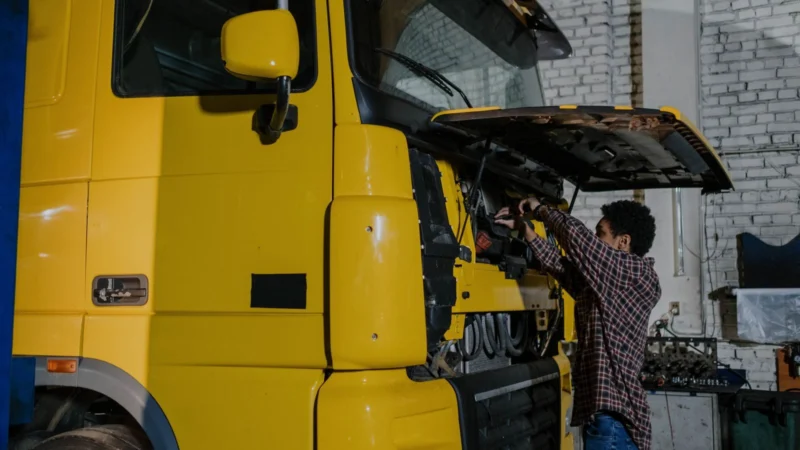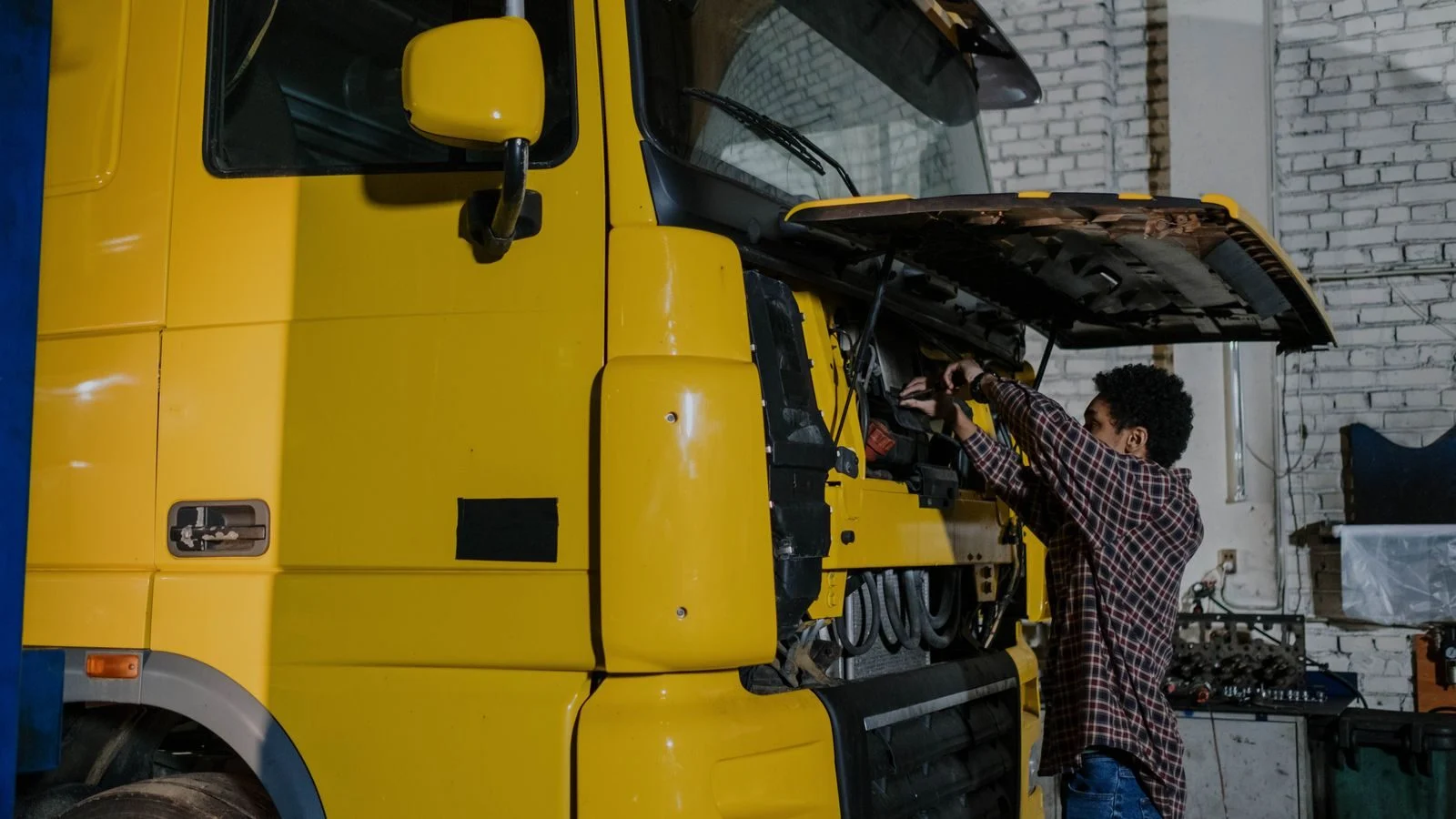
A dump truck is a truck with an open box bed that tilts to unload loose material such as gravel, sand, soil and asphalt. A hydraulic cylinder lifts the front of the bed, the tailgate swings open and the load slides out. It is a simple idea, and it moves most of the raw material used in construction and landscaping.
Buying, hiring or driving one is less simple. Dump trucks range from one-ton pickups with a small dump body to tri-axle haulers and off-road giants. Each size has its own payload, its own license rules and its own costs.
This guide explains the main types of dump trucks, how to work out what one can legally carry, which commercial driver’s license class applies, what OSHA and FMCSA require, and what to check on a used truck. License and inspection rules are quoted from federal regulations. We have not driven or tested these trucks.
Dump trucks at a glance
Payload is set by weight, the license by the weight rating
License thresholds are from 49 CFR 383.91. Axle limits are the federal Interstate limits.
Quick answer
A dump truck carries loose material and tips its bed to unload. Small dump trucks with a weight rating under 26,001 pounds can be driven without a commercial driver’s license in most cases. Single trucks rated at 26,001 pounds or more need a Class B CDL, and a truck pulling a heavy trailer needs a Class A. Payload is limited by weight, not by how full the bed looks. Check the truck before every shift, never raise the bed on uneven ground or near power lines, and keep everyone clear when you dump.
How we put this guide together
We have not driven or tested dump trucks. License groups come from federal regulation 49 CFR 383.91. Job-site rules are quoted from OSHA standard 29 CFR 1926.601. Inspection rules come from FMCSA regulations in 49 CFR Part 396. Capacity and material weight figures are typical industry ranges and are labeled as such. Product details come from Amazon listings. All checked in October 2026. State rules differ, so confirm the details with your state’s licensing and transportation agencies.
In this guide
- What Is a Dump Truck?
- Types of Dump Trucks
- Sizes, Weight Ratings and Truck Classes
- Which License Do You Need?
- Safety Rules: OSHA and FMCSA
- The Pre-Shift Check
- Maintenance: What a Dump Truck Needs
- Buy, Rent or Hire a Hauler?
- Buying a Used Dump Truck
- Useful Gear for Dump Truck Owners and Drivers
- Common Dump Truck Mistakes (and the Fix)
- Pro Tips From Drivers and Fleet Owners
- Real-Life Scenarios: What Would You Choose?
- Dump Trucks: FAQ
- Your Dump Truck Checklist
What Is a Dump Truck?
A dump truck has three main systems on top of an ordinary truck chassis.
- The dump body. A steel or aluminum box, also called the bed or the box. The floor and sides are built to take impact and abrasion.
- The hoist. One or more hydraulic cylinders that lift the front of the body. On most trucks, a pump driven from the transmission through a power take-off supplies the pressure.
- The tailgate. Hinged at the top on most trucks. It is unlatched from the cab, so it swings open as the load slides out. Many tailgates also open from the bottom hinge for spreading.
Almost every dump truck above the smallest sizes has a diesel engine. Diesels give the low-speed pulling power and the long service life that heavy hauling needs.
Types of Dump Trucks
Standard dump truck
This is the truck most people picture. The body is mounted on a rigid frame behind the cab. Standard dump trucks are named by their rear axles: a single axle, a tandem with two rear axles, or a tri-axle with three. More axles spread the load, so the truck can legally carry more.
One-ton and medium-duty dump trucks
These are small dump bodies on heavy pickup or medium truck chassis. Landscapers, small contractors and farms use them. Many are rated under 26,001 pounds, which keeps them outside CDL rules in most cases.
Articulated dump truck
An articulated dump truck has a hinge between the cab and the body, and it steers by bending in the middle. All its wheels are driven. It is an off-road machine, built for mud, steep grades and rough sites where a road truck would get stuck.
Transfer dump and truck and pup
A transfer dump is a standard truck that pulls a trailer carrying a second box of material. The second box rolls forward into the empty truck body to be dumped. A truck and pup is similar, but the trailer has its own hoist. Both carry more per trip while staying within weight limits.
Super dump
A super dump is a standard truck with a liftable trailing axle that stretches the wheelbase. A longer wheelbase lets the truck carry more weight under bridge formula rules.
Side dump and bottom dump
A side dump trailer tips its tub to the left or right. It unloads quickly and is less likely to tip over than an end dump. A bottom dump, or belly dump, opens gates under the trailer and lays material in a long, even row. It is common in road building.
Semi end dump
This is a tractor pulling a long dump trailer. It carries large loads and dumps them in a pile, but the tall raised trailer needs firm, level ground.
Rigid haul truck
These are the giant off-road trucks used in mines and quarries. They never drive on public roads.
| Type | Where it works | Strength | Watch out for |
|---|---|---|---|
| Standard dump | Roads and job sites | Simple, versatile, turns tightly | Payload limited by axles |
| One-ton or medium-duty | Residential and light commercial | Often no CDL needed | Small payload |
| Articulated | Off-road sites | Works in mud and on steep ground | Not for highways |
| Transfer or truck and pup | Highways | More payload per trip | Needs room and skill to operate |
| Super dump | Highways | High legal payload on one truck | Extra axle to maintain |
| Side dump | Highways and sites | Fast unloading, stable | Needs room beside the truck |
| Bottom dump | Road building | Lays material in a row | Cannot dump in a pile |
| Semi end dump | Highways and sites | Large loads | Higher tip-over risk when raised |
Sizes, Weight Ratings and Truck Classes
Every truck has a gross vehicle weight rating, or GVWR. This is the most the truck may weigh when loaded, including the truck itself, the fuel, the driver and the cargo. The maker sets it, and you will find it on a label inside the driver’s door.
Trucks are grouped into classes by GVWR.
| Class | GVWR | Typical dump truck |
|---|---|---|
| Class 3 | 10,001 to 14,000 lb | One-ton dump |
| Class 4 | 14,001 to 16,000 lb | Light landscaper’s dump |
| Class 5 | 16,001 to 19,500 lb | Contractor’s dump |
| Class 6 | 19,501 to 26,000 lb | Largest trucks below the CDL line |
| Class 7 | 26,001 to 33,000 lb | Single-axle dump |
| Class 8 | 33,001 lb and over | Tandem and tri-axle dumps |
Payload: the number that matters
Payload is what the truck can carry. It is the GVWR minus the truck’s empty weight. A truck rated at 26,000 pounds that weighs 12,000 pounds empty can carry 14,000 pounds, or 7 tons.
Here is the point that catches people. Dump trucks are limited by weight, not by volume. A body that holds 10 cubic yards can be filled to the top with mulch and still be far under its limit. Fill it with wet gravel and it is badly overloaded.
| Material | Typical weight per cubic yard | What it means |
|---|---|---|
| Mulch or wood chips | About 500 to 800 lb | You run out of room before weight |
| Dry topsoil | About 2,000 to 2,200 lb | Roughly one ton per yard |
| Sand | About 2,600 to 3,000 lb | Heavy, and heavier when wet |
| Gravel or crushed stone | About 2,800 to 3,000 lb | About 1.4 to 1.5 tons per yard |
| Broken concrete | Varies widely | Weigh it. Do not guess |
As a rough guide, tandem-axle dump trucks commonly carry bodies of around 10 to 16 cubic yards, and tri-axles a little more. What they can legally haul depends on the material, the truck’s ratings and the roads they travel.
Federal weight limits
On the Interstate system, federal limits are 20,000 pounds on a single axle, 34,000 pounds on a tandem axle and 80,000 pounds gross. A bridge formula also limits weight according to the number of axles and the distance between them. States set their own limits on other roads, and many post lower limits on local roads and bridges, above all in spring.
Tip: load by the scale, not by eye
If you buy material by the ton, the scale ticket tells you what you are carrying. If you buy by the yard, multiply the yards by the weight per yard before you load. An overloaded truck takes longer to stop, wears out faster and can earn a heavy fine.
Which License Do You Need?
Federal regulation 49 CFR 383.91 sets the commercial driver’s license groups. States issue the licenses and follow these groups.
| License | Covers | Dump truck example |
|---|---|---|
| No CDL | Vehicles under the CDL thresholds, in most cases | A one-ton dump rated under 26,001 lb |
| Class B | A single vehicle with a GVWR of 26,001 lb or more, or one towing a vehicle of 10,000 lb GVWR or less | Tandem or tri-axle dump truck |
| Class A | A combination with a gross combination weight rating of 26,001 lb or more, when the towed unit is rated over 10,000 lb | Transfer dump, truck and pup, semi end dump |
A few points to keep in mind.
- The rating counts, not the load. A truck with a GVWR of 33,000 pounds needs a Class B driver even when it is empty.
- Air brakes need the right qualification. Most heavy dump trucks have air brakes. A driver who tests in a vehicle without them gets a restriction on the license.
- Lighter trucks still have rules. A commercial truck over 10,000 pounds used in interstate business comes under FMCSA safety rules, even without a CDL.
- States differ. Some have extra rules for farm use, intrastate work and vehicle registration. Ask your state licensing agency.
Safety Rules: OSHA and FMCSA
Dump trucks are covered by two sets of federal rules. OSHA covers them on construction sites. FMCSA covers commercial trucks on public roads.
OSHA on the job site
OSHA standard 29 CFR 1926.601 covers motor vehicles that operate on an off-highway job site. Several parts deal directly with dump trucks.
What OSHA 1926.601 says about dump trucks
Trucks with dump bodies must have a positive means of support, permanently attached and capable of being locked in position, to stop the body lowering by accident during maintenance or inspection. Hoist and dump levers must have a latch or similar device that prevents accidental starting or tripping. Tailgate trip handles must be arranged so that the operator is in the clear when dumping. A vehicle with an obstructed view to the rear may not be used unless it has a reverse signal alarm that can be heard above the surrounding noise, or an observer signals that it is safe to back up.
The same standard adds two more points. Haulage vehicles loaded by cranes, power shovels or loaders must have a cab shield or canopy that protects the operator from shifting or falling material. And all vehicles in use must be checked at the beginning of each shift, with defects corrected before the vehicle goes into service.
FMCSA on the road
For commercial trucks on public roads, 49 CFR Part 396 sets the inspection rules.
- Systematic maintenance. Carriers must systematically inspect, repair and maintain their vehicles.
- Daily driver reports. Drivers must report defects found at the end of each day’s work, and must be satisfied the truck is safe before they drive it.
- Annual inspection. Every commercial motor vehicle must pass a periodic inspection at least once every 12 months, with proof kept on the vehicle.
Our fleet maintenance schedule for diesel trucks explains these rules and how to build a service calendar around them.
The dangers that are specific to dump trucks
- Tip-overs while dumping. A raised body is top-heavy. Soft or sloping ground, a flat tire or a load that sticks on one side can pull the truck over. Dump only on firm, level ground.
- Overhead power lines. A raised body can reach a line. Look up before every dump.
- A raised body on the road. Driving with the body up has brought down bridges and wires. Lower it fully before you move off.
- Working under a raised body. Never go under it unless the body prop is in place and locked.
- Backing. Dump trucks have large blind spots. Use a spotter, and stop if you lose sight of them.
- Sticking loads. Wet clay and frozen material can hang in the body. Do not jerk the truck to free it, and never climb in to dig it out with the body raised.
- Unsecured loads. State laws require loads to be covered or secured so that nothing escapes. A tarp keeps stones off the windshields behind you.
Our equipment safety page covers the basics that apply to every engine-powered machine.
The Pre-Shift Check
OSHA’s standard names the items to check at the start of each shift. This list follows it, with a few dump-specific additions.
- Service brakes, including trailer brake connections.
- Parking brake and emergency brakes.
- Tires: pressure, tread and damage. Check between dual wheels for trapped rocks.
- Horn.
- Steering mechanism.
- Coupling devices, if you pull a trailer.
- Seat belts.
- Operating controls and safety devices.
- Lights, reflectors, wipers and defrosters.
- Fire extinguisher and warning triangles.
- Reverse alarm.
- Hoist controls and the lever latch.
- Hydraulic hoses and the hoist cylinder, for leaks.
- Tailgate latches, pins and chains.
- Tarp system.
- Fluid levels and any leaks under the truck.
Maintenance: What a Dump Truck Needs
A dump truck lives a hard life. It carries heavy loads over rough ground and stops and starts all day.
- Grease the pivots. The body hinge pins, the hoist cylinder mounts and the tailgate pins need grease on the schedule in the manual.
- Look after the hydraulics. Check the fluid level with the body down. Look for worn hoses and weeping fittings.
- Check the brakes often. Heavy loads and short trips are hard on brakes. On air brakes, drain the tanks as the maker advises.
- Watch the tires. Federal rules set a minimum tread depth of 4/32 of an inch on steer tires and 2/32 on others. Remove rocks from between dual wheels.
- Service the engine by hours as well as miles. Dump trucks idle and run the PTO a lot, so engine hours rise faster than the odometer.
- Keep the body clean. Material left in the body holds water, adds weight and causes rust.
- Inspect the frame. Look for cracks around the hoist mounts and the hinge.
Diesel engines reward clean oil, clean fuel and clean air. Our diesel engine maintenance schedule gives the intervals, and our free Fleet Maintenance Tracker helps you log every truck’s services.

Buy, Rent or Hire a Hauler?
| Option | Best for | Advantages | Drawbacks |
|---|---|---|---|
| Order delivered material | Homeowners and one-off jobs | No truck, license or insurance needed | You pay for each load |
| Rent a small dump truck or trailer | Weekend and short projects | Low commitment | Small payload, limited availability |
| Hire a hauler by the hour or load | Contractors with uneven workloads | Scale up and down easily | Less control over timing |
| Buy a truck | Businesses with steady hauling work | Lower cost per load when busy | Purchase, insurance, upkeep and a licensed driver |
For a homeowner, the answer is almost always delivery. A few loads of gravel a year do not justify a truck.
For a business, do the sums on a full year. Count the truck payment, insurance, registration, fuel, tires, maintenance, the driver’s wages and the days the truck will sit idle. Compare that with what you pay haulers now.
Buying a Used Dump Truck
A used dump truck can be good value, because the chassis often outlasts its first owner’s needs. Check these points.
- Read the GVWR and axle ratings on the door label. Make sure they suit your work and your license.
- Ask for maintenance records and the last annual inspection report.
- Look along the frame rails for cracks, bends and weld repairs, above all near the hoist and the hinge.
- Check the body floor and sides for thin, dented or patched steel.
- Raise the body fully on level ground. It should lift smoothly and hold. Check the cylinder for leaks.
- Check the body prop is fitted and works.
- Test the tailgate latches and the PTO.
- Start the engine cold. Watch the exhaust and listen for knocks.
- Check for warning lights and ask about the emissions system and any recent repairs to it.
- Drive it loaded if you can. Test the brakes, steering and transmission.
- Check tires, wheels, suspension and brake linings.
- Confirm the title is clear and the serial number matches the paperwork.
Have a diesel mechanic inspect any truck you are serious about. For a heavy truck, a scan of the engine’s stored fault codes is worth doing too. If the exhaust looks wrong, our guide to diesel engine smoke colors explains what each color means.
Useful Gear for Dump Truck Owners and Drivers
These items support the daily checks and the legal requirements. We have not tested them. Details are from the sellers’ listings.
Inspection record
J. J. Keller Detailed Driver’s Vehicle Inspection Report Book (1854)
A book of two-ply carbonless inspection reports. The listing says it has 31 sets, a checklist of vehicle parts and key regulations printed inside the cover.
- Sets31
- Format2-ply carbonless
- Size5.5 x 8.5 inches
- ChecklistTractor and trailer parts
- Regulations cited49 CFR 396.11 and 396.13
- Model1854
- Why it works: a printed checklist makes the daily report quick and gives the office a copy.
- Who it is best for: owner-operators and small fleets that keep paper records.
- What it solves: missing inspection reports when a truck is stopped or audited.
- Keep in mind: the form is laid out for a tractor and trailer. Add notes for the hoist, body and tailgate, which it does not list.
As an Amazon Associate we earn from qualifying purchases. Details come from the Amazon listing, checked October 2026.
Tire gauge for duals
Milton S-986 Straight Foot Dual Head Truck Tire Gauge
A long truck tire gauge with a dual head, made to reach the inner wheel of a dual pair. The listing gives a range of 10 to 160 PSI in 2-pound steps.
- Range10 to 160 PSI
- Steps2 lb
- Length13 1/4 inches
- HeadDual, straight foot
- BodyPlated brass tube
- Warranty1 year
- Why it works: the dual head reaches the valve on an inner wheel that an ordinary gauge cannot.
- Who it is best for: anyone who runs dual rear wheels.
- What it solves: an under-inflated inner tire, which is easy to miss and overheats under load.
- Keep in mind: it is a stick gauge, read by eye. Check it against a known gauge now and then.
As an Amazon Associate we earn from qualifying purchases. Details come from the Amazon listing, checked October 2026.
Roadside warning
CARTMAN Warning Triangles, 3-Pack, Foldable
A set of three reflective warning triangles in a case. The listing says they meet Federal Motor Vehicle Safety Standard 125 for warning devices.
- Pack3 triangles
- Size17 x 17 inches
- Standard on listingFMVSS 125
- BaseWeighted, rotating
- Weight each2.98 lb
- StorageFolding, with case
- Why it works: three triangles let you warn traffic at set distances behind and ahead of a stopped truck.
- Who it is best for: any commercial truck. Federal rules require commercial vehicles to carry warning devices.
- What it solves: a breakdown on the shoulder with nothing to warn approaching drivers.
- Keep in mind: learn the placement distances for your type of road before you need them, and check the set is complete at each inspection.
As an Amazon Associate we earn from qualifying purchases. Details come from the Amazon listing, checked October 2026.
Load cover
VEVOR Dump Truck Mesh Tarp, 7 x 18 ft
A PVC-coated mesh tarp with pockets at both ends for the tarp arm and bar. The listing describes double-stitched hems and brass grommets.
- Size7 x 18 feet
- MaterialPVC-coated mesh
- PocketsFront and back, 5.5 in
- GrommetsBrass
- HemsDouble stitched
- UseDump trucks and dump trailers
- Why it works: mesh lets air through, so it does not billow at speed, while still holding stones and debris in the body.
- Who it is best for: owners replacing a torn tarp on a truck or dump trailer of the right size.
- What it solves: fines for uncovered loads and damage claims from flying stones.
- Keep in mind: measure your body and your tarp system before you order. Mesh does not keep rain out, so use a solid tarp for loads that must stay dry.
As an Amazon Associate we earn from qualifying purchases. Details come from the Amazon listing, checked October 2026.
Reverse alarm
ECCO 575 Back-Up Alarm, 107 dB, 12 to 24 Volt
A replacement reverse alarm. The listing gives a sound level of 107 decibels, a 12 to 24 volt DC range and the SAE J994 Type B standard.
- Sound level107 dB
- Voltage12 to 24 V DC
- Current draw0.3 A
- Standard on listingSAE J994 Type B
- HousingFiberglass-reinforced nylon
- Warranty2 years
- Why it works: it sounds whenever reverse is selected, which warns people in the blind area behind the body.
- Who it is best for: owners whose alarm has failed or cannot be heard on a noisy site.
- What it solves: a truck that does not meet OSHA’s rule on reversing with an obstructed view.
- Keep in mind: OSHA requires an alarm that can be heard above the surrounding noise. Make sure this level suits your sites. An alarm does not replace a spotter.
As an Amazon Associate we earn from qualifying purchases. Details come from the Amazon listing, checked October 2026.
Common Dump Truck Mistakes (and the Fix)
Pro Tips From Drivers and Fleet Owners
- Spread the load evenly from side to side and front to back, so the axles share it.
- Keep the tailgate area clear. Stand well to the side when you release the gate.
- Dump with the truck and any trailer in a straight line.
- Wash out sticky material before it sets or freezes in the body.
- Use a body liner or a release agent for clay and asphalt, as the body maker advises.
- Track engine hours. Plan oil changes by hours when the truck idles a lot.
- Keep the scale tickets. They are your proof of legal loads.
Real-Life Scenarios: What Would You Choose?
These are typical situations. They are examples to help you decide, not reports from real customers.
🏡 The homeowner with a new driveway
You need 40 tons of gravel spread once.
Order it delivered. A supplier’s tandem truck can tailgate-spread it in a few loads, and you need no truck or license.
Choice: delivery
🌱 The landscaper
You haul mulch, soil and stone to homes every day, in loads of a few yards.
A one-ton or medium-duty dump under 26,001 pounds suits tight driveways and usually needs no CDL. Watch the weight with stone.
Choice: small dump truck
🏗️ The excavation contractor
You move hundreds of yards of fill each week between sites.
A tandem or tri-axle truck earns its keep here. You need a Class B driver, an inspection program and a plan for busy and slow months.
Choice: own a Class 8 dump
Dump Trucks: FAQ
How much can a dump truck carry?
It depends on the truck's weight ratings and the material. Payload is the gross vehicle weight rating minus the empty weight. As a rough guide, tandem-axle dump trucks often have bodies of about 10 to 16 cubic yards, but heavy material such as gravel, at around 1.4 to 1.5 tons per yard, reaches the weight limit before the body is full.
Do you need a CDL to drive a dump truck?
Under federal rules, a single vehicle with a GVWR of 26,001 pounds or more requires a Class B commercial driver's license. A combination rated at 26,001 pounds or more, with a towed unit over 10,000 pounds, requires a Class A. Smaller dump trucks below those ratings usually do not need a CDL. State rules can add requirements.
What is the difference between a tandem and a tri-axle dump truck?
A tandem has two rear axles. A tri-axle has three, often with one that lifts when it is not needed. The extra axle spreads the weight, so a tri-axle can legally carry a heavier load.
What does OSHA require on dump trucks?
OSHA standard 1926.601 requires a locking body support for maintenance work, a latch on hoist controls, tailgate handles arranged to keep the operator clear, seat belts, and a reverse alarm or an observer when the rear view is obstructed. Vehicles must be checked at the start of each shift.
How often should a dump truck be inspected?
Check it at the start of every shift. Commercial trucks on public roads also need a driver's report of any defects each day and a full periodic inspection at least once every 12 months under FMCSA rules.
Why do dump trucks tip over?
A raised body is top-heavy. Soft or uneven ground, a load that sticks on one side, a flat tire, wind or a truck and trailer that are not in a straight line can all pull it over. Dump on firm, level ground and keep people well away.
Your Dump Truck Checklist
- Decide whether you need to own a truck or can use delivery or a hauler.
- Choose the type and axle setup for your material and roads.
- Read the GVWR and axle ratings on the door label.
- Work out payload by weight, not by volume.
- Confirm the license class you need with your state agency.
- Check the truck at the start of every shift.
- Keep inspection reports and scale tickets.
- Dump only on firm, level ground, clear of overhead lines.
- Lower the body before you drive away.
- Use the body prop for any work under the body.
- Cover every loose load.
The bottom line
The right dump truck is the smallest one that carries your loads legally. Know the weight rating, know the license it needs, check it every shift, and treat a raised body with respect.
As an Amazon Associate we earn from qualifying purchases.
Sources: 49 CFR 383.91 (commercial motor vehicle groups); OSHA standard 29 CFR 1926.601 (motor vehicles); FMCSA regulations in 49 CFR Part 396 (inspection, repair and maintenance) and Part 393 (tires and warning devices); federal Interstate weight limits; typical industry figures for body sizes and material weights; Amazon listings for the products named in this guide. All checked October 2026.