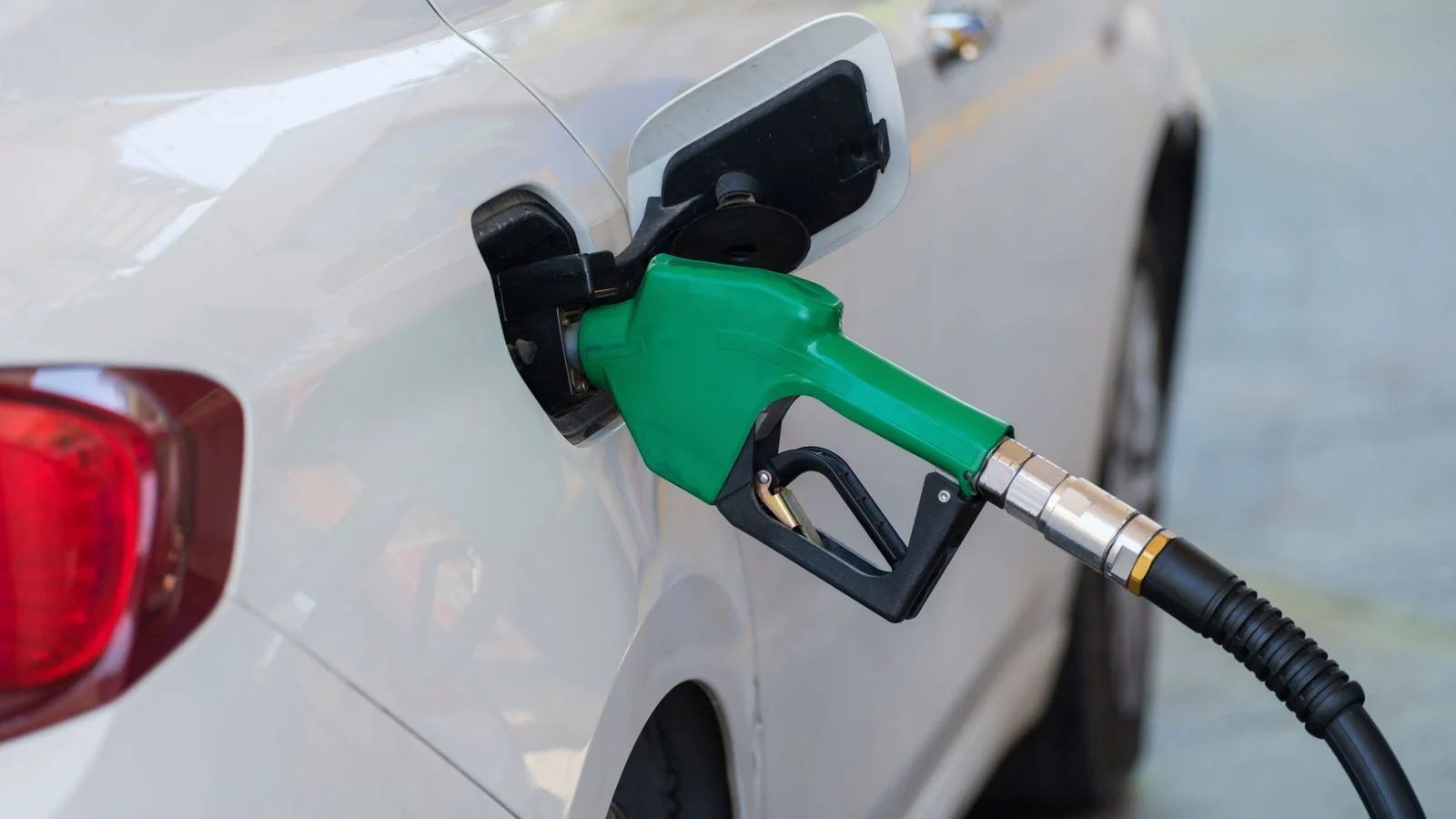
Portable gas Champion generators are the simplest and cheapest way into the brand, and they deliver full rated power on the fuel you can buy at any station. The trade-off is the gasoline itself. It goes stale, it needs careful storage, and a big generator can drink a lot of it.
This guide covers Champion’s gasoline-only portables from end to end. You will see the lineup by size, how long each one runs on a tank, exactly which gasoline Champion asks for, and how to store it so the engine starts next time.
Every figure comes from Champion’s website, a current Champion operator’s manual or a current Amazon listing. We have not tested these generators ourselves.
Champion gasoline portables at a glance
From 1,200 to 13,500 running watts on regular unleaded
Lineup data comes from Champion’s official website. Fuel and storage rules come from the current operator’s manual for Champion’s 3500W Generator. All checked in October 2026.
Quick answer
Champion sells gasoline-only portables from a 1,200-watt open-frame unit to a 13,500-watt electric-start model, plus gasoline inverters from 2,000 to 11,000 starting watts. Its manual asks for fresh regular unleaded with an octane rating of at least 87 and no more than 10% ethanol. Choose gasoline-only if you want the lowest cost and use the generator often enough to keep the fuel fresh. If it will sit for months, a Dual Fuel model that also runs on propane is easier to live with.
How we put this guide together
We have not tested these generators. Model names, wattages, tank sizes, run times and noise levels come from Champion’s official product pages. Fuel, break-in, storage and maintenance details come from Champion’s operator’s manual for model 201286, the 3500W Generator. Other Champion models can differ, so always follow the manual for your own machine. Product box details come from current Amazon listings. We do not show prices or star ratings.
In this guide
- What “Gas” Means in This Guide
- Champion’s Gasoline-Only Portable Lineup
- Gasoline Only or Dual Fuel: Which Champion Should You Buy?
- How Much Gasoline Will a Champion Generator Use?
- The Right Gasoline for a Champion Generator
- Four Portable Gas Champion Generators Worth a Look
- Storing a Gasoline Champion the Right Way
- Break-In, Oil and Maintenance
- Altitude, Cold and Heat
- CO Shield and Safe Operation
- If a Gasoline Champion Will Not Start
- Common Mistakes With a Gasoline Champion (and the Fix)
- Pro Tips for Gasoline Owners
- Real-Life Scenarios: Is Gasoline Right for You?
- Portable Gas Champion Generators: FAQ
- Your Gasoline Champion Checklist
What “Gas” Means in This Guide
In the United States, a “gas generator” nearly always means a gasoline generator. That is how we use the word here.
It is worth being clear, because Champion also sells portables that burn two other gases:
- Propane, also called LP gas, on its Dual Fuel and Tri Fuel models.
- Natural gas, from a home gas line, on its Tri Fuel models.
If you came here looking for those, read our guide to dual-fuel generators instead. Everything below is about gasoline.
Champion’s Gasoline-Only Portable Lineup
Champion’s website names its open-frame generators by running watts. The starting watts are higher, and Amazon usually puts the starting figure in the title. The table shows both so you can match them up.
Conventional open-frame gasoline generators
| Model on Champion’s site | Starting / running watts | Engine | Fuel tank | Run time | Noise |
|---|---|---|---|---|---|
| 1200W Generator | 1,500 / 1,200 | 79 cc | 1.46 gal | 10 hours | 65 dB(A) |
| 3500W Generator | 4,375 / 3,500 | 212 cc | 4.7 gal | 12 hours | 68 dB(A) |
| 3650W Generator | 4,550 / 3,650 | 224 cc | 4.7 gal | 14 hours | 68 dB(A) |
| 5500W Generator | 6,875 / 5,500 | 389 cc | 7.7 gal | 11 hours | 74 dB(A) |
| 7500W Electric Start Generator | 9,375 / 7,500 | 420 cc | 7.7 gal | 10 hours | 74 dB(A) |
| 9200W Electric Start Generator | 11,500 / 9,200 | 459 cc | 7.7 gal | 10 hours | 74 dB(A) |
| 10000W Electric Start Generator | 12,500 / 10,000 | 500 cc | 7.7 gal | 8 hours | 74 dB(A) |
| 12,000W Electric Start Generator | 15,000 / 12,000 | 717 cc | 11 gal | 9 hours | 78 dB(A) |
| 13,500W Electric Start Generator | 16,875 / 13,500 | 739 cc | 11 gal | 8 hours | 79 dB(A) |
Gasoline inverter generators
Inverters are quieter and make cleaner power for electronics. Champion names them by starting watts, and it quotes their run times at a lighter load.
| Model on Champion’s site | Starting / running watts | Engine | Fuel tank | Run time | Noise |
|---|---|---|---|---|---|
| 2000W Inverter | 2,000 / 1,600 | 80 cc | 1.1 gal | 11 hours | 53 dB(A) |
| 2500W Inverter | 2,500 / 1,850 | 80 cc | 1.1 gal | 11.5 hours | 53 dB(A) |
| 4000W Inverter | 4,000 / 3,000 | 149 cc | 1.54 gal | 10 hours | 64 dB(A) |
| 4500W Inverter | 4,500 / 3,500 | 212 cc | 2.3 gal | 14 hours | 61 dB(A) |
| 8500W Electric Start Inverter | 8,500 / 7,000 | 420 cc | 5.3 gal | 14 hours | 64 dB(A) |
| 11,000W Wireless Start Inverter | 11,000 / 9,000 | 459 cc | 6.1 gal | 15 hours | 64 dB(A) |
Do not compare the two run-time columns
The open-frame figures are at 50% load. The inverter figures are at 25% load. An inverter that lists 14 hours is not being tested as hard as an open-frame generator that lists 10. Compare inverters with inverters, and open-frame models with open-frame models.
Gasoline Only or Dual Fuel: Which Champion Should You Buy?
Most Champion sizes come in a gasoline-only version and a Dual Fuel version. Here is how they differ.
| Point | Gasoline only | Dual Fuel (gasoline or propane) |
|---|---|---|
| Purchase cost | Usually lower | Usually higher |
| Power | Full rated output | Lower on propane: 8,280 running watts instead of 9,200 on the 11,500-Watt Dual Fuel |
| Where to buy fuel | Any gas station | Stations for gasoline, cylinders for propane |
| Fuel shelf life | Up to 1 year with stabilizer, Champion’s manual says | Propane does not go stale |
| Carburetor care | Must be run dry, drained or treated for storage | Running on propane avoids stale gasoline in the carburetor |
| Best for | Regular use and tight budgets | Emergency use after long storage |
Key insight: gasoline-only makes the most sense when you use the generator often. The more it sits, the more a second fuel is worth paying for.
So a contractor who runs a generator every week loses nothing with gasoline. A homeowner who starts it twice a year is the person stale fuel catches out.
How Much Gasoline Will a Champion Generator Use?
Champion gives a tank size and a run time at half load for each open-frame model. Divide one by the other and you get a rough fuel use per hour.
| Model on Champion’s site | Tank | Run time at 50% load | About per hour | About per 24 hours |
|---|---|---|---|---|
| 1200W Generator | 1.46 gal | 10 hours | 0.15 gal | 3.5 gal |
| 3500W Generator | 4.7 gal | 12 hours | 0.4 gal | 9.4 gal |
| 5500W Generator | 7.7 gal | 11 hours | 0.7 gal | 16.8 gal |
| 9200W Electric Start Generator | 7.7 gal | 10 hours | 0.77 gal | 18.5 gal |
| 10000W Electric Start Generator | 7.7 gal | 8 hours | 0.96 gal | 23 gal |
| 13,500W Electric Start Generator | 11 gal | 8 hours | 1.4 gal | 33 gal |
These are estimates, not promises. Champion’s run times are “up to” figures, and a heavier load burns more. Still, the pattern is useful.
A three-day outage is a lot of gasoline. At half load around the clock, the 3500W model would use roughly 28 gallons in three days. The 9200W model would use about 55 gallons. Most households cannot store that much safely.
That leads to three practical choices.
- Buy the smallest generator that covers your real needs. A smaller engine sips fuel.
- Run it in blocks, not around the clock. US food safety guidance says a refrigerator keeps food cold for about 4 hours if the door stays shut.
- Plan your fuel supply before the storm. Know how many cans you have and where you would refill them.
Our guide to how much gas a generator uses explains the math in more detail.
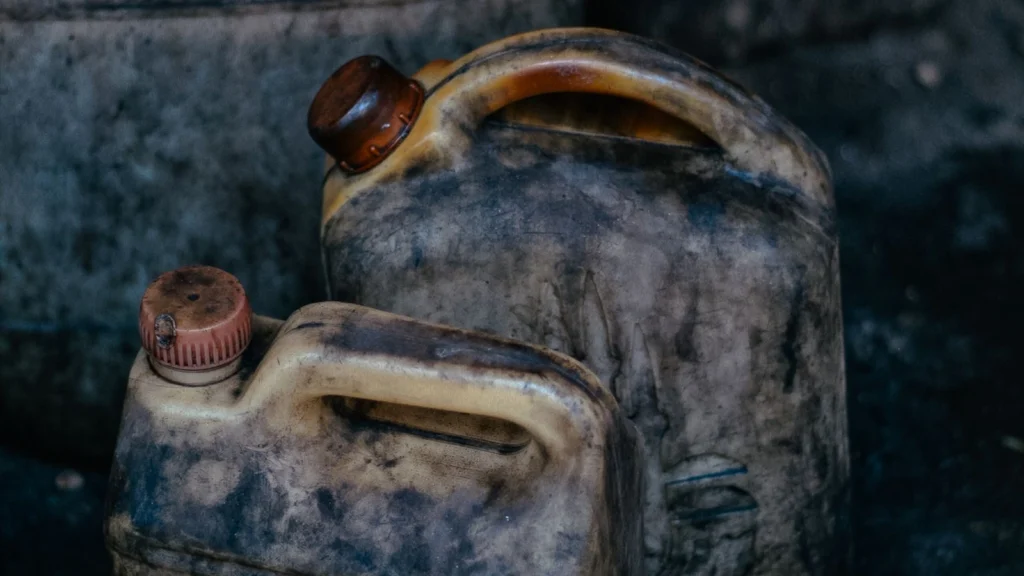
The Right Gasoline for a Champion Generator
Champion’s manual for the 3500W Generator is specific about fuel.
- Use clean, fresh, regular unleaded gasoline.
- Use a minimum octane rating of 87.
- Use fuel with 10% ethanol or less by volume.
- Do not use E15 or E85.
- Do not mix oil with the gasoline. These are four-stroke engines with separate engine oil.
Why ethanol matters
The manual says the engine works well with blends of 10% ethanol or less. It also lists the problems that ethanol can cause in storage.
- Ethanol blends absorb more water than gasoline alone.
- The blend can separate over time, leaving water or a watery goo in the tank, fuel valve and carburetor.
- A fuel stabilizer must be formulated for ethanol blends.
- Damage from fuel above 10% ethanol, badly stored gasoline or the wrong stabilizer is not covered by the warranty.
How to fill the tank safely
- Stop the engine and let it cool. The manual says never to fill the tank when the engine is running or hot.
- Fill outdoors. Never fill the tank indoors.
- Use an approved fuel container. Champion says not to pump gasoline straight into the generator at the pump.
- Pour slowly. Fuel poured too fast can splash back off the fuel screen.
- Leave room at the top. The manual asks for at least a quarter inch of space, because gasoline expands.
- Refit the cap and wipe up any spills before you start the engine.
Gasoline vapor is the danger
The manual warns that gasoline vapors are highly flammable and explosive. Do not smoke while refueling. Keep fuel away from sparks, open flames, pilot lights and heat.
Four Portable Gas Champion Generators Worth a Look
These four cover the range from a light inverter to Champion’s largest portable. Each one runs on gasoline only, and each had an active Amazon listing when we checked in October 2026.
Light and quiet
Champion 2500-Watt Ultralight Portable Inverter Generator
The smallest pick, and the easiest to live with. It is a gasoline inverter that one person can carry, with clean power for electronics.
- Starting watts2,500 W
- Running watts1,850 W
- Noise level53 dBA from 23 ft
- Run timeUp to 11.5 hours
- Weight39.7 lb
- Warranty3-year limited
- Why it works: a small engine and a small tank. Champion’s site lists a 1.1-gallon tank for its 2500W Inverter, so one fuel can lasts a long time.
- Who it is best for: campers, tailgaters and anyone who needs a little quiet power.
- What it solves: fuel storage. You need far less gasoline on hand than with an open-frame generator.
- Room to grow: an optional parallel kit links it to a second 2500-watt Champion inverter.
- Keep in mind: the run time is measured at a light 25% load. It has a pull cord and one 120-volt duplex outlet, and it will not start an RV air conditioner.
As an Amazon Associate we earn from qualifying purchases. Specs come from the Amazon listing, checked October 2026.
Best all-rounder
Champion 4375-Watt RV Ready Portable Generator
A simple pull-start generator with 3,500 running watts. Its specs match the model Champion’s site calls the 3500W Generator, the same one whose manual we used for this guide.
- Starting watts4,375 W
- Running watts3,500 W
- Run timeUp to 12 hours
- Noise level68 dBA from 23 ft
- Weight103.4 lb
- Warranty3-year limited
- Why it works: it is a plain, proven layout with little to go wrong. There is no battery to keep charged.
- Who it is best for: RV owners and homeowners who want to run a refrigerator, lights and a few circuits.
- What it solves: RV hookups. It has a 120-volt 30-amp RV outlet, a 120-volt 30-amp locking outlet and a 120-volt 20-amp household duplex.
- Handy extras: CO Shield, Volt Guard and a low oil shut-off.
- Keep in mind: every outlet is 120 volts, so it cannot run 240-volt equipment. At 68 dBA it is much louder than an inverter.
As an Amazon Associate we earn from qualifying purchases. Specs come from the Amazon listing, checked October 2026.
Home backup
Champion 11,500-Watt Electric Start Portable Generator
A large open-frame generator that Champion’s site calls a 9200-watt model. It is sized for home backup through a transfer switch.
- Starting watts11,500 W
- Running watts9,200 W
- Engine459 cc
- Run timeUp to 10 hours
- Noise level74 dBA
- Weight203 lb
- Why it works: 9,200 running watts covers many household loads at once, so you juggle appliances less.
- Who it is best for: homeowners with a transfer switch or interlock who want strong, simple backup power.
- What it solves: 240-volt loads. The listing shows a 120/240-volt 30-amp locking outlet and a second 120/240-volt outlet, plus two GFCI household duplexes.
- Handy extras: electric start and a 3-year limited warranty.
- Keep in mind: at half load it works out to roughly 0.77 gallons an hour, so plan your fuel. It weighs 203 pounds.
As an Amazon Associate we earn from qualifying purchases. Specs come from the Amazon listing, checked October 2026.
Maximum power
Champion 16,875-Watt Electric Start Portable Generator
The largest portable in Champion’s range. Champion’s site calls it the 13,500W Electric Start Generator, and it uses a V-twin engine.
- Starting watts16,875 W
- Running watts13,500 W
- Engine739 cc V-twin
- Run timeUp to 8 hours
- Noise level79 dBA
- Weight338 lb
- Why it works: it gives standby-size power from a machine you can wheel into place.
- Who it is best for: large homes with heavy 240-volt loads, and owners who cannot fit a permanent standby unit.
- What it solves: big starting surges. With 16,875 starting watts, large motors have room to start.
- Handy extras: a lift hook and 12-inch never-flat tires.
- Keep in mind: it is the thirstiest and loudest model here. An 11-gallon tank lasts about 8 hours at half load, and it weighs 338 pounds.
As an Amazon Associate we earn from qualifying purchases. Specs come from the Amazon listing, checked October 2026.
Want something between the first two? Champion’s 3650-Watt RV-Ready generator with CO Shield is another pull-start gasoline model in the same class.
Storing a Gasoline Champion the Right Way
Old fuel is the number one enemy of a gasoline generator. Champion’s manual puts a clock on it: gasoline may gum up and clog the carburetor if the generator is not run, or the carburetor drained, within 4 weeks.
The manual then sets out three storage plans.
| How long it will sit | What Champion’s manual says to do |
|---|---|
| Up to 30 days | Start the engine, turn the fuel valve off and let it run until it stops. This empties the carburetor. |
| 30 days to 1 year | Add a fuel stabilizer, run the engine for 10 minutes, then drain the carburetor or run it dry. Add a tablespoon of oil to the cylinder and pull the cord slowly. |
| More than 1 year | Drain the gasoline tank and the carburetor completely. |
A few details from the same pages are worth knowing.
- Stabilized gasoline has a limit. The manual gives a maximum shelf life of up to 1 year with a properly formulated stabilizer, stored in a cool, dry place.
- Run it dry after every use. Champion says it is advisable to shut off the fuel and run the engine until it stops each time you finish.
- Store it switched off. Set the engine switch and the fuel valve to OFF.
- Keep it cool and dry, out of direct sunlight.
A stabilizer such as STA-BIL Storage is the usual choice. Check the label says it works with ethanol blends, as the manual asks.
If it sat with old fuel
The manual says that if a generator was stored for more than 30 days with ethanol-blended gasoline left in it, all the fuel must be drained and the carburetor thoroughly cleaned. Champion calls that a technically advanced job and suggests calling its support team. Our guide on how long gasoline lasts explains why fuel goes bad.
For the full routine, see how to store a generator.
Break-In, Oil and Maintenance
A new Champion needs a gentle start. The manual for the 3500W Generator calls the first 5 hours the break-in period.
- Keep the load at or below 50% of the running watt rating for the first 5 hours.
- Vary the load now and then. The manual says this helps the piston rings seat.
- Check the oil often during break-in.
- Change the oil after 5 hours.
After that, follow the schedule.
| When | What to do |
|---|---|
| Every 8 hours or before each use | Check the oil level. Clean around the air intake and muffler. |
| First 5 hours | Change the oil. |
| Every 50 hours or once a year | Clean the air filter. Change the oil if you run under heavy load or in hot weather. |
| Every 100 hours or once a year | Change the oil. Clean and adjust the spark plug. Clean the spark arrestor. Clean the fuel valve filter (service job). |
| Every 250 hours | Clean the combustion chamber (service job). Check and adjust the valve clearance (service job). |
| Every 3 years | Replace the fuel line (service job). |
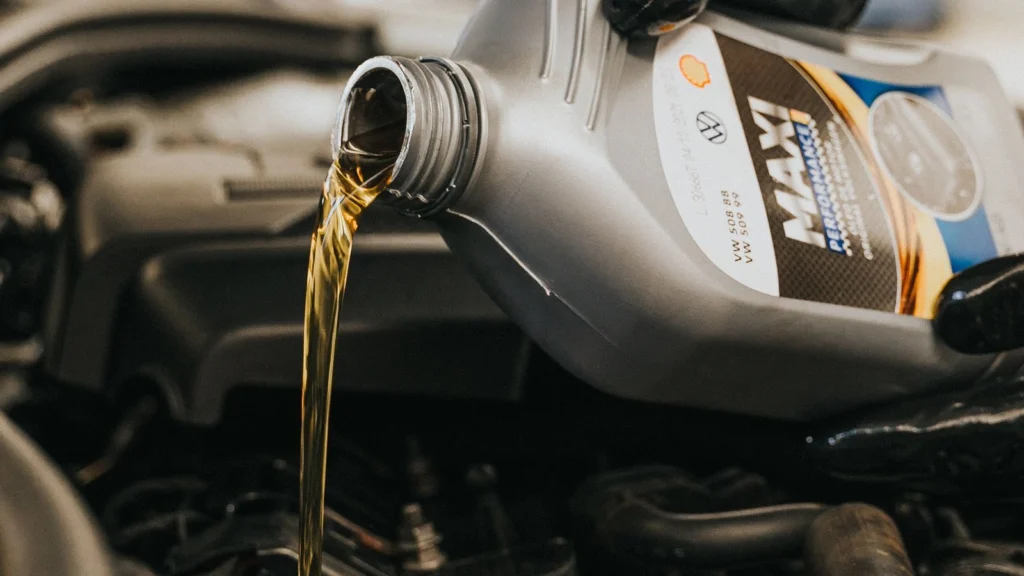
The manual recommends 10W-30 oil for this model, which holds 0.6 quarts. It also says a full synthetic 5W-30 helps starting when the air is colder than 41 °F, and that synthetic oil may be used once break-in is over. The replacement spark plug is an NGK BPR6ES or equivalent.
Our generator maintenance checklist turns a schedule like this into a simple routine.
Altitude, Cold and Heat
Gasoline engines lose power in thin air. Champion’s manual says engine power and generator output fall by about 3.5% for every 1,000 feet above sea level.
That adds up. At 5,000 feet, a 3,500-watt generator would give roughly 2,900 watts by that rule.
The manual also notes that high altitude can cause hard starting, higher fuel use and fouled spark plugs. Champion offers a high-altitude carburetor jet through its technical support team for use from about 3,300 to 9,800 feet. Do not use that jet at lower elevations. The manual warns it can damage the engine.
On temperature, the manual lists a starting range of 23 to 104 °F for this model.
CO Shield and Safe Operation
Every gasoline generator makes carbon monoxide. Many Champion models add CO Shield, which stops the engine if the gas builds up around it.
The manual explains what the lights mean.
- A blinking red light means CO Shield shut the engine down because carbon monoxide was building up. Move the generator to an open outdoor area and point the exhaust away from people and buildings.
- A blinking yellow light means a system fault. If it keeps happening, contact Champion’s technical support.
Two tips from the manual help prevent nuisance shutdowns. Keep objects at least 5 feet away from the generator, because they can trap exhaust. And if the wind is blowing the exhaust back at the machine, turn the generator about 45 degrees.
CO Shield is not a substitute for distance
Champion says CO Shield is not a substitute for an indoor carbon monoxide alarm or for safe operation. Run the generator outdoors only, never in a home or garage, even with the doors open. Safety agencies advise keeping it at least 20 feet from the house. Read our generator safety tips before your first run.
If a Gasoline Champion Will Not Start
Most no-start problems on a gasoline generator trace back to fuel. The manual’s troubleshooting chart for the 3500W Generator lists these causes and fixes.
| Possible cause | Fix from the manual |
|---|---|
| No fuel | Add fuel. |
| Fuel valve is closed | Open the fuel valve. |
| Engine switch is off | Switch it on. |
| Old fuel or water in the fuel | Drain the fuel and replace it with fresh fuel. |
| Flooded with fuel | Let the unit stand for 10 minutes. |
| Low oil level | Fill to the proper level and place the generator on a flat, level surface. |
| Faulty spark plug | Clean and adjust the plug, or replace it. |
| Spark plug wire loose | Attach the wire to the plug. |
Work through that list before you suspect anything serious. Our guides to why a generator won’t start and why a generator keeps shutting off go further.
Common Mistakes With a Gasoline Champion (and the Fix)
Pro Tips for Gasoline Owners
- Rotate your fuel. Pour stored gasoline into your car every few months and refill the cans with fresh fuel.
- Label each can with the date you filled it.
- Treat fuel on the day you buy it. Stabilizer protects fresh gasoline. It does not repair old gasoline.
- Keep a spare spark plug and a quart of oil with the generator.
- Start it on a schedule. A short run each month shows up problems while the weather is calm.
- Let it idle before shutdown. The manual says to unplug the loads and run at no load for several minutes before you stop the engine.
- Do not hose it down. The manual warns that water can get into the cooling slots and damage the windings.
Real-Life Scenarios: Is Gasoline Right for You?
These are typical situations that buyers describe in forums and reviews. They are examples to help you choose, not quotes from real people.
🔨 The weekly user
You run tools on job sites several days a week, and the fuel never sits for long.
Gasoline-only is the simple, low-cost choice. Stale fuel is not your problem.
Best fit: 4375-Watt RV Ready or larger
⛈️ The twice-a-year user
You only start the generator when a storm takes the power out, and it sits in the garage in between.
Gasoline works if you run it dry and rotate your cans. Dual Fuel would be easier.
Best fit: gasoline with strict storage, or Dual Fuel
🏕️ The weekend camper
You want quiet power for a few nights and do not want to carry much fuel.
A small gasoline inverter with a 1.1-gallon tank keeps the fuel load tiny.
Best fit: 2500-Watt Ultralight
Portable Gas Champion Generators: FAQ
What kind of gas does a Champion generator use?
Champion's manual for its 3500W Generator asks for clean, fresh, regular unleaded gasoline with an octane rating of at least 87 and no more than 10% ethanol. It says not to use E15 or E85. Check the manual for your own model.
How long will a Champion generator run on a tank of gas?
It depends on the model and the load. At 50% load, Champion lists 12 hours for the 3500W Generator on 4.7 gallons and 10 hours for the 9200W Electric Start Generator on 7.7 gallons. Inverter run times are quoted at 25% load.
Can I leave gas in my Champion generator?
Not for long. The manual says gasoline may gum up the carburetor if the generator is not run or drained within 4 weeks. For 30 days to a year, add stabilizer and empty the carburetor. For more than a year, drain the tank and carburetor completely.
Do Champion generators need oil mixed with the gas?
No. They use four-stroke engines with separate engine oil, and the manual says not to mix oil with gasoline.
Why does my Champion shut off and blink a red light?
On models with CO Shield, the manual says a blinking red light means carbon monoxide was building up around the generator. Move it to an open outdoor area, point the exhaust away from buildings and clear any objects within 5 feet.
Does altitude affect a gasoline Champion generator?
Yes. The manual says output falls by about 3.5% for every 1,000 feet above sea level. Champion can supply a high-altitude carburetor jet for use from about 3,300 feet.
Your Gasoline Champion Checklist
- Add up your running watts and your largest starting surge.
- Decide if gasoline-only suits how often you will use it.
- Work out the gallons per day for the size you want.
- Check whether you need 240-volt outlets.
- Buy approved fuel cans, stabilizer and the right oil.
- Follow the 5-hour break-in and change the oil.
- Run the carburetor dry after every use.
- Keep the generator at least 20 feet from the house and fit carbon monoxide alarms indoors.
- Register the product and keep the receipt.
The bottom line
A gasoline Champion is simple and good value if you manage the fuel. For most RVs and home essentials, the 4375-Watt RV Ready is a sensible place to start.
As an Amazon Associate we earn from qualifying purchases.
Sources: Champion Power Equipment’s official product pages for the models named in this guide; Champion’s operator’s manual for model 201286 (3500W Generator), downloaded from Champion’s website; Amazon listings for the products named in this guide. All checked October 2026.