Portable propane generators for home use solve the biggest problem with home backup power: fuel that goes bad. Gasoline starts to break down within weeks. Propane keeps for years in a sealed cylinder. A generator that runs on propane can sit in the shed from one storm season to the next and still start on fuel that is as good as the day you bought it.
That one advantage has made dual fuel generators the first choice for many homeowners. Buying one is the easy part. Planning around it takes a little more thought.
How much of your home can it run on propane, which gives less power than gasoline? How many cylinders do you need for a three-day outage? Where do you keep them? How do you connect the generator to the house safely? This guide answers those questions as a step-by-step home plan. Generator figures come from makers’ listings. Safety advice comes from US government sources. We have not tested these generators.
Propane home backup at a glance
A fuel that keeps for years, measured in cylinders per day
Run times are makers’ published figures. Cylinder budgets are our arithmetic from them.
Quick answer
A portable propane generator for home use is almost always a dual fuel model that runs on gasoline or propane. On propane it makes about 10% less power. A mid-size model runs about 10 hours on a 20-pound cylinder at half load, and a large one about 6 hours. For a three-day outage, running eight hours a day, plan on three 20-pound cylinders for a mid-size generator and four or more for a large one, or one 100-pound cylinder. Connect it to the house through a transfer switch, and keep cylinders outdoors.
How we put this guide together
We have not tested these generators. Power and run-time figures come from the makers’ Amazon listings and product pages, checked in October 2026. The cylinder budgets are our own arithmetic from those figures, and real use depends on your load and the temperature. Propane energy content is from the US Energy Information Administration. Safety guidance is from the US Consumer Product Safety Commission and Ready.gov. For rules on storing propane at home, your fire department and your propane supplier have the final say.
In this guide
- Why Propane Makes Sense for Home Backup
- Step 1: Decide What Your Home Needs
- Step 2: Size the Generator on Its Propane Rating
- Step 3: Work Out How Much Propane You Need
- Step 4: Connect the Generator to Your Home Safely
- Step 5: Store and Handle Cylinders the Right Way
- Step 6: Plan for Cold Weather
- Step 7: Start, Run and Shut Down on Propane
- Five Products for a Propane Home Backup Plan
- A Sample Plan for a Three-Day Outage
- Common Mistakes With Propane Home Backup (and the Fix)
- Pro Tips for Propane Backup at Home
- Real-Life Scenarios: Which Propane Plan Fits?
- Portable Propane Generators for Home Use: FAQ
- Your Propane Home Backup Checklist
Why Propane Makes Sense for Home Backup
A home backup generator spends nearly all its life waiting. That changes what matters in a fuel.
| Point | Propane | Gasoline |
|---|---|---|
| Storage life | Years, in a sealed cylinder | About a month untreated, up to a year with stabilizer |
| Carburetor trouble | None from the fuel | Common after storage |
| Power | About 10% less | Full rating |
| Energy per gallon | About 91,450 Btu | About 120,200 Btu |
| Refilling in an outage | Swap or refill cylinders | Depends on filling stations having power |
| Storage at home | Outdoors, in cylinders | In cans, with strict limits |
| Cold weather | Vapor supply drops in deep cold | Starts normally |
The case for propane is strongest when the generator is used rarely. Generac’s own guidance says gasoline begins to deteriorate within about one month. A homeowner who runs a generator twice a year is always fighting stale fuel. Propane removes that fight.
There are honest drawbacks. You get less power. A gallon of propane holds about a quarter less energy than a gallon of gasoline. And a big generator goes through barbecue-size cylinders quickly. The rest of this guide shows how to plan around those limits.
Dual fuel is the practical choice
Almost every portable propane generator sold today is a dual fuel model. It runs on gasoline or propane, and you choose with a switch or a dial. A tri fuel model adds natural gas.
That gives you a sensible routine. Keep the gasoline tank empty in storage, and run on propane for tests and for outages. If the propane runs out, gasoline is your reserve.
Step 1: Decide What Your Home Needs
Start with a list of what must run together. These are the planning figures we use across this site.
| Appliance | Running watts | Starting watts |
|---|---|---|
| Refrigerator or freezer | 700 | 2,200 |
| Gas furnace blower, 1/2 hp | 800 | 2,350 |
| Sump pump, 1/3 hp | 800 | 1,300 |
| Well pump, 1/2 hp, 240 volts | 1,000 | 2,100 |
| Lights, several rooms | 300 | 300 |
| TV, router and chargers | 300 | 300 |
| Microwave | 1,500 | 1,500 |
| Window air conditioner, 10,000 BTU | 1,200 | 3,600 |
Add the running watts. Then add the largest extra starting load once. Then allow about 20% in reserve.
Three typical homes
| Home | What runs | Running watts | With largest start | Propane running watts to look for |
|---|---|---|---|---|
| Basic essentials | Refrigerator, furnace blower, lights, electronics | 2,100 | 3,650 | About 2,500 or more |
| Essentials with pumps | The above plus a sump pump and a well pump | 3,900 | 5,450 | About 4,700 or more |
| Comfortable | The above plus a microwave and a window air conditioner | 6,600 | 9,000 | About 7,900 or more |
Our Generator Size Calculator runs these sums for your own list.
Step 2: Size the Generator on Its Propane Rating
This is the step people miss. A dual fuel generator has two sets of ratings, and the name on the box is almost always the gasoline one.
| Generator | Running watts on gasoline | Running watts on propane | Starting watts on propane |
|---|---|---|---|
| Champion 4375-Watt remote start dual fuel | 3,500 | 3,150 | 3,950 |
| Westinghouse 6500 Watt dual fuel | 5,300 | 4,800 | 5,800 |
| Champion 11,500-Watt dual fuel | 9,200 | 8,280 | 10,350 |
| Westinghouse 12500 Peak Watt tri fuel | 9,500 | 8,500 | 11,200 |
| DuroMax XP13000HX dual fuel | 10,500 | 9,975, per retailer spec sheets | See the listing |
Match these to the three homes. The Champion 4375-Watt model covers basic essentials on propane, with 3,950 starting watts against the 3,650 needed. The Westinghouse 6500 covers essentials with pumps. The larger three cover the comfortable home.
Key insight: read the propane line, not the name. A generator sold as “4,375 watts” is a 3,150-watt generator on propane. Size your home backup against the fuel you will actually burn.
Check for 240 volts
A well pump, and anything else on a double breaker, needs 240 volts. Many small and mid-size generators are 120 volts only. Look for an outlet marked 120/240 volts, such as an L14-30R or a 14-50R. If your home has a well pump, this decides which generators you can consider.
Step 3: Work Out How Much Propane You Need
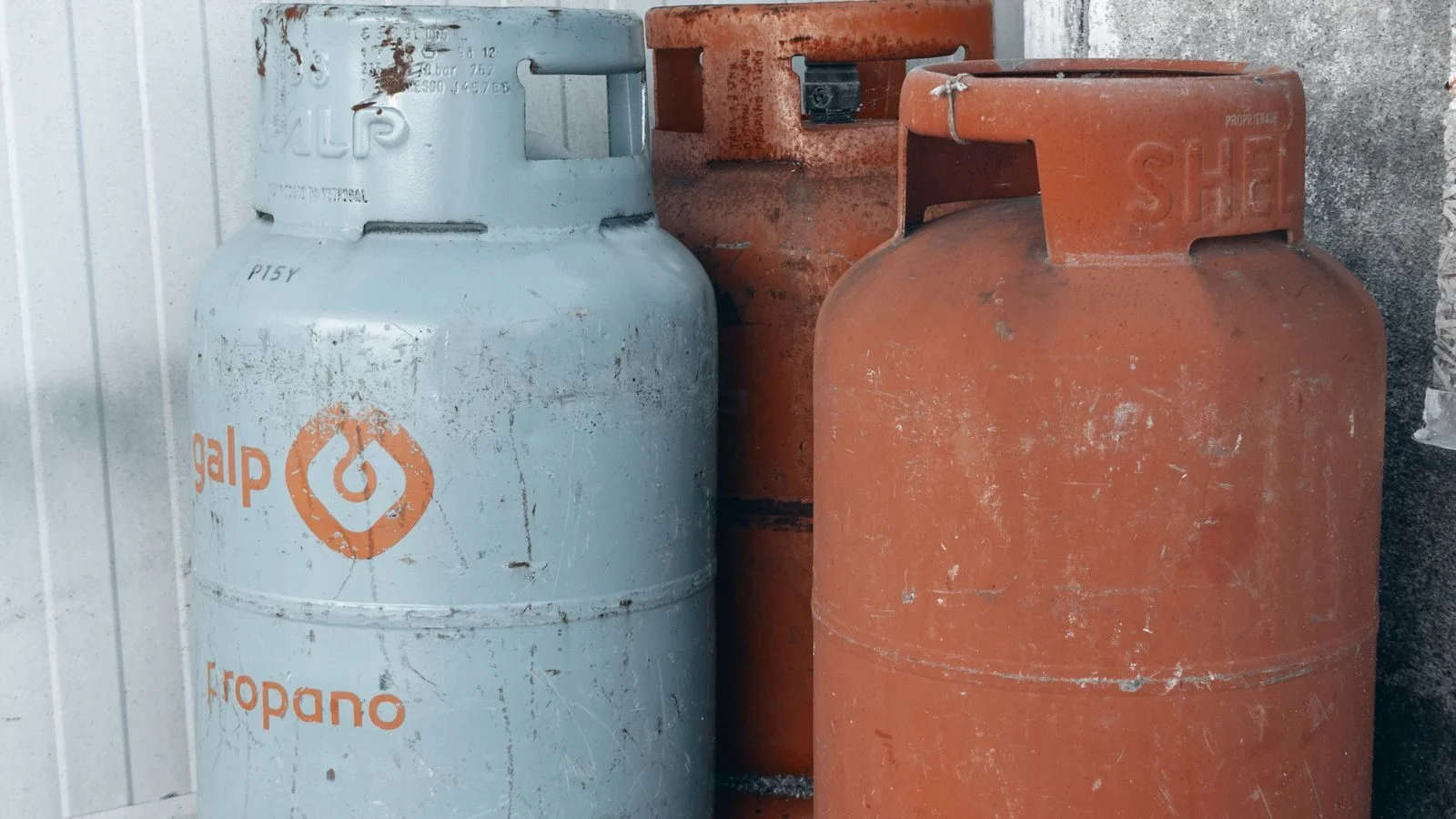
Makers publish how long their generators run on a 20-pound cylinder. A full 20-pound cylinder holds about 4.7 gallons.
| Generator | Class | Run time on one 20-lb cylinder | Load |
|---|---|---|---|
| Generac iQ5200 Dual Fuel | Mid-size inverter | Up to 11 hours | 50% load |
| Champion 4375-Watt dual fuel | Mid-size open frame | 10.5 hours | 50% load |
| Generac 8,250 starting watt dual fuel | Large open frame | 6 hours | 50% load |
| Generac GP9500E Tri Fuel | Large open frame | Up to 6 hours | 25% load |
| Westinghouse 14500 Peak Watt tri fuel | Very large open frame | Up to 7 hours | Not stated in the listing |
Two round numbers come out of that table. At half load, a mid-size generator runs about 10 hours on a cylinder. A large generator runs about 6 hours.
You do not need to run it all day
A refrigerator and a freezer hold their cold for hours with the doors shut. Ready.gov says a refrigerator keeps food cold for about 4 hours, and a full freezer for about 48 hours, if you keep the doors closed. A furnace can warm the house in the morning and again in the evening.
Most households get through an outage by running the generator in blocks, for a total of about eight hours a day. That cuts fuel use by two thirds compared with running around the clock.
The cylinder budget
| Plan | Mid-size generator, 10 hours per cylinder | Large generator, 6 hours per cylinder |
|---|---|---|
| 8 hours a day for 3 days | About 2.5 cylinders | 4 cylinders |
| 8 hours a day for 7 days | About 6 cylinders | About 9 cylinders |
| Around the clock for 3 days | About 7 cylinders | 12 cylinders |
| Around the clock for 7 days | About 17 cylinders | 28 cylinders |
The lesson is clear. Run in blocks. A week of nonstop running on a large generator would take 28 barbecue cylinders, which no home should store. The same week at eight hours a day takes nine, and a mid-size generator takes six.
Bigger cylinders
Carrying and swapping 20-pound cylinders gets tiresome. Larger cylinders hold more.
| Cylinder | Propane held | Equal to | Notes |
|---|---|---|---|
| 20 lb | About 4.7 gallons | 1 grill cylinder | Easy to carry and exchange |
| 30 lb | About 7 gallons | 1.5 grill cylinders | RV size |
| 40 lb | About 9.4 gallons | 2 grill cylinders | Still movable by one person |
| 100 lb | About 23.6 gallons | 5 grill cylinders | About 170 lb full. Refilled by a dealer |
One 100-pound cylinder covers a mid-size generator for about six days at eight hours a day. Larger cylinders also cope better in cold weather, as we explain below.
One detail about exchange cylinders: many exchange services fill a 20-pound cylinder with less than 20 pounds of propane. Read the label on the sleeve. A cylinder refilled at a propane dealer is normally filled to its full legal level.
Our guide to portable propane generators has more detail on cylinder sizes and run times.
Step 4: Connect the Generator to Your Home Safely
There are two safe ways to use a portable generator at home.
Extension cords
Run heavy, outdoor-rated cords from the generator to the appliances. This costs little and needs no installation. It works for a refrigerator, a freezer, lamps and electronics. It does not work for hard-wired things such as a furnace, a well pump or ceiling lights.
A transfer switch or an interlock
A licensed electrician fits a power inlet box outside and a transfer switch or an interlock at your panel. You plug the generator into the inlet with one heavy cord, and the chosen circuits in the house run from the generator.
| Connection | Generator outlet | Most power it can pass | Suits |
|---|---|---|---|
| 30 amp, 120/240 volts | L14-30R | 7,200 watts | Mid-size and large generators |
| 50 amp, 120/240 volts | 14-50R | 12,000 watts | Large generators |
Never backfeed, and never bring it inside
Never plug a generator into a wall outlet or a dryer outlet. That sends power into the utility lines, where it can kill a line worker, and it can destroy the generator when power returns. A connection to house wiring needs a transfer switch or an interlock fitted by a licensed electrician, with a permit where required. Run the generator outdoors only, at least 20 feet from the house, with the exhaust pointing away from doors and windows. Propane burns cleaner than gasoline, but the exhaust still contains deadly carbon monoxide.
Our guide on how to connect a generator to your house explains each option.
Can it run from your home’s big propane tank?
If your home has a large propane tank for heating, it is natural to want to feed the generator from it. That can be done, but it is a job for your propane supplier or a licensed gas fitter. The generator needs gas at the correct pressure, through the right regulator and a properly sized line with a shutoff. Do not improvise a connection. Ask the generator’s maker which hookups it approves, and have a professional do the work.
Step 5: Store and Handle Cylinders the Right Way
Propane is safe when it is handled properly. It is unforgiving when it is not.
- Store cylinders outdoors, never in the house, the basement or an attached garage.
- Keep them upright, on a firm, level surface.
- Keep them in the shade, away from heat and anything that could spark.
- Keep them away from doors, windows, vents and basement window wells.
- Close the valve firmly when a cylinder is not in use.
- Check the date stamped on the collar. A cylinder past its requalification date will not be refilled.
- Check hoses for cracks, and connections for leaks, with soapy water.
- Transport cylinders upright and secured, in a ventilated vehicle, and do not leave them in a hot car.
Local fire codes limit how much propane you may keep at a home. Ask your fire department or your propane supplier before you build up a large stock.
If you smell gas
Propane is heavier than air. A leak sinks and collects in low places. If you smell gas, do not light anything and do not operate switches. Close the cylinder valve if you can do so safely, move away and call the fire department or your propane supplier from a safe distance.
Use the right hose
Dual fuel generators come with a hose and a regulator made for that generator. Use it. The regulator reduces cylinder pressure to what the engine needs. If you buy a larger cylinder, check that its valve type matches your hose. A 100-pound cylinder commonly has a POL valve, which may need a different hose or an adapter approved by the generator’s maker.
Step 6: Plan for Cold Weather
Propane is stored as a liquid and used as a vapor. The liquid has to boil in the cylinder, and boiling takes heat from the cylinder walls and the surrounding air.
In cold weather there is less heat to draw on. A small cylinder feeding a large generator can chill so much that frost forms on the outside and the vapor pressure falls. The engine then loses power or stalls, even though the cylinder still has fuel in it.
- Use larger cylinders in winter. More liquid and more surface area mean more vapor.
- Keep cylinders full. A nearly empty cylinder struggles first.
- Swap in a fresh cylinder if the first one frosts over. Let the cold one recover.
- Never heat a cylinder with a flame, a heater or hot water.
- Have gasoline as a reserve. This is where dual fuel earns its name.
Step 7: Start, Run and Shut Down on Propane
The exact steps are in your manual. The usual order is:
- Place the generator outdoors, 20 feet from the house, on level ground.
- Check the oil.
- Connect the hose to the generator and to the cylinder. Hand-tighten as the manual says.
- Set the fuel selector to propane.
- Open the cylinder valve slowly. Check for leaks.
- Start the engine with nothing plugged in.
- Let it warm up, then add loads one at a time, largest motor first.
- To stop, unplug the loads, let it run for a few minutes, then close the cylinder valve and let the engine use up the gas in the hose.
Shutting down by closing the cylinder valve leaves no fuel in the lines. That is one more reason a propane-run generator stores so well.
Maintenance does not change
Running on propane keeps the carburetor clean, but the engine still needs care. Check the oil before every use. Change it on the schedule in your manual. Clean the air filter and check the spark plug each season. Our generator maintenance checklist covers the routine.
Five Products for a Propane Home Backup Plan
We have not tested these. Details come from the makers’ pages and Amazon listings, and stock changes quickly.
Basic essentials
Champion 4375-Watt Wireless Remote Start Dual Fuel Portable Generator
A mid-size dual fuel generator you can start from indoors with a key fob. The listing gives 3,150 running watts on propane and 10.5 hours on a 20-pound cylinder at half load.
- On gasoline3,500 running, 4,375 starting
- On propane3,150 running, 3,950 starting
- Run time on propane10.5 hours at 50% load, 20-lb cylinder
- Engine224 cc
- OutletsL5-30R, TT-30R, 5-20R duplex
- Weight126 lb
- Why it works: it sips propane, and remote start from up to 80 feet means you do not have to go out in the storm to start it.
- Who it is best for: homes that need a refrigerator, a furnace blower, lights and electronics.
- What it solves: the basic essentials home, on about one cylinder a day at eight hours of running.
- Keep in mind: it is a 120-volt generator. It cannot run a 240-volt well pump, and its outlets suit cords or a 120-volt setup, not a standard 240-volt transfer switch.
As an Amazon Associate we earn from qualifying purchases. Details come from the Amazon listing, checked October 2026.
Large home, three fuels
Westinghouse 12500 Peak Watt Tri-Fuel Home Backup Portable Generator
A large generator that runs on gasoline, propane or natural gas. The listing gives 8,500 running watts on propane, remote start and both 30-amp and 50-amp 240-volt outlets.
- On gasoline9,500 running, 12,500 peak
- On propane8,500 running, 11,200 peak
- On natural gas7,500 running, 9,500 peak
- Engine457 cc OHV
- OutletsTwo GFCI 5-20R, L14-30R, 14-50R
- Warranty on listing3-year limited
- Why it works: it has the 240-volt outlets a transfer switch needs, and a third fuel if your home has natural gas.
- Who it is best for: homes with a well pump, a sump pump and kitchen loads to cover.
- What it solves: the comfortable home, with propane for storage life and gasoline in reserve.
- Keep in mind: a generator this size uses a 20-pound cylinder in a few hours. Plan on 40-pound or 100-pound cylinders. It weighs about 215 pounds, and a natural gas hookup needs a licensed gas fitter.
As an Amazon Associate we earn from qualifying purchases. Details come from the Amazon listing, checked October 2026.
Most power on propane
DuroMax XP13000HX 13,000-Watt Dual Fuel Portable Generator with CO Alert
One of the most powerful dual fuel portables. It makes 10,500 running watts on gasoline, and retailer spec sheets list 9,975 on propane.
- On gasoline10,500 running, 13,000 starting
- On propane9,975 running, per retailer spec sheets
- Engine500 cc OHV
- OutletsFour 120 V GFCI, 30 A 120 V, 30 A and 50 A at 120/240 V
- SafetyCO Alert
- Weight245 lb
- Why it works: it loses very little on propane, and its 50-amp outlet suits a large transfer switch.
- Who it is best for: larger homes that want most circuits live without a standby system.
- What it solves: the gap between a typical portable and a permanent standby generator.
- Keep in mind: the propane figure is from retailer spec sheets, so confirm it in the manual. A 500 cc engine needs large cylinders, and at 245 pounds it is a two-person machine.
As an Amazon Associate we earn from qualifying purchases. Details come from the Amazon listing, checked October 2026.
A week of fuel in one cylinder
Flame King 100 lb Steel Propane Cylinder with POL Valve
A 100-pound, 23-gallon steel cylinder. It holds as much as five grill cylinders, and it copes better in cold weather.
- Capacity100 lb, about 23 gallons
- ValvePOL
- Approval on listingDOT
- Empty weight70 lb
- Size14.7 in wide, 48.7 in tall
- ShipsEmpty
- Why it works: one cylinder runs a mid-size generator for about 50 hours at half load.
- Who it is best for: homes that expect outages of several days.
- What it solves: swapping small cylinders in the dark, and frosted cylinders in winter.
- Keep in mind: it ships empty and weighs about 170 pounds when full, so it is refilled where it stands or moved with a hand truck. Its POL valve needs a matching hose. Keep it outdoors, upright and secured.
As an Amazon Associate we earn from qualifying purchases. Details come from the Amazon listing, checked October 2026.
Know what is left
Propane Tank Gauge and Level Indicator for 5 to 40 lb Cylinders
A brass gauge that fits between the cylinder and the hose. The listing says it suits cylinders from 5 to 40 pounds with a QCC1 connection and shows the level on a color dial.
- Fits5 to 40 lb cylinders
- ConnectionQCC1, Type 1
- MaterialSolid brass
- DisplayColor-coded dial
- Not forCylinders over 40 lb
- ReadingAn estimate, per the listing
- Why it works: you can see roughly how much propane is left without lifting or disconnecting the cylinder.
- Who it is best for: anyone running a generator from grill-size cylinders.
- What it solves: a generator that stops at 2 am because the cylinder ran out without warning.
- Keep in mind: the listing says the reading is an estimate, and it changes with temperature. Check with your generator’s maker before adding any fitting to its fuel line. Weighing the cylinder is still the most accurate check.
As an Amazon Associate we earn from qualifying purchases. Details come from the Amazon listing, checked October 2026.
For more models, see our dual fuel generator reviews and our tri fuel generator review.
A Sample Plan for a Three-Day Outage
Here is how the pieces fit for the “essentials with pumps” home.
- The loads. Refrigerator, furnace blower, sump pump, well pump, lights and electronics: 3,900 running watts, about 5,450 with the largest start.
- The generator. A dual fuel model with about 4,800 running watts on propane and a 240-volt outlet.
- The connection. A 30-amp inlet and a transfer switch, fitted by an electrician.
- The run plan. Three hours in the morning, two at midday and three in the evening.
- The fuel. A generator of this size uses a 20-pound cylinder in roughly 6 to 10 hours at half load. For three days at eight hours a day, keep four cylinders, or one 100-pound cylinder.
- The reserve. A few gallons of fresh, stabilized gasoline.
- The safety kit. Carbon monoxide alarms on every level, a heavy cord, a flashlight at the generator and a printed checklist.
Our emergency power outage checklist covers the rest of the household plan.
Common Mistakes With Propane Home Backup (and the Fix)
Pro Tips for Propane Backup at Home
- Weigh your cylinders. The empty weight is stamped on the collar. The difference is your fuel.
- Refill, do not only exchange. A dealer refill is normally a full fill.
- Test on propane twice a year, with the hose you will use in an outage.
- Label a full cylinder “generator only” so it is not used on the grill the day before a storm.
- Keep the gasoline tank empty in storage. Add fresh gasoline only if the propane runs out.
- Fill up before the season. Refill stations get busy when a storm is forecast.
- Keep a spare hose and regulator if your generator’s maker sells one.
Real-Life Scenarios: Which Propane Plan Fits?
These are typical situations. They are examples to help you plan, not reports from real customers.
🏘️ The suburban home
Gas furnace, city water, outages of a day or two.
A mid-size dual fuel generator on cords or a small transfer switch, with three 20-pound cylinders.
Plan: mid-size and three cylinders
🚰 The home on a well
A 240-volt well pump and a sump pump, outages of up to a week.
A large dual fuel or tri fuel generator with a 240-volt outlet, a transfer switch and two 100-pound cylinders.
Plan: large and two 100-lb cylinders
❄️ The cold-climate home
Winter ice storms, with temperatures far below freezing.
Larger cylinders kept full, a fresh cylinder ready to swap in, and gasoline as a reserve for the coldest nights.
Plan: large cylinders and a gasoline reserve
Portable Propane Generators for Home Use: FAQ
Can a portable propane generator power a house?
It can power the essentials, and a large one can power most of a house. A mid-size dual fuel generator runs a refrigerator, a furnace blower, lights and electronics. A large one, connected through a transfer switch, adds a well pump, a sump pump and kitchen appliances. Central air usually needs a standby generator.
How long will a 20-pound propane tank run a generator?
At half load, makers list about 10 to 11 hours for mid-size dual fuel generators and about 6 hours for large ones. A full 20-pound cylinder holds about 4.7 gallons.
How many propane tanks do I need for a three-day outage?
If you run the generator about eight hours a day, plan on three 20-pound cylinders for a mid-size generator and four or more for a large one. One 100-pound cylinder covers either.
Is propane better than gasoline for a home generator?
For a generator that is used rarely, propane is easier to live with, because it keeps for years and does not gum up the carburetor. Gasoline gives about 10% more power and is easier to find day to day. A dual fuel generator gives you both.
Can I connect a portable generator to my home's large propane tank?
It can be done, but it must be done by your propane supplier or a licensed gas fitter, with the correct regulator and line. Ask the generator's maker which connections it approves.
Is it safe to store propane cylinders at home?
Yes, outdoors. Keep cylinders upright, shaded and away from doors, windows and ignition sources. Never store them indoors, in a basement or in an attached garage. Local fire codes limit the quantity.
Your Propane Home Backup Checklist
- List the loads that must run together.
- Add running watts and the largest starting surge.
- Choose a generator by its propane rating.
- Check for a 240-volt outlet if you have a well pump.
- Work out your cylinder budget for three days and for a week.
- Buy the cylinders and keep them full.
- Store them outdoors, upright and shaded.
- Have an electrician fit an inlet and a transfer switch.
- Fit carbon monoxide alarms on every level.
- Test the whole setup on propane twice a year.
- Keep fresh gasoline as a reserve.
The bottom line
A portable propane generator is the low-stress way to back up a home, because the fuel is always ready. Size it on its propane rating, count your cylinders before the storm, and connect it properly. Then it will be there when you need it.
As an Amazon Associate we earn from qualifying purchases.
Sources: Amazon listings and makers’ pages for the Champion 4375-Watt dual fuel, Westinghouse 6500 Watt dual fuel, Champion 11,500-Watt dual fuel, Westinghouse 12500 and 14500 Peak Watt tri fuel, DuroMax XP13000HX and Generac dual fuel and tri fuel generators; Amazon listings for the Flame King 100 lb cylinder and the propane tank gauge; US Energy Information Administration for fuel energy content; Generac’s portable generator FAQ; US Consumer Product Safety Commission and Ready.gov for safety guidance. All checked October 2026.