A utility tractor is the do-everything tractor of the farm: big enough to bale hay, run a loader and pull tillage tools, yet small enough to work in a barn or a tight lot. It sits between the compact tractors sold to homeowners and the large row-crop tractors that work thousands of acres.
That middle position is what makes the class so popular, and so confusing. One maker’s “utility” range starts at 50 horsepower. Another’s ends there. Brochures quote engine horsepower, PTO horsepower, lift capacity and hydraulic flow, and it is not obvious which number matters for the job you have.
This guide explains utility tractors in plain English. You will learn how the size classes work, which specs to read first, how to match a tractor to your implements, what to check on a used one, and how to stay safe. Tractor classes come from John Deere’s and Kubota’s official websites. Safety figures come from NIOSH. We have not tested this equipment.
Utility tractors at a glance
The middle class of tractors, built for many jobs
Horsepower ranges are from John Deere’s official tractor pages. The safety figure is from NIOSH.
Quick answer
A utility tractor is a mid-size farm tractor, usually from about 50 horsepower up. John Deere lists its utility tractors from 50 to 260 horsepower. Choose one by the work, not the badge: check PTO horsepower for powered implements, three-point lift capacity for mounted ones, and hydraulic flow for a loader. For most small farms, a 50 to 100 horsepower tractor with four-wheel drive, a loader and a Category 2 hitch covers haying, mowing, feeding and snow.
How we put this guide together
We have not tested these tractors. The size classes come from John Deere’s official tractor pages and Kubota’s US website. Some model figures come from dealer pages and TractorData, and we say so where that is the case. Safety figures come from NIOSH. Product details come from Amazon listings. Everything was checked in October 2026. Models and specs change, so confirm the details with a dealer before you buy.
In this guide
- What Is a Utility Tractor?
- The Size Bands Inside the Class
- The Specs That Matter Most
- Transmissions: Which Type Suits You?
- Matching a Utility Tractor to Your Implements
- New or Used?
- Utility Tractor Safety
- Maintenance: Keep It Earning
- Useful Gear for Utility Tractor Owners
- Common Utility Tractor Mistakes (and the Fix)
- Pro Tips From Tractor Owners
- Real-Life Scenarios: Which Utility Tractor Fits?
- Utility Tractors: FAQ
- Your Utility Tractor Checklist
What Is a Utility Tractor?
There is no law that defines a utility tractor. It is a market class, and each maker draws the lines a little differently.
The idea behind the class is simple. A utility tractor is a general-purpose farm tractor. It is not built for one crop or one job. It is built to carry a front loader, power a baler or a mower from its PTO, lift implements on a three-point hitch and pull a wagon, all in the same day.
John Deere describes its utility tractors as machines for livestock producers, hay producers, snow removal and municipalities. That list tells you a lot. These are tractors for farms and properties with many different chores.
How utility tractors fit among the other classes
| Class | Horsepower range | Typical owner | Typical work |
|---|---|---|---|
| Compact tractors | 22.4 to 65.9 hp | Homeowners, landscapers, small farmers | Mowing, loader work, gardens |
| Utility tractors | 50 to 260 hp | Livestock and hay producers, municipalities | Haying, feeding, mowing, snow |
| Row-crop and 4WD tractors | 95 to 830 hp | Grain and row-crop farmers | Planting and heavy tillage |
| Specialty tractors | 75 to 155 hp | Orchards and vineyards | Narrow-row work |
Notice the overlap. A 60 horsepower tractor could be a large compact or a small utility tractor. The difference is in the build. A utility tractor of the same power usually has a longer wheelbase, a heavier frame, bigger tires, a stronger hitch and more hydraulic flow. It is made to work hard for many hours a year.
The Size Bands Inside the Class
It helps to split the class into three bands. These bands are our own way of grouping tractors, not an official standard.
Small utility: about 50 to 75 horsepower
This is the entry point. These tractors handle a small round baler, a 6 to 8 foot rotary cutter, a box blade and a loader. Kubota’s MX series, at 50.3 to 63.4 horsepower, sits at the bottom of this band.
Mid utility: about 75 to 125 horsepower
This is the heart of the class. A tractor here runs larger balers and mower-conditioners, lifts heavy round bales and pulls serious tillage tools. Dealers list John Deere’s 5M series at about 75 to 125 horsepower.
Large utility: about 125 horsepower and up
At the top, utility tractors blur into row-crop machines. John Deere’s 6M series runs from 95 to 250 horsepower across five frame sizes. For example, the 6M 95 is rated at 95 horsepower and the 6M 240 at 240.
Tip: buy for the biggest regular job
Size the tractor for the hardest job you do often, not the hardest job you can imagine. If you bale hay every summer, the baler sets the size. If you move snow twice a year, do not buy a tractor around the snow blower.
The Specs That Matter Most
A tractor brochure has dozens of numbers. Five of them decide whether the tractor can do your work.
1. PTO horsepower
The power take-off, or PTO, is the splined shaft at the back that drives implements such as mowers, balers and tillers. PTO horsepower is always lower than engine horsepower, because some power is lost in the drivetrain.
Here is a real example from a smaller tractor. TractorData lists the Kubota L3901 at 37.5 gross engine horsepower, and 32.1 PTO horsepower with a gear transmission or 30.6 with a hydrostatic one. That is a loss of 14% to 18%.
Implement makers quote the PTO horsepower they need. Always compare PTO to PTO, never engine to PTO.
2. PTO speed
The standard speed is 540 rpm. Larger utility tractors add a 1,000 rpm PTO for bigger implements. Some offer an economy setting that reaches 540 rpm at a lower engine speed, which saves fuel on light work. The implement and the tractor must turn at the same rated speed.
3. Three-point hitch category and lift capacity
Mounted implements hang on the three-point hitch. Hitches come in standard sizes called categories. The numbers below are the common figures quoted by dealers and parts makers.
| Category | Typical tractor power | Top link pin | Lower link pins | Lower arm spacing |
|---|---|---|---|---|
| 0 | Garden tractors | 5/8 in | 5/8 in | About 20 in |
| 1 | About 20 to 45 hp | 3/4 in | 7/8 in | About 26 in |
| 2 | About 40 to 100 hp | 1 in | 1 1/8 in | About 32 in |
| 3 | About 80 to 225 hp | 1 1/4 in | 1 7/16 in | About 38 in |
Most utility tractors use Category 2. Smaller ones may take both Category 1 and Category 2 implements with the right pins or bushings. Large ones move up to Category 3.
Lift capacity is just as important. A heavy round bale on a rear spear, or a wide mounted disk, can exceed what a small tractor can lift. Check the lift figure in the specs and note where it was measured, because capacity is lower behind the lift points than at them.
4. Hydraulic flow and remotes
Hydraulics power the loader, the hitch and any cylinders on your implements. Flow, measured in gallons per minute, decides how fast the loader cycles. Rear remotes, also called selective control valves, are the couplers that power implement cylinders. A baler, a hay rake with hydraulic fold and a grapple each need them. Count how many your implements require.
5. Weight
Weight is traction. A heavier tractor pulls more and stays planted with a load on the loader. Two tractors with the same horsepower can differ by a ton or more. For pulling tillage tools and handling round bales, the heavier one usually works better.
Key insight: horsepower sells tractors, but weight, lift capacity and hydraulic flow decide what a tractor can actually do. Read those three before you read the horsepower.
Transmissions: Which Type Suits You?
The transmission shapes how a tractor feels more than anything else.
| Type | How it works | Best for | Trade-off |
|---|---|---|---|
| Synchro or gear shuttle | Manual gears with a clutch, plus a forward and reverse lever | Field work at steady speed | You must use the clutch to change direction |
| Power shuttle | Change direction with a lever, no clutch needed | Loader work | Costs more than a plain gear box |
| Partial powershift | Shift several gears under load with a button | Mixed field and loader work | More complex |
| Hydrostatic | A pedal controls speed with no gears | Loader and mowing on small tractors | Less PTO power, rare on big utility tractors |
| Continuously variable | Stepless speed with computer control | Operators who want comfort and efficiency | The highest price |
If you will spend hours on the loader, a power shuttle is the feature most owners say they would not go without. Loader work means changing direction hundreds of times. Doing that with a clutch pedal is tiring and hard on the clutch.
Two-wheel drive or four-wheel drive?
Four-wheel drive on a tractor is usually called MFWD, for mechanical front-wheel drive. It adds traction in mud and snow and on hills, and it makes a loader far more useful, because a full bucket takes weight off the rear wheels. Two-wheel drive costs less and turns a little tighter. For loader work, hills or wet ground, choose four-wheel drive.
Cab or open station?
A cab keeps out heat, cold, dust and noise. It also adds cost and height, and it may not fit through a low barn door. An open-station tractor with a folding rollover bar is cheaper and easier to get in and out of. If you feed cattle in winter or bale hay in summer, a cab pays you back in comfort.
Matching a Utility Tractor to Your Implements
Start with a list of the implements you own or plan to buy. Then check each one against the tractor.
- List every implement. Include the ones you will buy in the next few years.
- Find the PTO horsepower each one needs. The implement’s manual or brochure gives a minimum.
- Find the heaviest mounted implement. Compare its weight with the tractor’s three-point lift capacity.
- Check the hitch category. Make sure the pins match, or that adapters are allowed.
- Count the hydraulic remotes you need. A tractor with too few can sometimes have more added, at a cost.
- Check the PTO speed. Most implements are 540 rpm. Large ones may be 1,000.
- Think about the loader. What is the heaviest thing you will lift, and how high?
- Add a margin. A tractor working at its limit all day wears faster and is tiring to use.
A common rule of thumb for rotary cutters is about 5 PTO horsepower for each foot of cutting width in light material, and more in heavy brush. That is a guide from owners and dealers, not a specification. The implement maker’s own minimum always comes first.
For a wider look at implements and how they fit into the farming year, see our guide to agricultural machinery.
New or Used?
Buying new
A new tractor comes with a warranty, dealer support and current emissions equipment. Modern diesel tractors above a certain power use exhaust after-treatment, such as a diesel particulate filter, and many use diesel exhaust fluid. Ask the dealer what the tractor needs and how the system is serviced.
Choose the dealer as carefully as the tractor. Parts and service close to home are worth more than a small saving on a brand whose nearest dealer is two hours away.
Buying used
Utility tractors hold their value and last a long time, so the used market is strong. Check these points before you pay.
- Read the hour meter, then judge whether the wear on the pedals, seat and tires matches it.
- Start it cold. Hard starting or heavy smoke are warning signs.
- Look for oil and coolant leaks under the engine and around the axles.
- Check the hydraulic fluid. Milky fluid means water has got in.
- Run the loader and the hitch up and down. They should move smoothly and hold their position.
- Engage the PTO and listen for noise.
- Drive it in every gear and in both directions. Test four-wheel drive.
- Check the rollover bar or cab frame for damage or repairs.
- Make sure the PTO shield and safety decals are in place.
- Ask for service records and the serial number, and check the model year.
An oil analysis is cheap insurance on a costly used tractor. A lab report can show coolant in the oil, fuel dilution or unusual wear metals before you buy.
Used-buying tool
Oil Analysis Kit for Gasoline and Diesel Engines (Prepaid Lab Test)
A mail-in kit with a sample bottle, an information card and a prepaid return mailer. The lab reports on wear metals, contamination and the condition of the oil.
- TypePrepaid lab oil test
- EnginesGasoline and diesel
- IncludesBottle, card, return mailer
- Reports onWear metals and contamination
- UsePre-purchase or routine checks
- Stock on listingIn stock when checked
- Why it works: oil carries tiny traces of whatever is wearing inside the engine. A lab can read those traces.
- Who it is best for: anyone about to spend serious money on a used tractor, and owners who want to track engine health.
- What it solves: hidden problems, such as a leaking head gasket, that a test drive cannot reveal.
- Keep in mind: results take days, not minutes, so plan ahead. A single sample is a snapshot. A seller who has just changed the oil will give you a clean but less useful sample.
As an Amazon Associate we earn from qualifying purchases. Details come from the Amazon listing, checked October 2026.
For older machines, parts supply matters as much as condition. Our guide to farm tractor salvage yards explains how to find used and rebuilt parts.
Utility Tractor Safety
Tractors are the most dangerous machines on a farm. A few habits remove most of the risk.
Rollovers are the biggest danger
NIOSH, the US government’s workplace safety institute, reports that tractor overturns are the leading cause of death on American farms. It also reports that a rollover protective structure, used with a seat belt, is 99% effective in preventing injury in a rollover. Keep the rollover bar up and locked, and wear the seat belt every time. If your tractor has no rollover bar, ask a dealer about a retrofit. NIOSH supports a National ROPS Rebate Program that helps with the cost.
- Carry loader loads low. A raised load moves the center of gravity up and forward. Drive with the bucket just clear of the ground.
- Add rear ballast for loader work. A ballast box or a heavy implement on the hitch keeps the rear wheels on the ground.
- Keep the PTO shield in place. A spinning PTO shaft can catch loose clothing in an instant. Shut the PTO off and stop the engine before you get near it.
- No riders. One seat means one person, unless the tractor has an instructor seat with a belt.
- Hitch only to the drawbar. Pulling from a point above the rear axle can flip a tractor backward.
- Use a slow-moving vehicle sign and lights on the road.
- Lower implements and set the brake before you get off.
Our equipment safety page covers the basics that apply to every engine-powered machine.
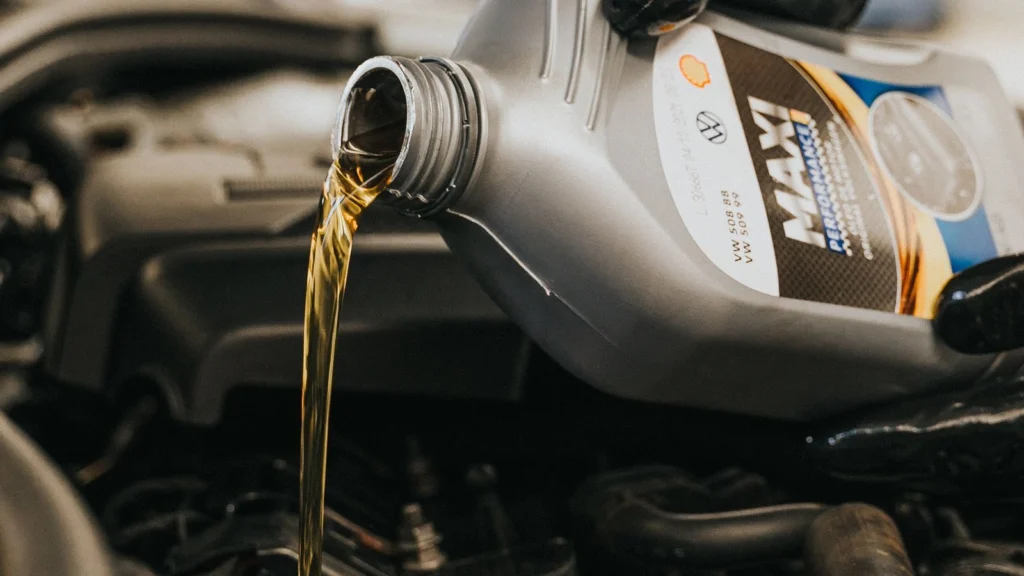
Maintenance: Keep It Earning
A utility tractor is built to last for thousands of hours, if it gets regular care.
- Walk around it before each use. Look for leaks, loose bolts, soft tires and damaged guards.
- Check the engine oil, coolant and hydraulic fluid.
- Grease the fittings. Loader pins, the front axle and PTO shafts need grease often, some of them daily in hard use.
- Keep the air filter and the radiator screen clean. Dust and chaff cause overheating.
- Drain water from the fuel filter and change fuel filters on schedule.
- Follow the hour-based schedule in the manual for oil, filters and transmission fluid.
Diesel engines reward clean fuel and clean oil. Our diesel engine maintenance schedule explains the intervals, and our guide to cold weather diesel starting covers winter fuel and block heaters. To build a service plan by the hour, try our Maintenance Interval Generator.
Useful Gear for Utility Tractor Owners
These are small items that make a working tractor safer and easier to live with. We have not tested them. The details are from the sellers’ listings.
Daily essential
Lincoln 1147 Lever-Action Grease Gun
A lever-action grease gun with an 18-inch whip hose. A lever gun moves more grease with each stroke than a pistol-grip gun, which suits the many fittings on a loader.
- TypeLever action
- Hose18 in whip hose with coupler
- Pump headCast
- FollowerDual lip
- FeatureJam-proof toggle
- BrandLincoln
- Why it works: the long lever builds pressure easily, and the flexible hose reaches fittings behind loader arms.
- Who it is best for: owners with a loader, a front axle and PTO shafts to grease every week.
- What it solves: worn pins and bushings, which are almost always the result of missed greasing.
- Keep in mind: it takes two hands to pump, so a pistol-grip gun is easier in tight spots. Grease is not included.
As an Amazon Associate we earn from qualifying purchases. Details come from the Amazon listing, checked October 2026.
Road safety
Slow Moving Vehicle Triangle Sign, Aluminum, 14 x 16 Inches
The orange and red triangle that tells drivers behind you that your tractor is slow. The listing describes rust-free aluminum with a reflective face and pre-drilled holes.
- Size14 x 16 inches
- MaterialAluminum, 40 mil
- FaceDiamond-grade reflective
- MountingPre-drilled holes
- UseTractors, UTVs, implements
- Stock on listingIn stock when checked
- Why it works: drivers recognize the triangle at a distance, day or night, and slow down sooner.
- Who it is best for: anyone who drives a tractor or tows an implement on a public road.
- What it solves: a faded or missing sign, which is one of the most common faults on older tractors.
- Keep in mind: rules for signs, lights and reflectors differ from state to state. Check what your state requires for farm equipment on the road.
As an Amazon Associate we earn from qualifying purchases. Details come from the Amazon listing, checked October 2026.
Comfort upgrade
VEVOR Universal Tractor Suspension Seat with Seat Belt
A replacement suspension seat with a retractable seat belt and a seat switch. The listing gives a suspension travel of 45 mm and an operator weight range of 110 to 286.7 pounds.
- Suspension travel45 mm
- Operator weight110 to 286.7 lb
- BackrestAdjusts 10 to 120 degrees
- Slide travel5.91 inches
- Seat beltRetractable, included
- Weight52.7 lb
- Why it works: a suspension seat takes the sting out of rough ground, and a new belt replaces one that is frayed or missing.
- Who it is best for: owners of older open-station tractors with a worn or torn seat.
- What it solves: long days on a hard seat, and a missing seat belt on a tractor that has a rollover bar.
- Keep in mind: it is a universal seat. Measure your mounting bolt pattern and the space you have before you order, and make sure the belt is anchored as your tractor’s maker requires.
As an Amazon Associate we earn from qualifying purchases. Details come from the Amazon listing, checked October 2026.
Loader add-on
Bolt-On Grade 70 Grab Hook for Tractor Buckets, 3/8 Inch
A forged grab hook welded to a steel plate that bolts to the top of a loader bucket. It gives you a proper place to hook a chain.
- Hook3/8 in, Grade 70, forged steel
- Plate1/4 in thick, 3.25 x 4.25 in
- Hardware1/2 in Grade 10.9 bolts, lock nuts
- Backer plateIncluded
- FinishGalvanized and powder coated
- MountBolt-on
- Why it works: a hook fixed to the bucket holds a chain where you put it, so the chain cannot slide along the edge.
- Who it is best for: owners who lift and drag logs, posts and equipment with a loader.
- What it solves: the risky habit of wrapping a chain around the bucket lip.
- Keep in mind: a hook does not raise your loader’s lift capacity. Stay within the loader’s rating, keep loads low and never stand under or near a raised load.
As an Amazon Associate we earn from qualifying purchases. Details come from the Amazon listing, checked October 2026.
Common Utility Tractor Mistakes (and the Fix)
Pro Tips From Tractor Owners
- Rent or borrow before you buy. A day on a tractor of the size you are considering tells you more than a brochure.
- Measure your doors. Check the height of the cab or the raised rollover bar against your barn and shed doors.
- Ask about loader compatibility. A loader made for the tractor fits better and keeps the warranty simple.
- Think about tire type. Agricultural tires grip best in fields. Industrial tires last longer on hard surfaces. Turf tires protect lawns.
- Keep a log. Write down hours, services and repairs. It helps you now and adds value when you sell.
- Learn the hand signals. If someone guides you while you back up to an implement, agree on signals first.
- Buy the manual. The operator’s manual answers most questions faster than a search engine.
Real-Life Scenarios: Which Utility Tractor Fits?
These are typical situations. They are examples to help you choose, not reports from real customers.
🐄 The small cattle farm
You feed round bales all winter, cut and bale 30 acres of hay, and clean pens with a loader.
A mid-size utility tractor with four-wheel drive, a loader, a power shuttle and two rear remotes covers it all.
Pick: about 75 to 100 hp
🌾 The hobby farm
You have 15 acres, a 6-foot rotary cutter, a box blade and plans for a small square baler.
A small utility tractor is enough. Put the money into four-wheel drive and a loader instead of extra horsepower.
Pick: about 50 to 65 hp
🚜 The contractor and snow remover
You run a large snow blower in winter and a flail mower along roadsides in summer.
You need a cab, high hydraulic flow and often a 1,000 rpm PTO. Look at the larger end of the class.
Pick: about 110 hp and up
Utility Tractors: FAQ
What is considered a utility tractor?
A utility tractor is a mid-size, general-purpose farm tractor. Makers define the class differently. John Deere lists its utility tractors from 50 to 260 horsepower. They are heavier and stronger than compact tractors and are built for haying, loader work, mowing and snow removal.
What is the difference between a compact tractor and a utility tractor?
Size, weight and strength. Compact tractors are lighter and usually use a Category 1 hitch. Utility tractors have a heavier frame, a longer wheelbase, more hydraulic flow and usually a Category 2 hitch. The power ranges overlap around 50 to 65 horsepower.
How much horsepower do I need in a utility tractor?
List your implements and find the PTO horsepower each one needs. The biggest regular job sets the size. Many small livestock and hay farms work well with 75 to 100 horsepower. A hobby farm with a rotary cutter and a small baler can use 50 to 65.
Is PTO horsepower the same as engine horsepower?
No. PTO horsepower is lower, because power is lost between the engine and the PTO shaft. As one example, TractorData lists the Kubota L3901 at 37.5 engine horsepower and 30.6 to 32.1 PTO horsepower, depending on the transmission.
Do I need four-wheel drive on a utility tractor?
For loader work, hills, mud or snow, yes. Four-wheel drive gives more traction and makes a loaded tractor safer to steer and stop. On flat, dry ground with light work, two-wheel drive can be enough.
How many hours will a utility tractor last?
There is no fixed limit. A diesel utility tractor that has had regular oil changes, clean air and clean fuel can work for many thousands of hours. Service history tells you more than the hour meter does.
Your Utility Tractor Checklist
- List every implement you own or plan to buy.
- Note the PTO horsepower and PTO speed each one needs.
- Check the heaviest mounted implement against the lift capacity.
- Confirm the hitch category.
- Count the hydraulic remotes you need.
- Choose a transmission that suits loader work if you will use one.
- Decide on four-wheel drive, and on a cab or an open station.
- Measure your shed and barn doors.
- Find the nearest dealer for parts and service.
- On a used tractor, start it cold and consider an oil analysis.
- Keep the rollover bar up and wear the seat belt.
The bottom line
The right utility tractor is the one that matches your implements, with weight, lift and hydraulic flow to spare. Choose a good dealer, look after the engine, and never work without the rollover bar and the seat belt.
As an Amazon Associate we earn from qualifying purchases.
Sources: John Deere’s official tractor pages (deere.com) for tractor classes and 6M series ratings; Kubota’s US website (kubotausa.com) for series horsepower ranges; dealer pages for John Deere 5 series ranges; TractorData for Kubota L3901 figures; NIOSH publications on tractor overturns, rollover protective structures and the National ROPS Rebate Program; commonly quoted three-point hitch dimensions; Amazon listings for the products named in this guide. All checked October 2026.