Natural gas home generators run on the same gas line that feeds your furnace and stove, so they can power a house through a long outage without anyone refueling them. For homes with gas service, that makes natural gas the most convenient backup fuel there is.
This guide covers every brand, not just one. You will see the two kinds of natural gas generator, what the major makers rate their machines at on natural gas, how much gas they really burn, and the checks your gas meter and piping have to pass. You will also find four current models to look at.
Every figure comes from a manufacturer’s website, a manufacturer’s spec sheet or a current Amazon listing. We have not tested or installed these generators.
Natural gas home generators at a glance
Fuel that never runs out, if the gas line can keep up
Ratings and fuel figures come from the official websites and spec sheets of Generac, Kohler and Champion, checked in October 2026.
Quick answer
There are two ways to run a home on natural gas. A home standby generator is installed permanently and starts by itself. A tri fuel portable is wheeled out, connected with a gas hose and started by hand. Both make less power on natural gas than on propane or gasoline. A typical 20 to 22 kW standby unit burns about 160 to 220 cubic feet of gas an hour at half load. Before you buy either kind, have your gas meter capacity, delivery pressure and pipe size checked.
How we put this guide together
We have not tested or installed these generators. Standby ratings, fuel use and gas pressure figures come from the product pages of Generac and Champion and from Kohler’s product pages and spec sheets. Portable figures come from current Amazon listings. Therm and cost arithmetic is our own, using the makers’ figures. We do not publish prices. Gas work is regulated, so use this guide to prepare for a conversation with a licensed installer.
In this guide
- Two Kinds of Natural Gas Home Generator
- How a Natural Gas Standby Generator Works
- Natural Gas Ratings by Brand
- How Much Natural Gas Do They Use?
- Gas Pressure, Meter and Pipe: The Hidden Requirements
- Tri Fuel Portables on Natural Gas
- Natural Gas vs Propane vs Gasoline
- How Reliable Is Natural Gas in an Emergency?
- Four Natural Gas Generators to Look At
- Installation and Safety
- Common Mistakes With Natural Gas Generators (and the Fix)
- Pro Tips for Natural Gas Backup Power
- Real-Life Scenarios: Which Route Fits?
- Natural Gas Home Generators: FAQ
- Your Natural Gas Generator Checklist
Two Kinds of Natural Gas Home Generator
| Point | Home standby generator | Tri fuel portable generator |
|---|---|---|
| How it starts | Automatically, within seconds | By hand, switch or remote |
| Where it lives | Permanently outside, on a pad | In the garage until you need it |
| Natural gas connection | Hard piped by a gas fitter | A hose to a gas outlet fitted by a professional |
| Typical power on natural gas | 7.5 to 25 kW in air-cooled sizes | About 5,000 to 9,500 running watts |
| Other fuels | Propane | Gasoline and propane |
| Transfer switch | Automatic | Manual, fitted by an electrician |
| Works when you are away | Yes | No |
Key insight: natural gas solves the fuel problem. It does not solve the starting problem. Only a standby generator does both.
If you are unsure which family suits you, our guide to portable vs standby generators compares them in detail.
How a Natural Gas Standby Generator Works
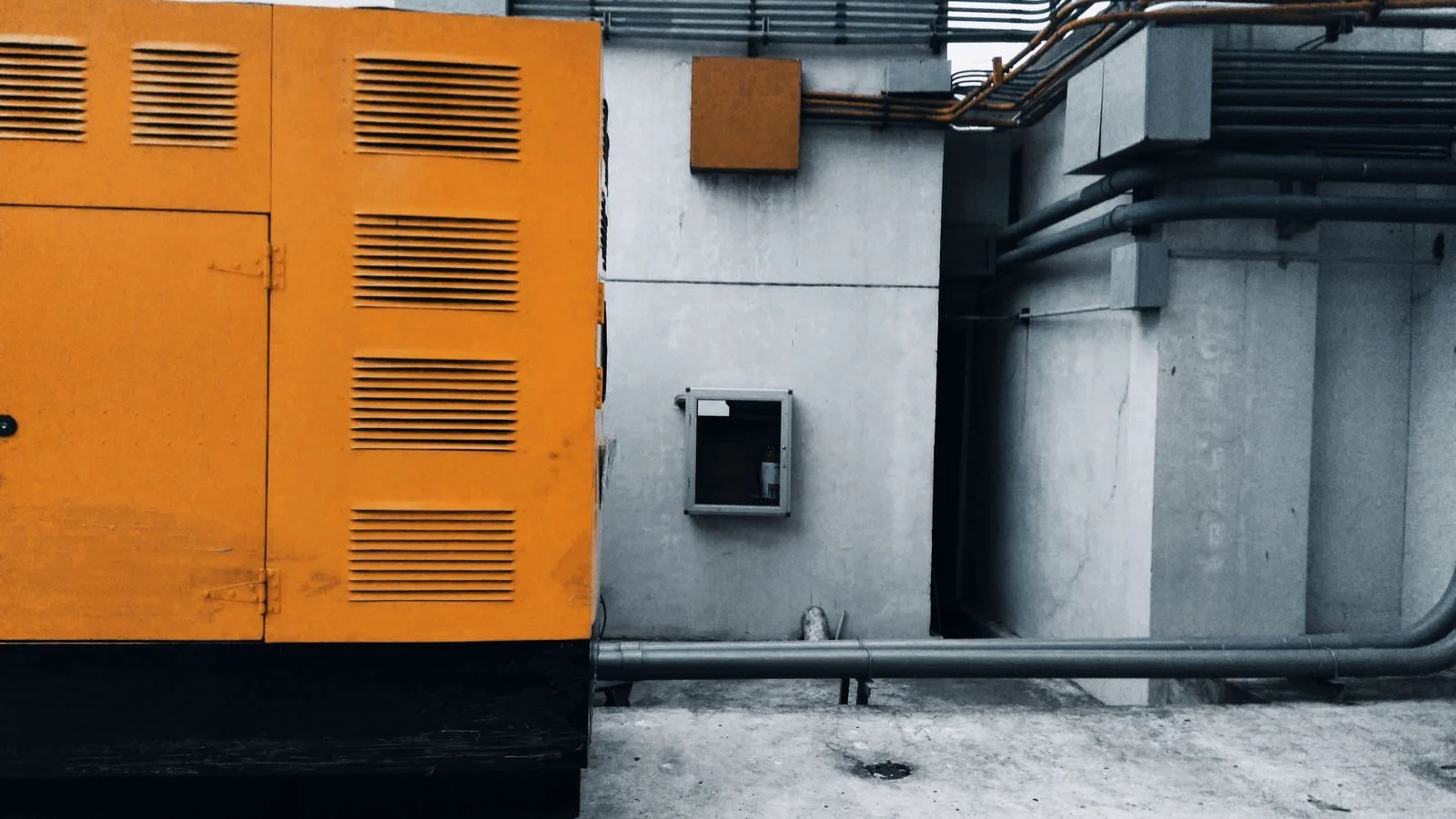
A standby generator sits outside, a little like a central air conditioner. Generac describes the sequence simply.
- Utility power is lost.
- The generator senses the problem. An automatic transfer switch watches the utility supply.
- The generator starts and restores power, usually within seconds.
- Utility power returns. The system switches back and the generator shuts down.
The engine burns gas straight from your home’s supply, so there is no tank to fill. Generac says a standby generator can run for as long as fuel is available and the unit is properly maintained. It adds that the oil level should be checked for every 24 hours of use.
Natural Gas Ratings by Brand
The number in a model name is nearly always the propane rating. On natural gas most generators make a little less. Here are popular sizes from three makers.
| Brand and model | Rating on LP | Rating on NG | Difference |
|---|---|---|---|
| Generac 14 kW | 14 kW | 14 kW | None |
| Generac 22 kW | 22 kW | 21 kW | 1 kW less |
| Generac 26 kW | 26 kW | 24 kW | 2 kW less |
| Kohler 14RCA | 14 kW | 12 kW | 2 kW less |
| Kohler 20RCA | 20 kW | 18 kW | 2 kW less |
| Kohler 26RCA | 26 kW | 24 kW | 2 kW less |
| Champion 14 kW | 14 kW | 12.5 kW | 1.5 kW less |
| Champion 22 kW | 22 kW | 19.8 kW | 2.2 kW less |
| Champion 26 kW | 26 kW | 23.4 kW | 2.6 kW less |
The lesson is the same for every brand. If you will run on natural gas, size the generator on the natural gas rating. A “22 kW” unit may be a 19.8 kW or a 21 kW generator on your fuel.
How Much Natural Gas Do They Use?
Natural gas is sold by volume. Spec sheets give fuel use in cubic feet per hour.
| Brand and model | At half load | At full load |
|---|---|---|
| Generac 10 kW | 98 cu ft/h | 132 cu ft/h |
| Generac 22 kW | 221 cu ft/h | 311 cu ft/h |
| Generac 26 kW | 182 cu ft/h | 316 cu ft/h |
| Kohler 20RCA | 161 cu ft/h | 281 cu ft/h |
| Kohler 26RCA | 180 cu ft/h | 290 cu ft/h |
| Champion 14 kW | 116.5 cu ft/h | 180.1 cu ft/h |
| Champion 22 kW aXis | 173.4 cu ft/h | 270.2 cu ft/h |
| Champion 26 kW | 197.8 cu ft/h | 321.1 cu ft/h |
Do not read too much into small differences between brands. Each maker tests in its own way. The useful pattern is the scale: a mid-size home standby unit uses roughly 160 to 220 cubic feet an hour at half load, and around 300 at full load.
What that means on your gas bill
Many gas bills are in therms. One therm is 100,000 Btu, and natural gas holds about 1,000 Btu per cubic foot. So 100 cubic feet is about 1 therm.
- Find the half-load figure for your generator. Take 180 cubic feet an hour as an example.
- Divide by 100. That is 1.8 therms an hour.
- Multiply by the hours it runs. A full day is about 43 therms.
- Multiply by your price per therm, which is printed on your gas bill.
That is our arithmetic, and it assumes a steady half load. Real homes use less overnight and more at dinner time. For a wider view of running costs, see how much gas a generator uses.
Gas Pressure, Meter and Pipe: The Hidden Requirements
A natural gas generator is only as good as the gas supply behind it. Three things have to be right.
Pressure
Each maker states the gas pressure its generators need, in inches of water column. That is a unit for low gas pressures.
| Brand | Natural gas pressure required | Propane pressure required |
|---|---|---|
| Generac air-cooled standby | 3.5 to 7 inches of water column | 10 to 12 inches |
| Kohler 20RCA and 26RCA | 3.5 to 11 inches of water column | 7 to 11 inches |
An installer checks the pressure with a gauge while the generator is running under load. Pressure that looks fine at rest can sag when the engine asks for full flow.
The meter
Your gas meter has a maximum flow on its rating plate. The generator is added to everything else that burns gas. A 22 kW unit can ask for around 300 cubic feet an hour by itself. If the meter cannot supply that on top of the furnace and water heater, the gas company may need to fit a bigger one.
The pipe
A long, narrow pipe starves the engine. Kohler’s spec sheets show how the size grows with distance.
| Length of gas pipe run | Kohler 20RCA | Kohler 26RCA |
|---|---|---|
| 25 feet | 1 inch | 1 inch |
| 50 feet | 1 inch | 1 1/4 inch |
| 100 feet | 1 1/4 inch | 1 1/4 inch |
| 200 feet | 1 1/4 inch | 1 1/2 inch |
Tip: three questions for the gas company
Before you order, ask your gas utility three things. What is the capacity of my meter? What is my delivery pressure? Will you upgrade the meter if the generator needs it, and how long does that take? The answers can change your schedule.
Tri Fuel Portables on Natural Gas
A tri fuel portable is the budget route. It runs on gasoline, propane or natural gas, and you connect it to a gas outlet with a hose.
The same rule applies, only more so. Output on natural gas is the lowest of the three fuels.
| Model | Running watts on gasoline | On propane | On natural gas |
|---|---|---|---|
| Westinghouse iGen8200TFc inverter | 6,600 | 5,940 | 5,280 |
| Champion 8125-Watt Tri Fuel | 6,500 | 6,000 | 5,500 |
| Generac GP9500E Tri Fuel, fuel injected | 9,500 | 8,550 | 7,000 |
| Champion 11,000-Watt Tri Fuel inverter | 9,000 | 8,100 | 7,290 |
| WEN TF-1450X | 11,500 | 10,300 | 8,750 |
| Westinghouse 14500 Tri-Fuel | 11,500 | 10,500 | 9,500 |
Three practical points.
- You need a gas outlet. A licensed gas fitter must install a suitable connection point with enough supply. The generator’s hose plugs into that.
- Check what is in the box. Several listings include the natural gas hose. The Champion 8500-Watt Tri Fuel inverter listing, for example, names a 25-foot natural gas hose.
- You still need a transfer switch to feed your home’s circuits. An electrician fits it.
A tri fuel portable will not start by itself, and it has to be wheeled outside and connected each time. In return it costs far less than a standby system.

Natural Gas vs Propane vs Gasoline
| Point | Natural gas | Propane | Gasoline |
|---|---|---|---|
| Supply in a long outage | Continuous, from the utility | Limited by tank size | Limited by cans and open gas stations |
| Storage at home | None | A tank or cylinders | Cans, with a short shelf life |
| Power from the same engine | Lowest | Middle | Highest |
| Shelf life | Not stored | Does not go stale | Months, with stabilizer |
| Used by | Standby and tri fuel units | Standby, dual fuel and tri fuel units | Portables |
| Main thing to plan | Meter, pressure and pipe | Tank size | Fresh fuel and safe storage |
If your home has gas service, natural gas is usually the first choice for a standby generator. If it does not, propane does the same job with a tank. Gasoline is for portables.
How Reliable Is Natural Gas in an Emergency?
Gas service normally keeps flowing when the electricity fails. That is why natural gas standby generators are so popular in storm country.
It is not a guarantee, though. A gas utility may shut off supply after an earthquake, a flood or a gas leak. Very severe cold has also strained gas supplies in some regions.
So think about the outages you actually face.
- Storms and grid failures: natural gas usually stays on. It is a strong choice.
- Earthquake zones: gas may be shut off as a precaution. A tri fuel portable with stored propane gives you a second option.
- Remote areas: if supply is a worry, ask your gas utility about its record in past emergencies.
Our emergency power outage checklist helps you plan for the kind of outage you are most likely to see.
Four Natural Gas Generators to Look At
Each of these had an active Amazon listing when we checked in October 2026. One is a standby system and three are tri fuel portables.
Automatic standby
Generac 14kW Whole Home Generator with Transfer Switch and Cellular Capability
An air-cooled home standby generator sold with a transfer switch. Generac’s site rates this size at 14 kW on natural gas as well as on propane.
- Rating on natural gas14 kW
- Gas use at half load189 cu ft/h
- Gas use at full load243 cu ft/h
- Gas pressure needed3.5 to 7 in. water column
- Weight391 lb
- MonitoringBuilt-in cellular
- Why it works: it starts by itself and runs from your gas line, so it works when nobody is home.
- Who it is best for: smaller homes, or larger homes that only want the essentials on backup.
- What it solves: refueling. There are no cans, cylinders or deliveries.
- Handy extras: oil level sensors, improved cold starting and a transfer switch in the package.
- Keep in mind: it needs professional gas and electrical installation with permits. The listing says remote monitoring requires a Mobile Link premium subscription. Fuel figures come from Generac’s website.
As an Amazon Associate we earn from qualifying purchases. Specs come from the Amazon listing and Generac’s product page, checked October 2026.
Most power on natural gas
Westinghouse 14500 Peak Watt Tri-Fuel Home Backup Portable Generator
A large open-frame portable that keeps 9,500 running watts on natural gas. That is the highest natural gas figure among the portables in this guide.
- On gasoline11,500 running, 14,500 peak
- On propane10,500 running, 13,500 peak
- On natural gas9,500 running, 12,000 peak
- Engine550 cc OHV
- Fuel tank9.5 gallons
- Weight230 lb
- Why it works: it has enough natural gas output to cover a long list of household loads.
- Who it is best for: homeowners with a gas line who want near-standby power and do not mind starting it themselves.
- What it solves: long outages. On natural gas the run time is limited only by the supply.
- Handy extras: remote electric start, a cast iron cylinder sleeve and a 3-year limited warranty.
- Keep in mind: it weighs 230 pounds, and it needs a gas outlet and a transfer switch fitted by professionals.
As an Amazon Associate we earn from qualifying purchases. Specs come from the Amazon listing, checked October 2026.
Three fuels, one dial
WEN TF-1450X 14,500-Watt Tri-Fuel Generator
An open-frame tri fuel generator with a selection dial for the fuel and both 30-amp and 50-amp 240-volt outlets.
- On gasoline11,500 running, 14,500 surge
- On propane10,300 running, 12,500 surge
- On natural gas8,750 running, 10,500 surge
- Engine500 cc OHV
- Run timeUp to 12 hours at half load
- Warranty3-year limited
- Why it works: it switches fuel with a turn of the dial and runs at 120 and 240 volts for transfer switches.
- Who it is best for: buyers who want a large tri fuel portable with the gas fittings in the box.
- What it solves: hookup shopping. The listing includes a 6-foot propane hose and a natural gas quick-connect adapter.
- Handy extras: electric start, a carbon monoxide shutdown sensor and an 8.2-gallon tank.
- Keep in mind: output falls to 8,750 running watts on natural gas. Size your loads to that figure.
As an Amazon Associate we earn from qualifying purchases. Specs come from the Amazon listing, checked October 2026.
Quiet tri fuel inverter
Westinghouse iGen8200TFc Tri-Fuel Portable Inverter Generator
A tri fuel inverter that makes clean power and runs far more quietly than an open-frame generator. It is also much lighter.
- On gasoline6,600 running, 8,200 peak
- On propane5,940 running, 7,380 peak
- On natural gas5,280 running, 6,560 peak
- NoiseAbout 60 dBA at 25% load
- Power qualityLess than 3% THD
- Weight134.5 lb
- Why it works: inverter technology matches engine speed to demand, which cuts fuel use and noise.
- Who it is best for: homes that need the essentials on natural gas and have close neighbors.
- What it solves: dirty power. Less than 3% THD is safe for computers and other electronics.
- Handy extras: a 50-amp 120/240-volt outlet, a 30-amp RV outlet, a carbon monoxide sensor and low-oil shutdown.
- Keep in mind: 5,280 running watts on natural gas covers essentials, not a whole house.
As an Amazon Associate we earn from qualifying purchases. Specs come from the Amazon listing, checked October 2026.
Want more natural gas output from an inverter? The Champion 11,000-Watt Tri Fuel inverter lists 7,290 running watts on natural gas.
Installation and Safety
Natural gas and electricity both need licensed hands.
Not a do-it-yourself job
A gas leak can cause a fire or an explosion. A wiring mistake can send power back down the utility line and injure line workers. Have a standby generator installed by a certified dealer or licensed trades, with permits and an inspection. For a portable, have a gas fitter install the gas outlet and an electrician fit the transfer switch. Run any portable outdoors only, at least 20 feet from the house, and fit carbon monoxide alarms indoors.
Read our generator safety tips and the guide to connecting a generator to your house before you start.
Common Mistakes With Natural Gas Generators (and the Fix)
Pro Tips for Natural Gas Backup Power
- Find your meter’s rating plate and photograph it before you talk to anyone.
- Ask for the Btu demand of the generator you are considering. Gas professionals work in Btu per hour.
- Keep the gas run short. Placing the generator near the meter saves pipe and pressure.
- Ask about load management. It lets a smaller generator serve a larger home, which matters when natural gas trims the rating.
- Request the pressure reading under load at startup, and keep it with your paperwork.
- Service it yearly. A natural gas engine still needs oil, filters, spark plugs and a healthy battery.
Real-Life Scenarios: Which Route Fits?
These are typical situations that buyers describe in forums and reviews. They are examples to help you choose, not quotes from real people.
🏘️ The family on a gas street
You have gas heat and a gas range, and outages of a day or two happen most winters.
You want power to return automatically, with no fuel to manage.
Best route: an air-cooled standby unit sized on its natural gas rating
🧰 The budget-minded homeowner
You have a gas line and are usually at home in a storm. A standby system is more than you want to spend.
You want natural gas run time from a generator you can start yourself.
Best route: a tri fuel portable, a gas outlet and a transfer switch
🌍 The earthquake-zone resident
Your utility may shut gas off after a quake, exactly when you need power.
You want a fuel plan that does not depend on one supply.
Best route: a tri fuel portable with stored propane as the backup
Natural Gas Home Generators: FAQ
Can a home generator run on natural gas?
Yes. Home standby generators from Generac, Kohler and Champion run on natural gas or propane, and tri fuel portable generators can run on natural gas through a hose connected to a gas outlet.
How much natural gas does a whole-house generator use?
It depends on the size and the load. Manufacturer figures for 20 to 22 kW units range from about 160 to 220 cubic feet an hour at half load and about 270 to 310 at full load.
Is a generator less powerful on natural gas?
Usually. Kohler rates its 20RCA at 20 kW on propane and 18 kW on natural gas. Champion rates its 22 kW unit at 19.8 kW on natural gas. A few models, such as the Generac 14 kW, list the same rating on both fuels.
Do I need a bigger gas meter for a generator?
Possibly. A mid-size standby generator can need around 300 cubic feet of gas an hour at full load. If your meter cannot supply that as well as your other appliances, the gas company may have to upgrade it.
Will natural gas work during a power outage?
Usually. Gas service normally continues when the electricity fails. It can be interrupted by events such as earthquakes, floods or gas leaks, so it is not guaranteed in every emergency.
Can a portable generator be connected to a home's natural gas?
Only a tri fuel model designed for it. A licensed gas fitter must install a proper gas outlet with enough supply, and the generator still has to run outdoors with a transfer switch for the electrical connection.
Your Natural Gas Generator Checklist
- Confirm you have natural gas service and locate the meter.
- Decide between automatic standby and a tri fuel portable.
- List your loads and add up the running watts.
- Size the generator on its natural gas rating.
- Note the generator’s full-load gas demand.
- Ask the gas company about meter capacity and delivery pressure.
- Have a licensed gas fitter size and run the pipe or outlet.
- Have an electrician fit the transfer switch.
- Get permits and an inspection.
- Keep a second fuel option if gas shutoffs are a risk where you live.
The bottom line
Natural gas is the easiest fuel to live with in a long outage, as long as your meter, pressure and pipe can feed the generator. Choose standby for automatic power, or a tri fuel portable to spend less, and size either one on its natural gas rating.
As an Amazon Associate we earn from qualifying purchases.
Sources: Generac’s official website (generac.com): home standby product pages, spec tables and FAQ; Kohler’s home generator website and Kohler specification sheets G4-272 and G4-315; Champion Power Equipment’s home standby product pages; Amazon listings for the products named in this guide. All checked October 2026.