The alternator vs generator question has a simple answer: both turn motion into electricity, but an alternator makes alternating current and a traditional generator makes direct current. The confusing part is that the word “generator” is used in two ways. Sometimes it means the old DC machine that cars used before the 1960s. Sometimes it means the whole engine-driven unit in your garage, which actually has an alternator inside it.
This guide untangles both meanings. You will learn how each machine works, why every modern car has an alternator, what the “generator end” of a portable generator really is, and how to check either one with a simple meter.
The explanations rest on well-established electrical principles and on manufacturer spec sheets. We name our sources where a specific figure is used.
Alternator vs generator at a glance
Same idea, different current, different hardware
Based on standard electrical principles and on published generator specifications, checked in October 2026.
Quick answer
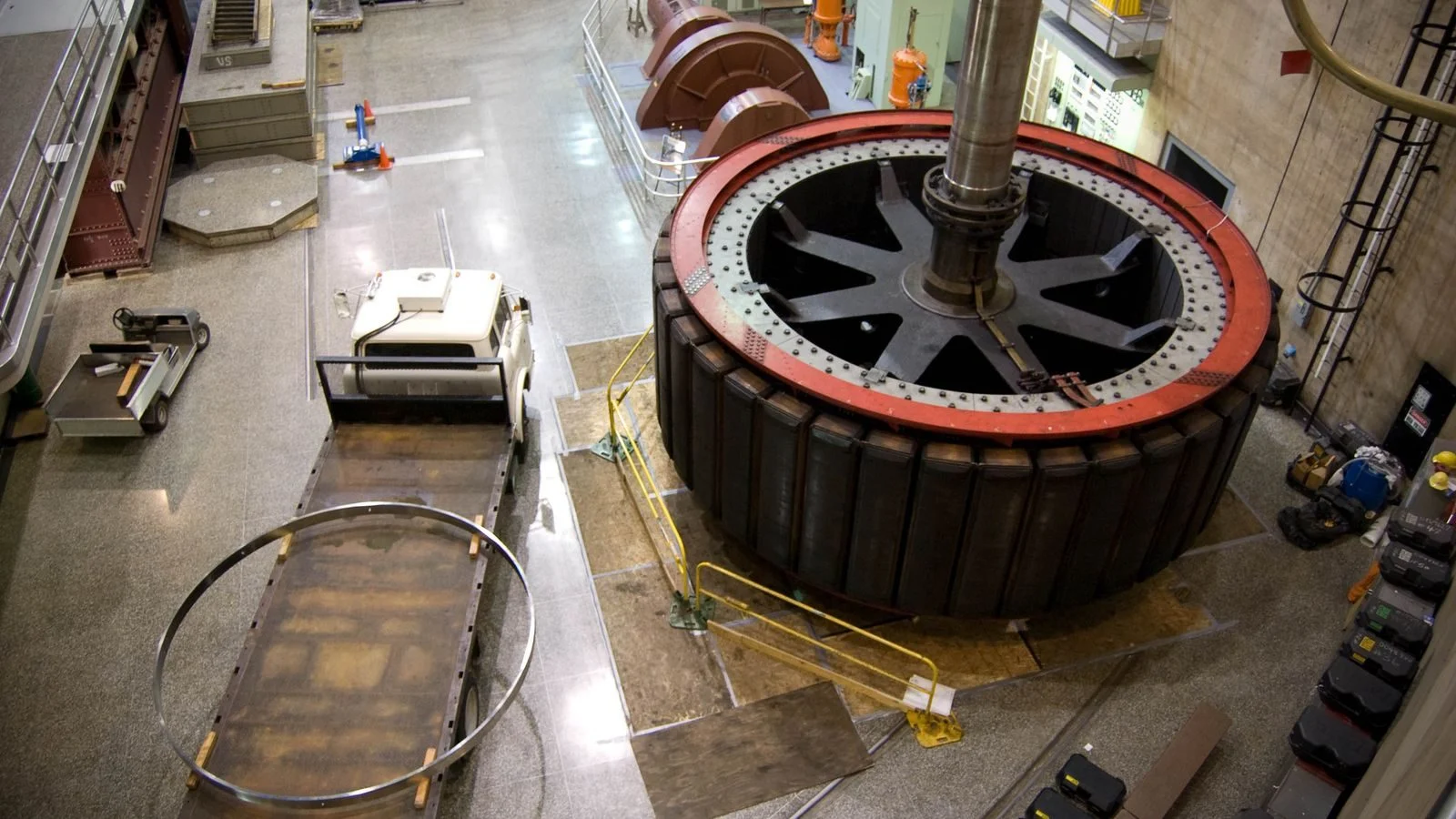
An alternator produces alternating current. Its magnetic field spins and its output windings stand still. A traditional DC generator, also called a dynamo, produces direct current. Its output windings spin and a commutator with brushes turns the output into DC. Cars moved from generators to alternators in the 1960s because alternators are lighter, charge better at low engine speed and need less maintenance. A portable or standby “generator” is an engine joined to an alternator.
How we put this guide together
This is an explainer, not a product test. The descriptions of how alternators and DC generators work come from standard electrical engineering principles that have been settled for more than a century. Specific figures for home generators come from manufacturer spec sheets, which we name. Product box details come from current Amazon listings. Electrical testing can be dangerous, so follow your vehicle or generator manual.
In this guide
- The Short Version
- How Both Machines Make Electricity
- What Is a DC Generator?
- What Is an Alternator?
- Why Cars Switched From Generators to Alternators
- The “Generator” in Your Garage Is an Engine and an Alternator
- Brushes, Brushless Designs and the Voltage Regulator
- Where Inverter Generators Fit
- Which Word Should You Use?
- Checking a Generator’s Alternator With a Meter
- Tools That Help
- Common Mix-Ups (and the Fix)
- Pro Tips
- Real-Life Scenarios
- Alternator vs Generator: FAQ
- Your Quick Reference Checklist
The Short Version
| Point | Alternator | DC generator (dynamo) |
|---|---|---|
| Current produced | Alternating current, AC | Direct current, DC |
| What spins | The magnetic field | The output windings |
| Where the output comes from | Stationary windings, called the stator | The spinning windings, through a commutator |
| How current is collected | Fixed connections | Brushes rubbing on a commutator |
| Brush wear | Low. Brushes carry only a small field current, or there are none | High. Brushes carry the full output current |
| Output at low speed | Good | Poor |
| Weight for the same output | Lighter | Heavier |
| Where you find it today | Cars, portable generators, standby generators, power stations | Vintage cars, some small specialist machines |
Key insight: the two machines are relatives, not opposites. Swap which part spins and how the current is taken off, and one becomes the other.
How Both Machines Make Electricity
Every generator and alternator relies on one discovery from the 1830s. Move a magnet past a coil of wire, or a coil past a magnet, and a voltage appears in the wire. This is called electromagnetic induction.
Three things decide how much electricity you get.
- The strength of the magnetic field.
- The number of turns of wire in the coil.
- The speed at which the field and the coil move past each other.
The voltage that appears in the coil naturally swings one way and then the other as the magnet passes. In other words, the raw output of any rotating machine is alternating current. The difference between an alternator and a DC generator is what happens next.
Our guide on how a generator works covers the basics of engines and windings. This article goes deeper into the two types of machine.
What Is a DC Generator?
A traditional DC generator is often called a dynamo. It was the standard way to make electricity on vehicles and machines for decades.
Here is how it works.
- Magnets or field coils sit still around the outside of the machine.
- A set of windings, called the armature, spins in the middle.
- Alternating current is induced in the spinning windings.
- A commutator switches the connections at exactly the right moment. It is a ring of copper segments on the shaft.
- Carbon brushes press on the commutator and carry the current out as direct current.
The commutator is the clever part. It acts as a mechanical switch that flips the connection every half turn, so the current always leaves in the same direction.
It is also the weak part. All of the output current has to pass through the brushes and the commutator. They spark, they wear and they need regular attention. A DC generator also has to spin fairly fast before it makes useful power, so it charges poorly at idle.
What Is an Alternator?
An alternator turns the design inside out.
- The magnetic field spins. It is carried on the rotor.
- The output windings stand still. They form the stator, which wraps around the rotor.
- Alternating current is induced in the stator as the rotor turns.
- The power leaves through fixed connections. No heavy current has to cross a sliding contact.
The rotor still needs a small current to create its magnetic field. In many alternators that current reaches the rotor through two smooth slip rings and a pair of small brushes. Because the current is small, the brushes last a long time. Other alternators are brushless and have no sliding contacts at all.
An alternator makes AC. When DC is needed, as in a car, a set of diodes called a rectifier converts it. Diodes are one-way valves for electricity, with no moving parts.
That combination is why the alternator won. It has simple fixed output connections, light brush duty and good output at low speed.
Why Cars Switched From Generators to Alternators
Cars used DC generators for the first half of the 20th century. During the 1960s, alternators took over across the industry.
| Reason | DC generator | Alternator |
|---|---|---|
| Charging at idle | Weak. The battery could run down in traffic | Charges at low engine speed |
| Weight and size | Heavy for its output | Lighter and more compact |
| Maintenance | Brushes and commutator need regular service | Brushes carry little current and last far longer |
| Output | Limited | Much higher, which modern electrical loads need |
| Converting to DC | Mechanical, by the commutator | Electronic, by diodes |
The change became practical when reliable silicon diodes became cheap. Before that, there was no simple way to turn an alternator’s AC into the DC that a battery needs.
So when someone talks about the “generator” on a classic car, they mean a real DC generator. On anything modern, the same job is done by an alternator, even if people still use the old word.
How to check a car’s charging system
You can learn a lot with an inexpensive multimeter set to DC volts. These figures are typical for a 12-volt system. Your vehicle’s manual has the exact values.
- Measure the battery with the engine off. A healthy, fully charged battery reads about 12.6 volts.
- Start the engine and measure again. A working alternator typically raises the reading to somewhere between 13.5 and 14.5 volts.
- Switch on the headlights and the heater fan. The reading should stay well above the battery’s resting voltage.
- If the voltage does not rise with the engine running, the charging system needs attention.
- If it climbs far above 14.5 volts, the voltage regulator may be at fault.
Take care around a running engine
Keep hands, clothing and test leads away from belts and fans. Do not disconnect the battery while the engine is running to “test” an alternator. That old trick can damage modern vehicle electronics. If you are unsure, have a workshop test the system.
The “Generator” in Your Garage Is an Engine and an Alternator
Now for the other meaning of the word. A portable generator or a home standby generator is a complete machine with two main halves.
- The engine, which burns fuel and turns a shaft.
- The alternator, which turns that rotation into electricity. In the trade it is often called the generator end or the generator head.
Manufacturers use the word alternator in their own specifications. Kohler’s spec sheet for its 20 kW home standby generator, for example, lists the “alternator type” as “2-pole, rotating field.” That is the layout described above: the field spins and the output windings stand still.
So the everyday phrase “portable generator” is perfectly correct for the whole machine. Inside it, the part making the electricity is an alternator.
Why engine speed sets the frequency
Household power in North America is 60 hertz, which means the current reverses direction 60 times a second. In a conventional generator, that frequency comes straight from how fast the alternator spins and how many magnetic poles it has.
The rule is: frequency equals poles times rpm, divided by 120.
| Poles | Engine speed needed for 60 Hz | Where you find it |
|---|---|---|
| 2 | 3,600 rpm | Most portable generators and air-cooled home standby units |
| 4 | 1,800 rpm | Larger liquid-cooled standby generators |
Kohler’s published specs show both. Its air-cooled 20RCA runs at 3,600 rpm, while its liquid-cooled home models turn at 1,800 rpm. The slower machines are quieter and built for longer running.
This is also why a conventional generator’s engine must hold a steady speed. If the engine slows under load, the frequency drops with it.
Brushes, Brushless Designs and the Voltage Regulator
Three terms come up whenever you compare generators.
| Term | What it means | Why it matters to you |
|---|---|---|
| Brushed alternator | Brushes and slip rings feed current to the spinning field | Simple, but the brushes are a wear item |
| Brushless alternator | The field is energized without sliding contacts | Fewer parts to wear |
| AVR | An automatic voltage regulator that adjusts the field to hold the output voltage steady | Steadier power as loads switch on and off |
The voltage regulator deserves a word. When you plug in a load, the output voltage wants to sag. The regulator senses that and strengthens the magnetic field to bring it back. Kohler lists digital voltage regulation of plus or minus 1% for its 20RCA.
Brushes in a generator’s alternator are not like the brushes in an old DC generator. They carry only the small field current, so they last a long time. They do still wear in the end, and a generator that suddenly makes no power can have worn brushes or a failed regulator.
Where Inverter Generators Fit
An inverter generator adds one more stage, and it changes the rules.
- The engine drives an alternator that produces raw AC at a frequency that varies with engine speed.
- A rectifier converts that AC to DC.
- An electronic inverter builds a fresh 60 Hz AC output from the DC.
Because the electronics create the final 60 Hz wave, the engine no longer has to hold 3,600 rpm. It can slow down when demand is light. That is why inverter generators are quieter and use less fuel at part load.
The output is also cleaner. Many current inverter listings state less than 3% total harmonic distortion, which is safe for laptops and other electronics. Our guide to inverter vs conventional generators compares the two types in detail.
Which Word Should You Use?
| You are talking about | Correct term | Notes |
|---|---|---|
| The charging unit on a modern car | Alternator | It makes AC and rectifies it to DC |
| The charging unit on a classic car from before the 1960s | Generator | A true DC machine with a commutator |
| A portable or standby power unit | Generator | The name for the whole machine |
| The part of that unit that makes the electricity | Alternator | Also called the generator end or head |
| A power plant machine | Generator or alternator | Engineers use both for large AC machines |
Nobody will misunderstand you if you call a portable unit a generator. Knowing that the working part is an alternator simply helps when you read a spec sheet or order parts.
Checking a Generator’s Alternator With a Meter
A multimeter can tell you whether a portable generator’s alternator is doing its job. Two readings matter.
- Voltage. A 120-volt outlet should read close to 120 volts AC with the generator running.
- Frequency. A conventional generator should read close to 60 hertz. A meter with a frequency setting shows this directly.
A low frequency on a conventional generator usually means the engine is running slow, not that the alternator has failed. A good voltage with the right frequency means both halves of the machine are healthy. Your generator’s manual gives the acceptable ranges.
Mains voltage can kill
A generator outlet carries the same dangerous voltage as a wall socket. Use a meter and leads rated for the job, keep your fingers behind the probe guards, stand on dry ground and never open the generator end while the engine is running. If you are not comfortable with live electrical testing, leave it to a technician.
Tools That Help
These had active Amazon listings when we checked in October 2026.
Reads volts and hertz
Klein Tools MM420 Auto-Ranging TRMS Digital Multimeter
A general-purpose multimeter that measures frequency as well as voltage, so it can check both a car’s charging system and a generator’s output.
- AC and DC voltageUp to 600 V
- Current10 A AC and DC
- FrequencyYes, with duty cycle
- TypeAuto-ranging, true RMS
- Drop rating6.6 feet
- IncludedTest leads, thermocouple, batteries
- Why it works: true RMS readings are accurate on the less-than-perfect waveforms that some generators produce.
- Who it is best for: home mechanics and generator owners who want one meter for the car, the house and the generator.
- What it solves: guessing. Voltage and frequency together tell you whether an alternator and its engine are both healthy.
- Handy extras: a backlit display, lead-placement warning lights and a kickstand.
- Keep in mind: it reads up to 10 amps directly. For larger currents you need a clamp meter.
As an Amazon Associate we earn from qualifying purchases. Specs come from the Amazon listing, checked October 2026.
Simple and affordable
Klein Tools MM325 Manual-Ranging Digital Multimeter
A basic meter that covers the essentials: battery voltage, charging voltage and continuity.
- AC and DC voltageUp to 600 V
- DC current10 A
- ResistanceUp to 2 megohms
- Battery testYes
- DisplayBacklit
- RangingManual
- Why it works: checking a car alternator needs nothing more than a reliable DC voltage reading.
- Who it is best for: anyone who wants a straightforward meter for the glovebox or the toolbox.
- What it solves: the “is it the battery or the alternator?” question, in two measurements.
- Handy extras: lead-alert lights, a continuity tester, a diode test and test lead holders on the back.
- Keep in mind: it has no frequency setting, so it cannot show a generator’s hertz. It is manual-ranging, so you choose the scale.
As an Amazon Associate we earn from qualifying purchases. Specs come from the Amazon listing, checked October 2026.
Keeps a battery ready
Battery Tender Junior 12V 750mA Charger and Maintainer
A small automatic charger that holds a 12-volt battery at full charge. It suits a stored car, a motorcycle or the starting battery on an electric-start generator.
- Output12 V, 750 mA
- Charging4-step, automatic
- Battery typesFlooded, AGM and gel lead-acid
- Output cord12 feet
- SafetySpark-proof, reverse hook-up detection
- Warranty5-year
- Why it works: it charges fully, then switches to float mode, so it can stay connected for months.
- Who it is best for: owners of anything with a battery that sits unused for long periods.
- What it solves: the flat battery that makes a healthy alternator look faulty.
- Handy extras: ring terminals and alligator clips are both included.
- Keep in mind: at 750 milliamps it maintains a battery. It is not a fast charger for a deeply flat one.
As an Amazon Associate we earn from qualifying purchases. Specs come from the Amazon listing, checked October 2026.
Another meter worth a look is the AstroAI true RMS auto-ranging multimeter, which also measures frequency.
Common Mix-Ups (and the Fix)
Pro Tips
- Learn the two halves. When a generator fails, ask whether the engine runs. If it runs but makes no power, the fault is on the alternator side.
- Look for “brushless” and “AVR” on spec sheets. Both point to steadier output and less maintenance.
- Check your car’s charging voltage twice a year. It takes two minutes and warns you before a breakdown.
- Keep generator batteries on a maintainer. Electric start is no use with a flat battery.
- Use true RMS for generator readings. It copes better with rough waveforms.
- Read the nameplate. Volts, amps, hertz and rpm on the plate tell you most of what the alternator is designed to do.
Real-Life Scenarios
These are typical situations that owners describe in forums and reviews. They are examples to make the ideas concrete, not quotes from real people.
🚗 The classic car owner
The parts shop offers an “alternator conversion” for your 1950s car, which still has its original generator.
The conversion swaps a DC generator for an alternator and usually brings better charging at idle.
Takeaway: the two are different machines doing the same job
🔧 The puzzled generator owner
Your portable generator’s engine runs smoothly but nothing works when you plug in.
The engine half is fine. The breaker, the outlets, the brushes or the regulator on the alternator half need checking.
Takeaway: split the fault into engine side and alternator side
🏕️ The quiet-camping shopper
You notice an inverter generator’s engine note rises and falls with the load.
That is normal. The alternator’s raw output is rebuilt electronically, so the engine can slow down.
Takeaway: inverters break the link between engine speed and frequency
Alternator vs Generator: FAQ
What is the main difference between an alternator and a generator?
An alternator produces alternating current using a spinning magnetic field and stationary output windings. A traditional generator, or dynamo, produces direct current using spinning output windings and a commutator with brushes.
Does a car have an alternator or a generator?
Modern cars have alternators. Cars built before the 1960s generally used DC generators. The industry switched because alternators are lighter, charge better at idle and need less maintenance.
Is a portable generator an alternator?
A portable generator is an engine joined to an alternator. The alternator is the part that makes the electricity, and it is sometimes called the generator end or generator head.
Which is more efficient, an alternator or a generator?
For most uses an alternator is the better design. It delivers more output for its weight, works well at low speed and avoids passing the full output current through brushes.
Can an alternator produce DC?
Not directly. An alternator makes AC. In a car, a built-in rectifier made of diodes converts that AC to DC to charge the battery and run the electrical system.
Why does a generator run at 3,600 rpm?
A two-pole alternator must turn at 3,600 rpm to produce 60 hertz power. A four-pole alternator produces 60 hertz at 1,800 rpm. Inverter generators are the exception, because electronics create the final frequency.
Your Quick Reference Checklist
- Alternator: makes AC, field spins, output windings stand still.
- DC generator: makes DC, output windings spin, commutator and brushes.
- Modern cars use alternators with a rectifier.
- A portable generator is an engine plus an alternator.
- Two poles at 3,600 rpm, or four poles at 1,800 rpm, gives 60 hertz.
- An AVR holds the voltage steady as loads change.
- An inverter generator rebuilds the output electronically.
- Test a car: about 12.6 volts at rest, typically 13.5 to 14.5 volts running.
- Test a generator: close to 120 volts and close to 60 hertz.
- Stay safe: live voltage and moving parts both injure.
The bottom line
An alternator makes AC with a spinning field. A traditional generator makes DC with a commutator. Your car has the first, a classic car has the second, and the generator in your garage is an engine with an alternator on the end. A simple multimeter will tell you whether either one is healthy.
As an Amazon Associate we earn from qualifying purchases.
Sources: Standard electrical engineering principles for alternators and DC generators; Kohler specification sheet G4-272 and Kohler’s official product pages for alternator type, engine speed and voltage regulation figures; Amazon listings for the tools named in this guide. Checked October 2026.