Pressure washers split neatly into two camps. Electric models plug into a wall outlet, weigh as much as a vacuum cleaner and cost less than a good drill. Gas models have a small engine, a heavier pump and the muscle to strip a driveway. The question is not which is better but how much cleaning you do and what you are cleaning.
Quick answer
Choose an electric pressure washer for cars, patio furniture, grills, small decks and anything within reach of an outlet. Choose a gas pressure washer for driveways, large decks, siding, heavy equipment and paint preparation, or for cleaning away from power. The dividing line is roughly 2,000 PSI and 2 gallons per minute: below it electric models dominate; above it, gas.
| Factor | Electric | Gas |
|---|---|---|
| Pressure | Typically 1,500 to 2,300 PSI | Typically 2,500 to 4,400 PSI |
| Flow | Typically 1.2 to 1.8 GPM | Typically 2.3 to 4 GPM |
| Cleaning speed | Adequate for light jobs | Two to four times faster on large areas |
| Noise | Quiet; motor runs only when you pull the trigger | Loud; engine runs continuously |
| Maintenance | Almost none | Oil, air filter, spark plug, fuel care, pump antifreeze |
| Weight | 20 to 50 lb | 60 to 100 lb and more |
| Portability | Limited by the cord and outlet | Anywhere with water |
| Exhaust | None; usable in a garage with the door open | Carbon monoxide; outdoors only |
| Lifespan | Shorter; often plastic pumps on budget models | Longer with care; metal pumps |
| Price | Lower | Higher |
In this guide
Cleaning power: PSI times GPM
Pressure (PSI) breaks dirt loose; flow (GPM) carries it away. Multiply them for a rough measure of cleaning speed, sometimes called cleaning units. A 1,800 PSI, 1.3 GPM electric washer scores about 2,300. A 3,100 PSI, 2.5 GPM gas washer scores about 7,800, which is why it clears a driveway in a third of the time. For a car or a patio set, the electric unit’s power is plenty, and its gentler pressure is safer for paint and wood.
Where electric wins
- Light jobs near the house. Vehicles, outdoor furniture, grills, windows, fences, small patios.
- Convenience. No fuel, no pull cord, no oil changes. It starts when you pull the trigger and stops when you let go.
- Noise. Quiet enough for a suburban Sunday morning.
- Storage. Small, light and nothing to drain or stabilize, although the pump must still be protected from freezing.
Where gas wins
- Big, dirty surfaces. Driveways, long decks, siding, roofs (with care), farm and construction equipment.
- Reach. No cord, so you can clean the far corner of the yard, the boat at the ramp or the trailer in the field.
- Durability. Gas washers generally use axial or triplex metal pumps built for longer service.
- Hot-water and commercial options start in the gas category.
Running costs and upkeep
An electric washer costs almost nothing to run and needs little more than a check of the inlet filter and a dose of pump antifreeze before winter. A gas washer is a small engine with all that implies: oil changes, a clean air filter, fresh or stabilized fuel and a spark plug now and then. Its pump also needs pump saver before storage. Our small engine maintenance schedule covers the engine side, and pressure washer won’t start covers what happens when it is skipped.
Safety differences
Both can injure: water at 1,500 PSI or more cuts skin and injects contaminants under it, so never point a wand at anyone and wear eye protection. The gas washer adds carbon monoxide, so it must run outdoors, and hot exhaust that can scorch nearby surfaces. The electric washer adds the usual risks of electricity and water: use a GFCI outlet and keep the connection dry. Our pressure washer buying guide has more on nozzles and safe use.
Which one for each job
| Job | Better choice |
|---|---|
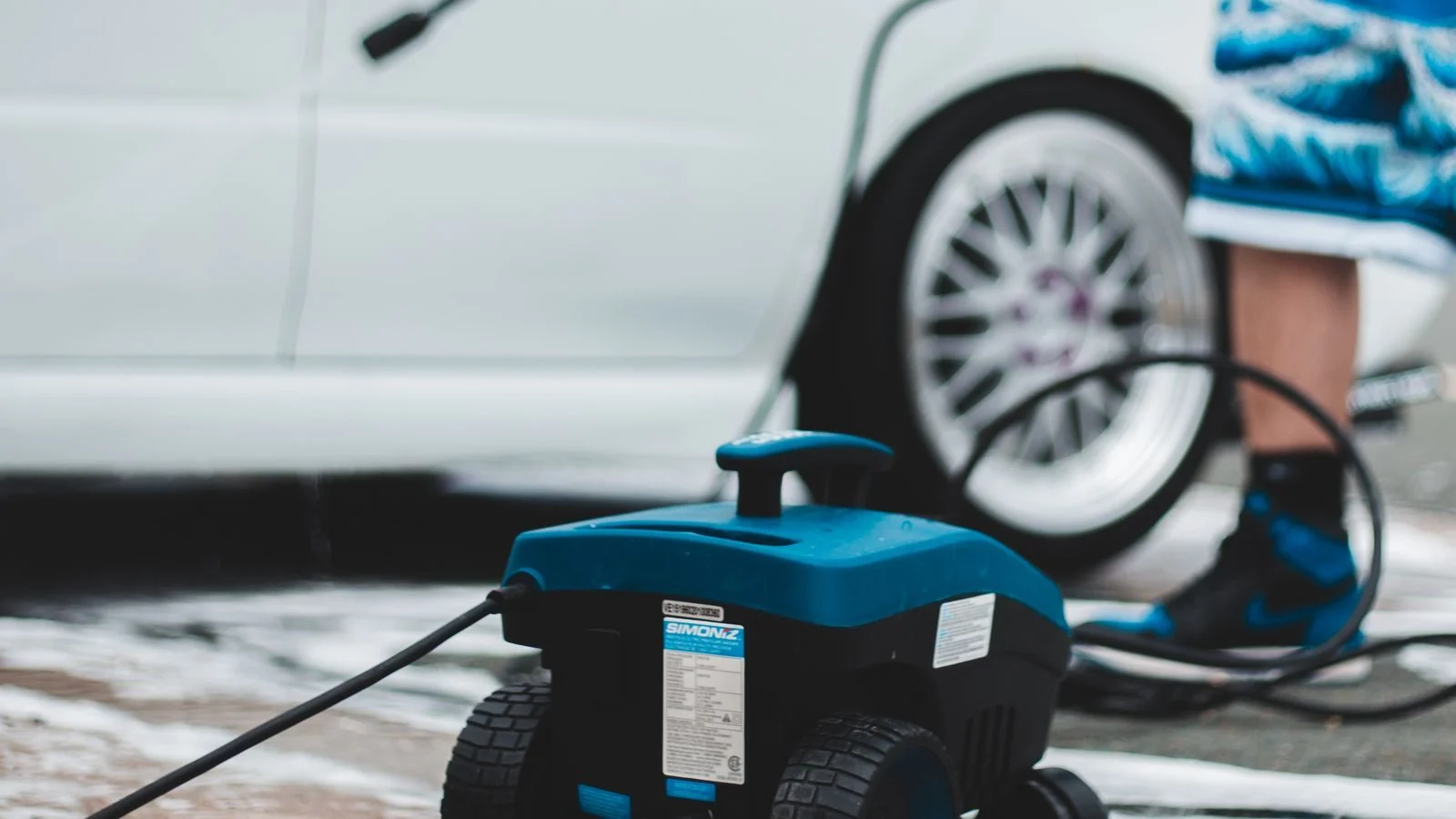
| Washing a car or truck | Electric, 1,500 to 2,000 PSI |
| Patio furniture, grill, bikes | Electric |
| Small deck or fence | Electric with a 25-degree nozzle |
| Concrete driveway or garage floor | Gas, 2,800 PSI or more, with a surface cleaner |
| Two-story siding | Gas, 2,500 to 3,000 PSI with an extension wand |
| Paint stripping, heavy equipment | Gas, 3,000 PSI or more |
| Anywhere without an outlet | Gas |
See electric pressure washers on Amazon
See gas pressure washers on Amazon
Frequently asked questions
Is an electric pressure washer strong enough for a driveway?
It will clean a driveway, slowly. A 2,000 PSI electric unit with a surface cleaner attachment does a reasonable job on a small driveway; for anything larger or badly stained, a gas washer finishes in a fraction of the time.
Do electric pressure washers last as long as gas ones?
Budget electric washers with plastic pumps have shorter lives, and many are not designed to be repaired. Better electric models with metal pumps last well. Gas washers generally last longer still, provided the engine and pump are maintained.
Can I run a gas pressure washer in my garage?
No. Like any gasoline engine it produces carbon monoxide, which builds up quickly in a garage even with the door open. Run it outdoors and keep the exhaust clear of doors and windows.