A home workshop is built, not bought. The garages that work best are the ones where each purchase followed a job that needed it, and where the safety and measuring tools were bought properly while the rest came from sales, second-hand and careful choices. This guide sets out a three-phase plan so that whatever you spend goes on the right things in the right order.
Quick answer
Phase one: safety and lifting (jack, rated stands, chocks, extinguisher, eye and hand protection), a quality socket and wrench set, a torque wrench, a code reader and good lighting. Phase two: a compressor or cordless impact, battery charger, fluid-handling gear and storage. Phase three: the big specialist items, bought only when a job calls for them. Spend on safety and measurement; economize on the tools you use once a year.
In this guide
Phase one: the foundation
Safety and lifting
- Floor jack rated well above your heaviest vehicle, and a pair of jack stands rated the same. Never work under a vehicle held only by a jack.
- Wheel chocks, two.
- Fire extinguisher rated ABC, mounted near the door, and a first-aid kit.
- Safety glasses, nitrile gloves, mechanic’s gloves and hearing protection.
- Carbon monoxide alarm if an engine will ever run in or near the garage.
Hand tools
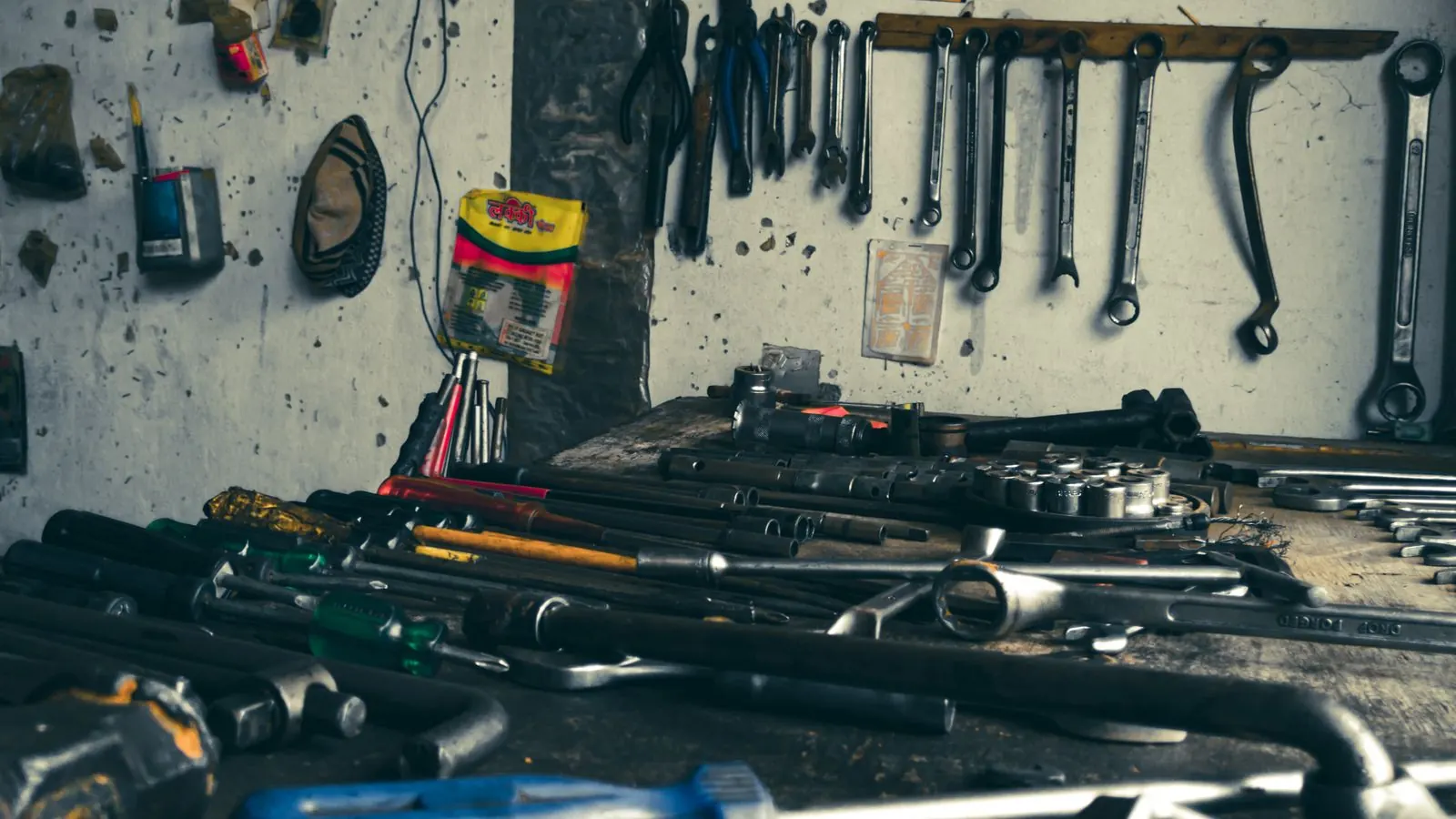
- A socket set in 3/8-inch drive with both metric and SAE sockets, deep and shallow, plus a 1/2-inch drive set for suspension and wheel work.
- Combination wrenches, metric and SAE.
- A 1/2-inch drive click torque wrench for wheels and suspension, and a 3/8-inch one for engine fasteners. This is the tool that stops you stripping threads and losing wheels.
- A breaker bar, screwdriver set, pliers (slip-joint, needle-nose, locking), a hammer and a pry bar.
- An oil filter wrench, drain pan and funnel.
Diagnostics and lighting
- An OBD-II code reader or Bluetooth scanner. Reading the code before touching anything saves hours.
- A digital multimeter.
- A tire pressure gauge and a tread depth gauge.
- Bright LED work lights: a headlamp and a rechargeable floor or magnetic light. Poor lighting causes more mistakes than poor tools.
With phase one you can do oil changes, brakes, filters, batteries, belts, spark plugs, tire rotations and most diagnosis on a modern car, plus everything a mower or generator needs. Our small engine maintenance schedule is a good first project.
Phase two: speed and comfort
- Compressed air or cordless power. A 20 to 30 gallon compressor with an impact wrench, ratchet and blow gun transforms wheel and suspension work; see how to size a compressor. A cordless impact wrench and ratchet do most of the same jobs with no compressor at all, and many home mechanics now start there.
- Battery charger and maintainer, ideally one that also jump-starts.
- Creeper or a thick mat, and a rolling stool.
- Fluid handling: a fluid extractor or transfer pump, brake bleeder, coolant funnel and a used-oil container.
- Storage: a rolling tool chest, shelving and labeled bins. Time spent looking for tools is the real cost of a messy garage.
- Parts washer or a cleaning tank, and a bin with a lid for oily rags.
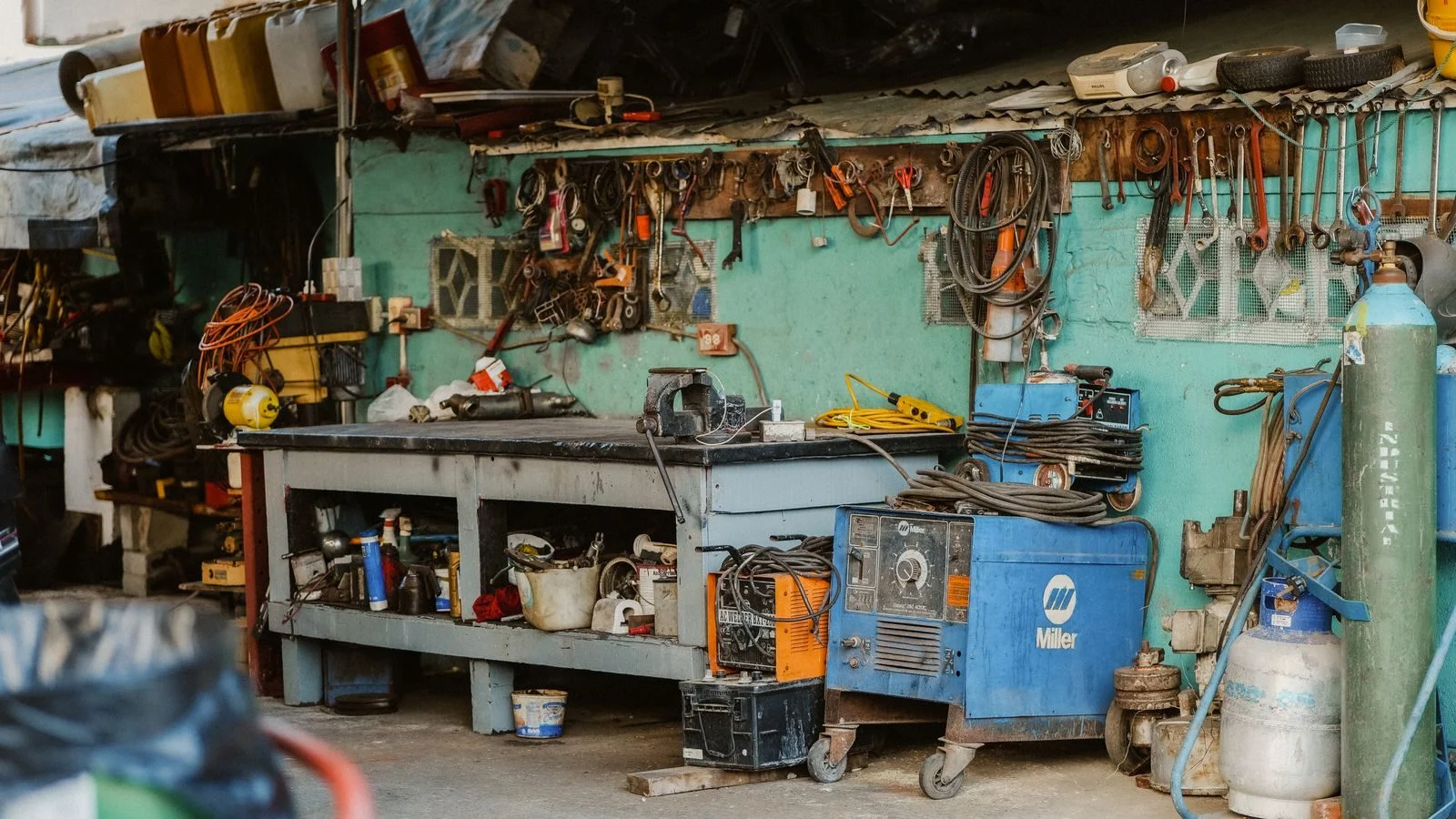
- A vise on a solid bench.
Phase three: buy when a job calls for it
- Engine hoist and stand for an engine swap or rebuild.
- Hydraulic press for bearings and bushings.
- Welder and angle grinder, with fume control and a clear fire-safe area.
- Transmission jack, spring compressor, ball-joint press: rent these unless you use them often.
- A two-post lift, if the ceiling and slab allow, which changes everything about working underneath a vehicle.
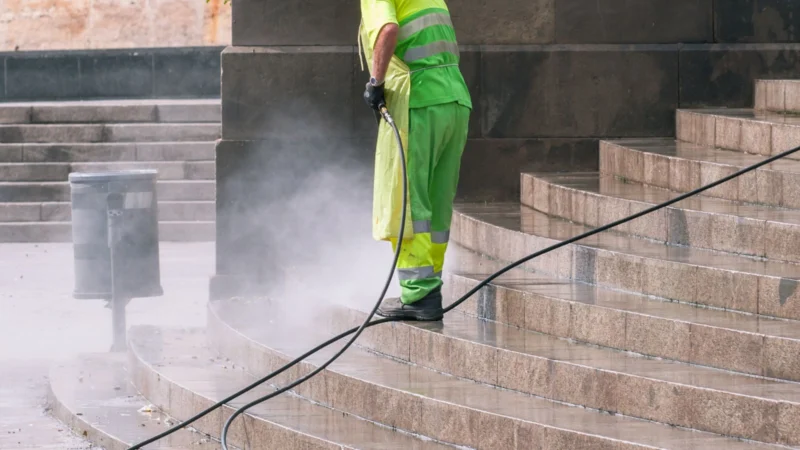
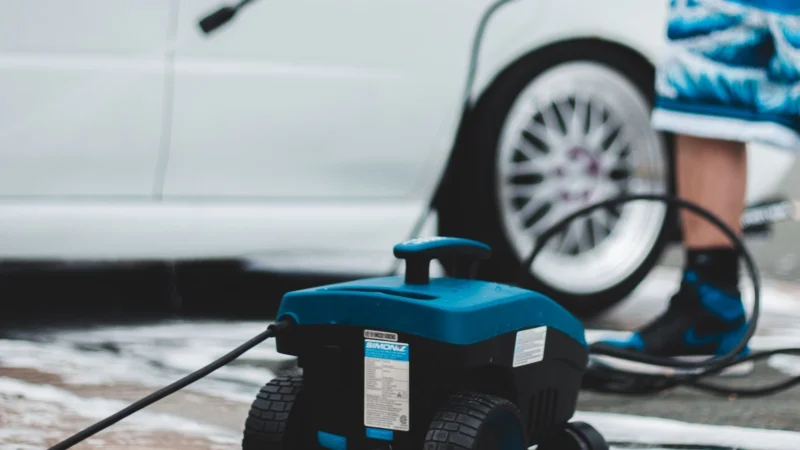
- Pressure washer for cleaning parts and equipment; see how to choose a pressure washer.
The space itself
Power
A single 15-amp circuit shared with the house lights will not run a compressor and a heater together. Have an electrician add dedicated circuits, with a 240 V circuit if a stationary compressor or welder is in your future. Mount outlets at bench height and add a retractable cord reel.
Lighting
Replace fluorescent fixtures with LED shop lights, aim for even light with no shadows over the bay, and keep portable lights for under the car.
Floor and layout
Seal or paint the concrete so spills wipe up, keep the center of the bay clear, and put storage and benches around the walls. Our workshop setup planner turns your zones into a printable checklist.
Ventilation and fuel
Never run an engine in a closed garage. Store gasoline in approved containers away from the water heater and furnace, and keep solvents in a cabinet. See how long gasoline lasts for storage limits.
Where to spend and where to save
| Spend properly on | Economize on |
|---|---|
| Jack and jack stands | Specialty tools used once a year |
| Torque wrenches | Large socket sets with sizes you never use |
| Safety glasses, gloves, extinguisher | Decorative tool chests |
| Multimeter and code reader | Branded screwdrivers and pliers |
| Lighting | Air tools you could replace with cordless |
| Tools you use every week | Anything available to rent for a one-off job |
See mechanic tool sets on Amazon
See jacks and stands on Amazon
Frequently asked questions
What tools does a beginner mechanic need first?
A jack and rated stands, wheel chocks, a socket set, combination wrenches, a torque wrench, screwdrivers and pliers, an OBD-II code reader, a multimeter, good lighting and safety glasses. That set covers oil changes, brakes, filters and most diagnosis.
Do I need an air compressor for a home garage?
Not necessarily. Cordless impact wrenches and ratchets now do most of what a home mechanic used air for. A compressor still earns its place if you want to run grinders, sanders or a blow gun regularly, or inflate tires without a separate pump.
Is it worth buying second-hand tools?
For hand tools, vises, benches and heavy items such as presses and hoists, yes. For jacks, jack stands and anything with a safety rating, buy new unless you can verify the condition and rating, and never trust a damaged stand.