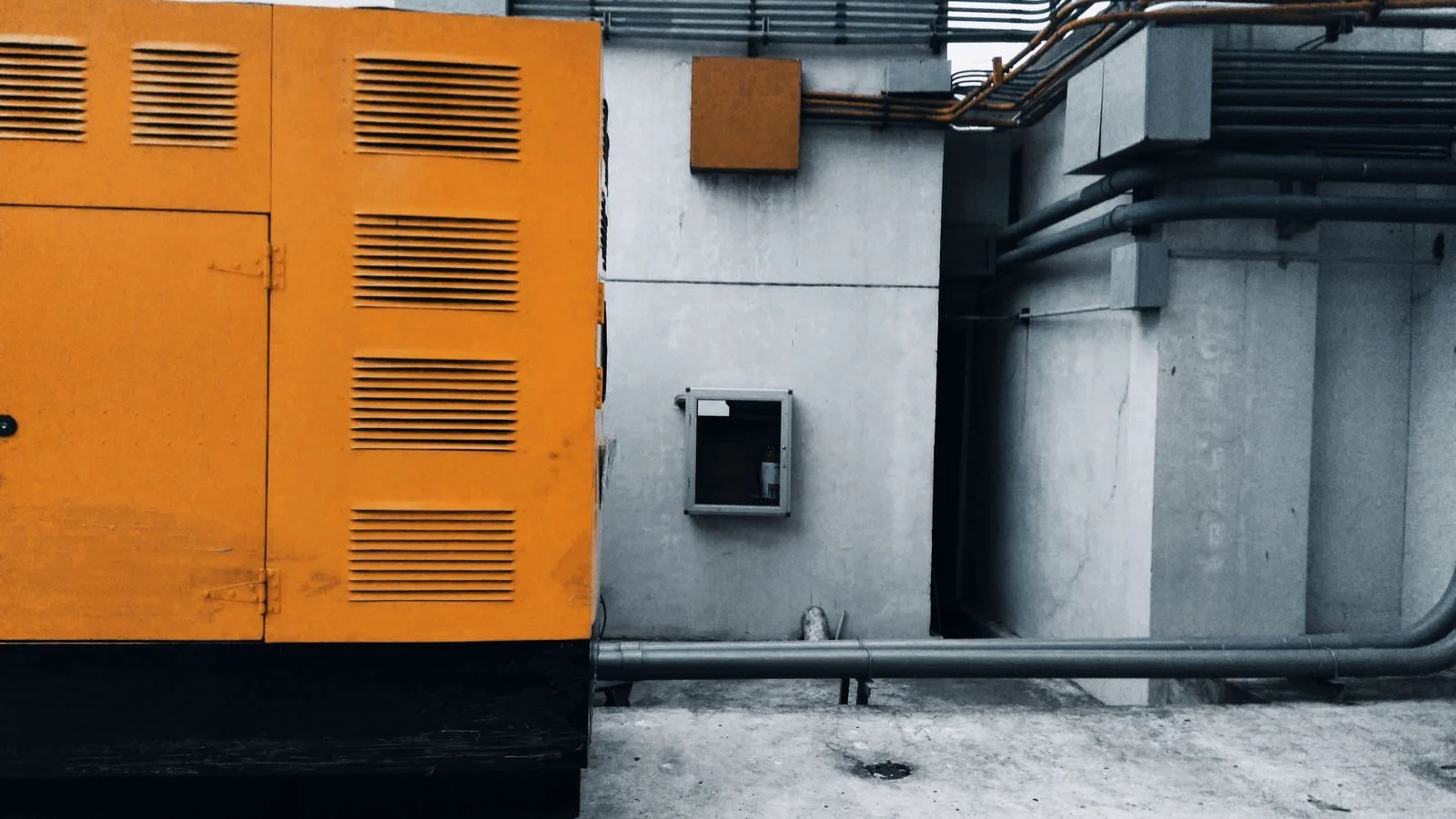
A Generac standby generator is a permanent backup power system that starts by itself when the grid goes down. You do not wheel it out, pull a cord or pour gasoline. It sits beside your house, watches the utility power, and takes over within seconds. For many families that is the whole point.
Here is the short version. Generac’s current air-cooled home standby line runs from 10 kW to 28 kW. The units run on natural gas or propane, carry a 5-year limited warranty on their listings, and the newest generation adds built-in cellular monitoring and longer service intervals. Most homes land on 18 to 24 kW. Smaller homes can use 10 to 14 kW, and large homes with several air conditioners need 26 or 28 kW.
This guide explains how standby power works, what changed when Generac replaced its Guardian series, how to pick a size, what the transfer switch does, and what to plan for before installation. You will also find three current models with direct links, so you can see real listings instead of brochure talk.
Generac home standby at a glance
Automatic backup power from 10 kW to 28 kW
Figures come from Generac dealer information and current Amazon listings, checked in October 2026.
Quick answer
Generac standby generators are permanently installed, automatic backup generators for homes. The current Next Gen line, launched in 2025 as the successor to the Guardian series, comes in 10, 14, 18, 22, 24, 26 and 28 kW air-cooled sizes that run on natural gas or propane. A 22 kW unit with a 200-amp transfer switch suits most homes. Choose 14 kW for smaller homes and essentials, and 26 or 28 kW for large homes with heavy cooling loads.
How we put this guide together
We have not installed or tested these generators ourselves. Sizes, engines and features come from Generac dealer documentation and from current Amazon listings for each model, all checked in October 2026. We do not publish prices, because the installed cost of a standby generator depends heavily on your home, and listed prices change often.
In this guide
- What Is a Generac Standby Generator?
- Guardian vs Next Gen: What Changed in 2025
- Generac Standby Sizes: 10 kW to 28 kW
- What Size Generac Standby Generator Do You Need?
- Natural Gas or Propane?
- Transfer Switches Explained
- The Best Generac Standby Generators for Most Homes
- What It Really Costs to Own One
- Installation: What to Expect
- Monitoring and Maintenance
- Common Mistakes When Buying a Standby Generator (and the Fix)
- Pro Tips From the Paperwork
- Real-Life Scenarios: Which Size Fits?
- Generac Standby Generators: FAQ
- Your Standby Generator Checklist
What Is a Generac Standby Generator?
A standby generator is a small power plant that lives outside your home, on a pad, connected to your electrical panel and your gas supply. It has three main parts:
- The generator. An engine and alternator inside a weatherproof enclosure.
- The automatic transfer switch. A box near your electrical panel that senses when utility power fails and switches your home over to generator power.
- The fuel supply. Your home’s natural gas line or a propane tank. There is nothing to refill by hand.
When the power goes out, the transfer switch notices, the generator starts, and your home runs on generator power. When the grid comes back, the system switches over again and the generator shuts down. You may be asleep or a thousand miles away, and it still works.
That is the big difference from a portable generator, which someone must roll outside, fuel and start. Our guide to portable vs standby generators compares the two in detail.
Generac describes itself as the number one selling brand of home standby generators and has been in the power business since 1959. That size matters in one practical way: dealers and service technicians are easy to find in most areas.
Guardian vs Next Gen: What Changed in 2025
If you have shopped for a Generac before, you know the Guardian name. In 2025 Generac introduced its Next Gen home standby line as the successor to the Guardian series. You will still see Guardian models for sale while stock lasts, so it helps to know what is new.
| Next Gen feature | What it is | Why it matters to you |
|---|---|---|
| Electronic Fuel and Ignition Control | The engine manages its own fuel and spark electronically | Generac says it uses fuel more efficiently than the Guardian series |
| Hydraulic valve lifters | Lifters that adjust themselves | No periodic valve adjustments |
| Oil level sensors | The unit watches its own oil level | Helps make sure it is ready when an outage hits |
| *200-hour oil change interval | Twice the usual 100 hours | Fewer service visits during long outages |
| Power Zone controller | A new control system with more diagnostics | Faster, clearer fault finding for technicians |
| Built-in cellular, Wi-Fi and Bluetooth | Connects to the Mobile Link app | Check status and get alerts from your phone |
| Sloped roof and rear air intake | A redesigned enclosure | Sheds water and reduces snow and ice getting in |
| Surge protection in the transfer switch | Whole-home surge protection in the new switch | One less device to add to your panel |
One detail to check before you buy: the Amazon listings say remote monitoring and control through the Mobile Link app requires a Mobile Link premium subscription. Ask your dealer exactly what is included.
Key insight: the generator is only half the system. The transfer switch, the gas supply and the installation decide whether it works on the day you need it.
Generac Standby Sizes: 10 kW to 28 kW
Standby generators are rated in kilowatts. One kilowatt is 1,000 watts. Each size has two ratings, because the same engine makes a little more power on propane than on natural gas.
| Size | Engine | Rating on LP | Rating on NG | Model without switch | Model with switch |
|---|---|---|---|---|---|
| 10 kW | 459 cc | 10 kW | 9 kW | 7257 | 7321 |
| 14 kW | 817 cc V-twin | 14 kW | 14 kW | 7258 | 7322 or 7323 |
| 18 kW | 817 cc V-twin | 18 kW | 17 kW | 7259 | 7324 |
| 22 kW | 997 cc V-twin | 22 kW | 21 kW | 7260 | 7325 |
| 24 kW | 997 cc V-twin | 24 kW | 22.5 kW | 7261 | 7326 |
| 26 kW | 997 cc V-twin | 26 kW | 24 kW | 7327 | 7328 |
| 28 kW | 997 cc V-twin | 28 kW | 25 kW | 7282 | 7329 |
There is also a 20 kW three-phase version for homes and small businesses with three-phase service. Above 28 kW, Generac moves to liquid-cooled models, which are a different class of machine.
What Size Generac Standby Generator Do You Need?
Sizing a standby generator is a job for your installer, who will do a proper load calculation. You can still walk in knowing roughly where you will land.
- Decide what “backed up” means to you. Essentials only, most of the house, or everything exactly as normal?
- List your big loads. Central air conditioners, electric water heaters, electric ranges, dryers, well pumps and EV chargers decide the size.
- Count your air conditioners. Each central unit needs a large burst of power to start. This is usually the deciding factor.
- Check your electrical service. Many homes have 200-amp service, which pairs with a 200-amp transfer switch.
- Ask about load management. A smart transfer switch can hold back big loads so a smaller generator can cover the whole house.
As rough guidance only: 10 to 14 kW suits smaller homes and essential circuits, 18 to 24 kW covers most family homes with one central air conditioner, and 26 to 28 kW suits large homes with two or more air conditioners or many electric appliances. Your installer’s calculation always wins over a rule of thumb.
Tip: load management can save you money
You do not always need a generator big enough to run everything at once. With load management, the system lets large appliances take turns. The air conditioner waits a moment while the water heater finishes, and you never notice. Ask every installer who quotes for you whether a smaller unit with load management would do the job.
Want a head start before the site visit? Our Generator Size Calculator adds up your appliances, and our guide to whole-house generators explains sizing, fuel and installation step by step.
Natural Gas or Propane?
Every model in the table runs on either fuel. The right one is usually decided by what your home already has.
Natural gas
If you have natural gas service, use it. The supply is continuous, so the generator can run for days without anyone hauling fuel. Output is slightly lower than on propane, as the table shows. Your installer must confirm that your gas meter and piping can feed the generator along with your furnace and other appliances.
Propane
If you are not on a gas main, propane is the answer. It stores for years without going bad and gives the generator its full rating. The limit is the tank. A standby generator under load drinks propane quickly, so the tank must be sized for the number of days you want to ride out. Your propane supplier and installer should work that out together.
Either way, there is no gasoline to store, rotate or spill. That is one of the quiet advantages of standby power.
Transfer Switches Explained
The automatic transfer switch is the brain of the system. It is also what makes standby power safe, because it disconnects your home from the utility lines before the generator feeds your panel.
- 200-amp whole-house switch. Backs up your entire panel. This is what the bundled Amazon listings include.
- 100-amp, 16-circuit switch. Backs up only the circuits you choose. Dealer documentation lists it for the 14 kW size.
- Generator without a switch. For homes that need a different switch, such as one for 400-amp service. Your installer supplies the right one.
Buying the generator and switch as a bundle is usually simplest. Just make sure the switch matches your electrical service before you order. Your electrician can tell you in one phone call.
The Best Generac Standby Generators for Most Homes
Here are three current models that cover small, typical and large homes. All three listings include a 200-amp automatic transfer switch.
Best for most homes
Generac 22kW Whole Home Generator with 200-Amp Transfer Switch (Model 7325)
The size most families end up with. It has enough power for a typical home with one central air conditioner, and the listing includes the 200-amp automatic transfer switch.
- Rating22 kW on LP, 21 kW on NG
- Engine997 cc V-twin
- Transfer switch200-amp automatic, included
- MonitoringBuilt-in cellular, Mobile Link app
- Warranty on listing5-year limited
- Weight451 lb
- Why it works: it sits in the middle of the range, so it covers most homes without paying for capacity you will never use.
- Who it is best for: families in a typical three or four bedroom home who want lights, heating or cooling, the kitchen and the internet to keep running.
- What it solves: outages become a non-event. The listing describes automatic detection and backup power, with oil level sensors and improved cold starting for readiness.
- Long-term comfort: the listing includes a 5-year limited warranty and round-the-clock customer support.
- Keep in mind: installation is a separate cost and needs a licensed professional. Remote monitoring requires a Mobile Link premium subscription, according to the listing.
As an Amazon Associate we earn from qualifying purchases. Specs come from the Amazon listing and Generac dealer documentation, checked October 2026.
Best for smaller homes
Generac 14kW Whole Home Generator with 200-Amp Transfer Switch (Model 7323)
A smaller, lighter unit for modest homes and for people who mainly want the essentials covered without running extension cords in a storm.
- Rating14 kW on LP, 14 kW on NG
- Engine817 cc V-twin
- Transfer switch200-amp automatic, included
- MonitoringBuilt-in cellular, Mobile Link app
- Warranty on listing5-year limited
- Weight391 lb
- Why it works: it gives the same automatic protection as the bigger units and the same rating on either fuel.
- Who it is best for: smaller homes, homes with gas heat and modest cooling, and anyone using load management to cover a whole panel.
- What it solves: the food in the freezer, the sump pump in the basement and the heat in winter, all without anyone going outside.
- Keep in mind: a large central air conditioner plus electric cooking can be too much for 14 kW. Have the load calculation done first.
As an Amazon Associate we earn from qualifying purchases. Specs come from the Amazon listing and Generac dealer documentation, checked October 2026.
Most powerful air-cooled model
Generac 28kW Whole Home Generator with 200-Amp Transfer Switch and ecobee Thermostat (Model 7329)
The top of the air-cooled range. Dealer documentation describes the 28 kW as the most powerful air-cooled home standby generator on the market. This listing bundles the transfer switch and an ecobee smart thermostat.
- Rating28 kW on LP, 25 kW on NG
- Engine997 cc V-twin
- Transfer switch200-amp automatic, included
- Also includedecobee Smart Thermostat
- Warranty on listing5-year limited
- Weight524 lb
- Why it works: it brings near liquid-cooled capacity in an air-cooled package, which is simpler and usually cheaper to install.
- Who it is best for: large homes with two or more central air conditioners, or homes with many electric appliances.
- What it solves: you can stop choosing which half of the house gets power.
- Keep in mind: it is the heaviest and most expensive of the three, and its natural gas rating is 25 kW, not 28. Make sure your gas supply can feed it.
As an Amazon Associate we earn from qualifying purchases. Specs come from the Amazon listing and Generac dealer documentation, checked October 2026.
Need a generator without a switch, for example to pair with a 400-amp service? The same family is listed without a transfer switch too, such as the Generac 28kW model 7282.
What It Really Costs to Own One
We do not quote prices here, because the generator is only part of the bill. What you actually pay depends on these pieces:
- The generator and transfer switch. The part you see on a listing.
- Site work. A level pad or base where the unit will sit.
- Electrical work. Wiring the transfer switch into your service, which is harder if the panel is far from the generator.
- Gas plumbing. A new gas line, and sometimes a meter or regulator upgrade, or a propane tank.
- Permits and inspections. Required in most places.
- A battery. The starting battery is often bought separately.
- Ongoing service. Oil and filter changes and an annual check.
Get at least two written quotes that list every item. If one quote is far lower than the others, find out which line it left out.
Installation: What to Expect
A standby generator is not a weekend project. It ties into your electrical service and your gas supply, and both are regulated for good reasons. A typical installation goes like this:
- Site visit. The installer checks your panel, gas supply and yard, and does the load calculation.
- Permits. The installer pulls electrical and gas permits, and checks any homeowner association rules.
- Placement. The unit goes on its pad, outdoors, at the clearances required by the installation manual and local code.
- Electrical and gas hookup. The transfer switch is wired in and the fuel line is connected and pressure tested.
- Startup and activation. The system is tested with a simulated outage, and you are shown how it works.
- Inspection. The local inspector signs off.
Leave the hookup to licensed professionals
A standby generator connects to your home’s electrical service and gas supply. Mistakes can cause fire, carbon monoxide poisoning, gas leaks or deadly backfeed onto utility lines. Have it installed by a licensed electrician and gas fitter, with permits. The unit must always be outdoors, placed according to the manual and local code, and you should keep working CO alarms inside your home.
Monitoring and Maintenance
A standby generator spends almost all of its life waiting. Maintenance is what makes sure the waiting pays off.
- Let it exercise. Standby generators run themselves briefly on a schedule to stay ready. Do not switch that off.
- Watch the app. The Next Gen line has cellular, Wi-Fi and Bluetooth built in and reports through Mobile Link, so you can see problems before the storm arrives.
- Change the oil on time. Generac dealer documentation gives the Next Gen line a 200-hour oil change interval. In a long outage that is about eight days of nonstop running.
- Keep it clear. Remove snow, leaves and weeds from around the enclosure so it can breathe.
- Check the battery. A weak battery is one of the most common reasons a standby generator fails to start.
- Book an annual service. A dealer check once a year catches small issues early.
Our generator maintenance checklist covers the routine jobs for any generator.
Common Mistakes When Buying a Standby Generator (and the Fix)
Pro Tips From the Paperwork
These tips come from manufacturer documentation and standard installer practice.
- Ask about load management first. It can move you down a size, which saves money on the unit and on fuel.
- Think about where the noise goes. Place the unit away from bedrooms and from your neighbors’ windows, within the rules.
- Check your HOA rules early. Some associations have rules on placement and screening.
- Register the warranty as soon as the system is activated.
- Keep a spare oil and filter kit on the shelf. During a week-long regional outage, parts sell out fast.
- Know your manual shutdown. Have the installer show you how to switch the system off safely for service or in an emergency.
- Protect it in winter. Ask the dealer whether a cold-weather kit makes sense for your climate.
Real-Life Scenarios: Which Size Fits?
These are typical situations that homeowners describe when they shop for standby power. They are examples to help you choose, not quotes from real people.
🏡 The family home
Three or four bedrooms, gas heat, one central air conditioner, and outages a few times a year.
A mid-range unit with a 200-amp switch covers the whole panel without drama.
Best fit: 22 kW (model 7325)
🏠 The smaller house
A compact home with gas heat and a modest air conditioner. The goal is safety and comfort, not luxury.
A smaller unit covers the essentials and more, and costs less to buy and run.
Best fit: 14 kW (model 7323)
🏰 The large home
Two or three central air units, a pool pump, a home office and electric cooking.
Go to the top of the air-cooled range, and have the gas supply checked carefully.
Best fit: 28 kW (model 7329)
Generac Standby Generators: FAQ
What sizes do Generac standby generators come in?
Generac's current air-cooled Next Gen home standby line comes in 10, 14, 18, 22, 24, 26 and 28 kW sizes, plus a 20 kW three-phase model. Larger homes and businesses use Generac's liquid-cooled models above that.
What is the difference between Generac Guardian and Next Gen generators?
Next Gen is the successor to the Guardian series and was introduced in 2025. Dealer documentation lists electronic fuel and ignition control, hydraulic valve lifters, oil level and fuel pressure sensors, a new Power Zone controller, built-in cellular connectivity, a 200-hour oil change interval and a redesigned enclosure with a sloped roof.
Do Generac standby generators run on propane or natural gas?
Both. Each model runs on natural gas or liquid propane. The propane rating is usually a little higher. For example, the 22 kW model is rated 22 kW on propane and 21 kW on natural gas.
How long is the warranty on a Generac standby generator?
The current Amazon listings for the Next Gen models state a 5-year limited warranty. Read the warranty document for your exact model, and register the unit after installation.
Can I install a Generac standby generator myself?
It is not a do-it-yourself job. The system connects to your electrical service and gas supply, usually needs permits and inspection, and should be installed by a licensed electrician and gas fitter or an authorized dealer.
How often does a Generac standby generator need an oil change?
Generac dealer documentation gives the Next Gen models a 200-hour oil change interval, compared with the usual 100 hours. Follow the maintenance schedule in your owner's manual, and check the oil during long outages.
Your Standby Generator Checklist
- Decide whether you want essentials, most of the house or everything backed up.
- List your big loads and count your central air conditioners.
- Find out whether your service is 100, 200 or 400 amps.
- Choose your fuel: natural gas if you have it, propane if you do not.
- Get at least two written quotes with a load calculation.
- Ask each installer about load management and a smaller unit.
- Confirm what the monitoring app includes and what it costs.
- Use licensed professionals, with permits and an inspection.
- Register the warranty and book the first annual service.
The bottom line
For most homes, a 22 kW Generac with a 200-amp transfer switch is the right starting point. Get a load calculation, then size up or down from there.
As an Amazon Associate we earn from qualifying purchases.
Sources: Generac dealer documentation for the Next Gen home standby line (Norwall PowerSystems); Amazon product listings for Generac models 7323, 7325, 7329 and 7282, all checked October 2026.