The best zero-turn mower is the one that fits your yard, not the one with the biggest engine. Deck width, slopes, gate openings and storage space decide whether a mower saves you time or becomes an expensive mistake.
A zero-turn mower pivots on the spot. That lets it swing around trees, flower beds and fence posts without the three-point turns a lawn tractor needs. On an open lawn with obstacles, it is the fastest way to mow.
This guide explains how these machines work, who should and should not buy one, and what to look for. Then it gives three picks for different yard sizes, each checked against the manufacturer’s published specs. We have not tested them ourselves.
Zero-turn mowers at a glance
Match the deck to the yard
Specs come from manufacturer pages and current Amazon listings, checked in October 2026. Safety guidance comes from manufacturer operator’s manuals.
Quick answer
For yards up to about 2 acres, a 42-inch gas zero-turn such as the Husqvarna Z242F Special Edition is a sensible start. If you want quiet running and no fuel, the battery-powered EGO Power+ ZT5207L has a 52-inch deck and a claimed 4 acres per charge. For several acres of heavy mowing, a commercial-style machine like the Ariens ZENITH 60 is built for the hours. Avoid zero-turns on steep slopes.
How we put this guide together
We have not tested these mowers. Specs come from Husqvarna’s and Ariens’ official pages and from current Amazon listings, checked in October 2026. Battery run times and horsepower equivalents are the maker’s claims. We do not show prices or star ratings. A mower is a large purchase, so sit on one at a dealer before you decide.
In this guide
- What Is a Zero-Turn Mower?
- Is a Zero-Turn Right for Your Yard?
- How to Choose: Six Things That Matter
- Zero-Turn Brands and Series to Know
- Our Picks by Yard Size
- Gas vs Electric Zero-Turn Mowers
- Zero-Turn Safety: Slopes, Roll Bars and Common Sense
- Maintenance: Keep the Cut Clean
- Common Mistakes When Buying a Zero-Turn Mower (and the Fix)
- Pro Tips for Zero-Turn Owners
- Real-Life Scenarios: Which Zero-Turn Fits?
- Zero-Turn Mowers: FAQ
- Your Zero-Turn Buying Checklist
What Is a Zero-Turn Mower?
A zero-turn mower steers with its back wheels. Each rear wheel has its own hydrostatic drive. Push both control levers forward and the mower goes straight. Push one further than the other and it turns. Push one forward and pull one back, and the mower spins in place.
The front wheels are free-turning casters, like the wheels on a shopping cart. They follow wherever the back wheels send them.
That design gives the “zero” in the name: a turning radius of zero.
| Point | Zero-turn mower | Lawn tractor |
|---|---|---|
| Steering | Two control levers, or lap bars | Steering wheel |
| Turning | Spins in place | Needs room to turn |
| Speed on open lawn | Faster | Slower |
| Trimming afterwards | Less | More |
| Slopes | Weaker, since the front wheels cannot steer | Better on moderate slopes |
| Towing and attachments | Limited | Carts, spreaders, some ground tools |
| Learning curve | Takes an hour or two | Familiar from day one |
Is a Zero-Turn Right for Your Yard?
A zero-turn is a great choice if your lawn is:
- Half an acre or more. Below that, the time you save is small.
- Mostly flat or gently rolling.
- Full of obstacles such as trees, beds, swing sets and posts.
It is the wrong choice in three cases.
- Steep ground. Zero-turns steer and brake with the rear wheels only. On a slope they can slide, and the front casters cannot correct it.
- Narrow access. A 42-inch deck needs a gate wider than the mower. Measure every opening before you buy.
- Heavy towing or ground work. A garden tractor is the better tool for pulling loads and running attachments.
Know the slope limit
Toro’s zero-turn operator’s manuals say not to mow slopes greater than 15 degrees. Other makers publish similar limits. Check the manual for the exact figure on your machine, and keep well away from drop-offs, ditches and water. If part of your yard is steeper, mow it with a walk-behind mower or a string trimmer.
How to Choose: Six Things That Matter
1. Deck width and yard size
Deck width is the first decision. A wider deck cuts more grass per pass, but it costs more, weighs more and fits through fewer gates.
| Yard size | Deck width to consider | Why |
|---|---|---|
| Up to about 2 acres | 42 to 46 inches | Fits gates and sheds, easy to store |
| 2 to 4 acres | 48 to 54 inches | A good balance of speed and agility |
| More than 4 acres | 60 inches and up | Covers open ground quickly |
A wide deck is not always quicker. In a yard crowded with trees, a nimble 42-inch mower can finish before a 60-inch one that has to work around everything.
2. Deck construction
There are two kinds of mower deck.
- Stamped decks are pressed from a single sheet of steel. They are lighter and cheaper, and they are fine for ordinary lawns.
- Fabricated decks are welded from thicker steel plate. They are heavier and stronger, and they shrug off roots, rocks and rough ground.
Both Husqvarna and Ariens build fabricated decks on the mowers in this guide. Ariens lists 10-gauge steel for the ZENITH deck.
3. The engine
Most gas zero-turns use an air-cooled V-twin from Kawasaki, Kohler or Briggs & Stratton. Twin-cylinder engines run smoother than singles.
Do not shop on horsepower alone. A 21.5 horsepower engine is plenty for a 42-inch deck. What matters more is the engine’s grade. Kawasaki’s FR series is its residential line. Ariens describes the FX series in its ZENITH as commercial-grade.
4. The transmissions
Each rear wheel has a hydrostatic transmission. On entry-level mowers these are sealed units made for homeowner hours. Bigger, serviceable transmissions cost more but cope with slopes, heat and long days. If you mow several acres every week, this is where the extra money goes.
5. Comfort
You will sit on this machine for hours. Look for a high-back seat, armrests, easy deck-height adjustment and controls you can reach without stretching. Suspension seats and vibration dampers make a real difference on rough ground.
6. Gas or electric
Battery zero-turns are no longer a novelty. They are quiet, need no fuel or oil changes and start with a button. The limits are run time and the cost of batteries. We compare the two further down.
Zero-Turn Brands and Series to Know
| Brand | Series to look for | Notes |
|---|---|---|
| Husqvarna | Z200 series and MZ for homes, Z500 for commercial use | Fabricated ClearCut decks. Sold online and through dealers |
| Ariens | EDGE, IKON, APEX and ZENITH | Runs from homeowner to commercial-style machines |
| EGO Power+ | Z6 and ZT battery models | Electric, with 42 and 52-inch decks |
| Toro | Z Master commercial line, plus residential models | Sold through dealers and home centers |
| STIHL | Zero-turn range sold through STIHL dealers | Not sold on Amazon |
| Craftsman | 46-inch gas model with a Kohler 7000 engine | A budget route into zero-turn mowing |
Other well-known makers include John Deere, Cub Cadet, Bad Boy, Gravely and Kubota. Most sell through dealers or home centers, so compare them in person.
Our Picks by Yard Size
These three mowers cover small, medium and large properties. All three are current Amazon listings from established brands.
| Model | Deck | Power | Top speed | Fuel or battery | Weight |
|---|---|---|---|---|---|
| Husqvarna Z242F Special Edition | 42 in, fabricated | 21.5 hp Kawasaki | 6.5 mph | 3.5 gal gasoline | 560 lb |
| EGO Power+ ZT5207L | 52 in | 25 hp equivalent, battery | 8 mph | Six 56V 12.0Ah batteries | 527 lb |
| Ariens ZENITH 60 | 60 in, fabricated | 23.5 hp Kawasaki FX | Not listed | Gasoline | 930 lb |
Best for up to 2 acres
Husqvarna Special Edition Z242F 42-Inch Zero-Turn Mower with 21.5 HP Kawasaki Engine
A compact gas zero-turn with a welded deck and a Kawasaki twin. It is small enough to store in a normal garage and strong enough for a couple of acres.
- Deck42 in, fabricated steel
- Engine21.5 hp Kawasaki V-twin
- Top speed6.5 mph
- Cutting height1.5 to 4 in, 6 steps
- Fuel tank3.5 gallons
- Warranty on listing3-year consumer
- Why it works: a fabricated deck and cast iron blade housings are features usually found on dearer mowers.
- Who it is best for: homeowners with half an acre to about two acres and plenty of trees and beds to mow around.
- What it solves: long mowing sessions on a lawn tractor. It also cuts, mulches or bags with the right kit.
- Nice touches: the park brake sets itself when you swing the levers out, and the Special Edition adds a 15-inch seat and all-terrain tires.
- Keep in mind: the listing gives its width as 46 inches, so measure your gate. Like all zero-turns, it is not for steep slopes.
As an Amazon Associate we earn from qualifying purchases. Specs come from Husqvarna’s product page and the Amazon listing, checked October 2026.
Best electric zero-turn
EGO Power+ ZT5207L 52-Inch Electric Zero-Turn Riding Mower with Six 12.0Ah Batteries
A battery zero-turn with a 52-inch deck. EGO says it has the power of a 25 horsepower gas engine and cuts up to 4 acres on one charge.
- Deck52 inches
- Power25 hp gas equivalent, per EGO
- Run timeUp to 4 acres per charge
- Speed4 to 8 mph
- BatteriesSix 56V 12.0Ah, charger included
- Weight on listing527 lb
- Why it works: it runs on the same 56-volt batteries as EGO’s other tools, so the batteries work all year.
- Who it is best for: owners of two to four acres who value quiet mowing and are tired of fuel, oil and belts.
- What it solves: engine upkeep. There is no gasoline to store, no oil to change and no carburetor to clean.
- Keep in mind: run time is EGO’s best-case claim. Thick, tall or wet grass shortens it. Replacement batteries are expensive, so check the battery warranty terms.
As an Amazon Associate we earn from qualifying purchases. Specs come from the Amazon listing, checked October 2026.
EGO’s newer Z6 range adds a color screen, an app and selectable blade speeds. The 52-inch Z6 is listed at up to 3 acres per charge and the 42-inch Z6 at up to 1.5 acres. The 42-inch listing states a 5-year mower warranty, limited to 300 hours of use.
Best for big properties
Ariens ZENITH 60 Zero-Turn Mower with 23.5 HP Kawasaki FX Engine
A commercial-style machine for people who mow acres, not yards. Ariens builds it on a fully welded tubular frame with a deep 60-inch deck.
- Deck60 in, 10-gauge steel
- Deck depth5.5 inches
- Engine23.5 hp Kawasaki FX V-twin
- FrameFully welded tubular steel
- Rollover protectionROPS fitted
- Weight on listing930 lb
- Why it works: Ariens describes the Kawasaki FX as a commercial-grade engine, and the deck and frame are built to match.
- Who it is best for: owners of four acres or more, small farms and estates, and anyone mowing for hours every week.
- What it solves: wear. Homeowner-grade mowers used on large properties tend to age quickly.
- Comfort: seat isolation dampers absorb bumps and engine vibration.
- Keep in mind: at 930 pounds and 60 inches of deck it needs a wide gate, a strong trailer and real storage space. It is far more mower than a typical suburban yard needs.
As an Amazon Associate we earn from qualifying purchases. Specs come from Ariens’ product page and the Amazon listing, checked October 2026.
Gas vs Electric Zero-Turn Mowers
| Point | Gas zero-turn | Electric zero-turn |
|---|---|---|
| Run time | As long as you have fuel | Limited by battery charge |
| Refuelling | Minutes | Hours on the charger |
| Noise | Loud | Much quieter |
| Upkeep | Oil, filters, spark plugs, belts, fuel care | Blades and tires, mostly |
| Power in tall, wet grass | Strong and steady | Good, but drains the battery faster |
| Running cost | Gasoline and service parts | Electricity |
| Long-term cost to watch | Engine wear | Battery replacement |
Choose gas if you mow large areas, mow tall or wet grass, or have no easy way to charge. Choose electric if your yard is within the stated range, you have neighbors close by, and you would rather not deal with fuel at all.
One honest caution about battery claims. An “acres per charge” figure assumes dry, regularly cut grass and steady driving. Leave a margin of at least a quarter when you compare it with your own yard.
Zero-Turn Safety: Slopes, Roll Bars and Common Sense
Zero-turn mowers are fast and heavy. Most serious accidents involve slopes, drop-offs or bystanders.
- Respect the slope limit. Toro’s manuals say not to mow slopes greater than 15 degrees. On gentle slopes, slow down, avoid sudden turns and follow the mowing direction your manual gives.
- Stay back from edges. Keep a safe distance from drop-offs, ditches, retaining walls and water.
- Use the roll bar properly. Toro’s manuals give a simple rule: if the roll bar is up, wear the seat belt. If it is folded down, do not wear the belt.
- Keep people and pets away. A mower deck can throw stones a long way. Never carry passengers.
- Protect your ears and eyes. Gas mowers are loud enough to damage hearing over time.
- Stop the blades before you cross gravel or leave the grass.
Practise in an open area first. The control levers feel strange for the first hour, and small movements make big changes in direction.
Maintenance: Keep the Cut Clean
A zero-turn is simple to look after. Most of the work is the same as for any small engine.
- Check the oil before each use and change it on the schedule in the manual.
- Keep the blades sharp. Dull blades tear grass and leave brown tips. Sharpen or replace them at least once a season.
- Clean under the deck. Packed grass holds moisture, causes rust and spoils the airflow.
- Keep tire pressures equal. Uneven tires make a zero-turn pull to one side and cut unevenly.
- Replace the air filter and spark plugs as the manual directs.
- Treat the fuel if the mower will sit for more than a month.
- Check belts and the deck level at the start of the season.
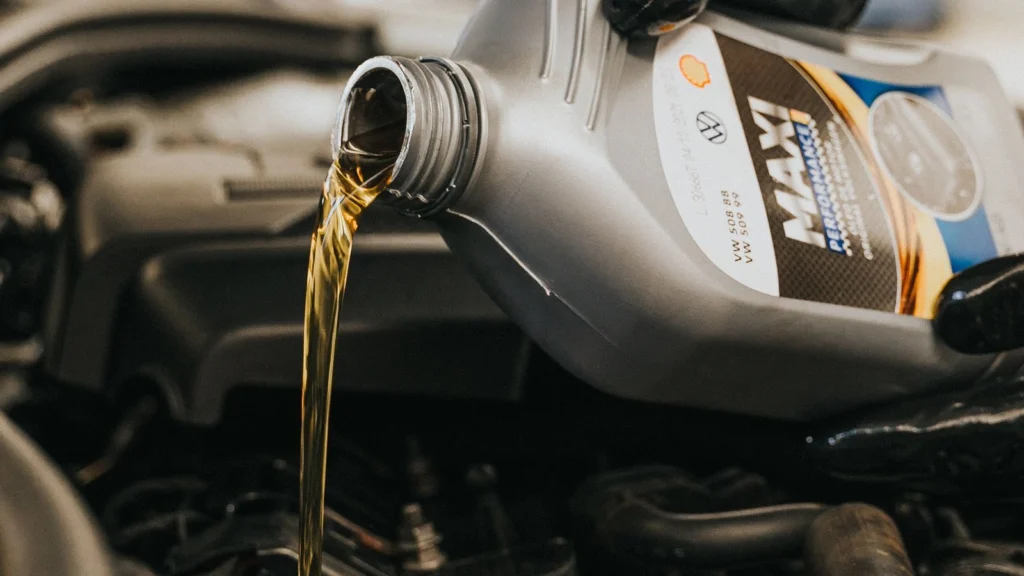
Our small engine maintenance schedule sets out the intervals, and the Maintenance Interval Generator builds a plan for your own machine. If the engine will not start in spring, begin with our guide to a small engine that won’t start. Old fuel is usually the reason, as how long gasoline lasts explains.
Common Mistakes When Buying a Zero-Turn Mower (and the Fix)
Pro Tips for Zero-Turn Owners
- Learn in the open. Spend your first session on a clear patch of lawn, at half speed.
- Turn gently. Keep both wheels moving in a turn. Pivoting on a stopped wheel tears the turf.
- Mow the edges first, two passes wide, then work back and forth across the middle.
- Overlap each pass by a few inches for an even finish.
- Cut high in summer. Taller grass shades its own roots and copes better with heat.
- Never cut wet grass if you can avoid it. It clumps, clogs the deck and makes slopes slippery.
- Keep a spare set of blades. Swap them in minutes and sharpen the dull set later.
Real-Life Scenarios: Which Zero-Turn Fits?
These are typical situations that buyers describe in forums and reviews. They are examples to help you choose, not quotes from real people.
🏡 The one-acre family yard
Trees, a play set and flower beds turn mowing into a long job on your old lawn tractor.
You need a compact zero-turn that fits the shed and the gate.
Best fit: Husqvarna Z242F Special Edition
🔇 The quiet neighborhood
You mow early on weekends, the neighbors are close and you dislike storing gasoline.
You need battery power with enough range for your lot.
Best fit: EGO Power+ ZT5207L
🚜 The five-acre property
You mow open ground for hours every week through a long season.
You need a heavy frame, a deep deck and an engine made for long days.
Best fit: Ariens ZENITH 60
Zero-Turn Mowers: FAQ
What size zero-turn mower do I need?
A common rule of thumb is a 42 to 46 inch deck for up to about 2 acres, 48 to 54 inches for 2 to 4 acres, and 60 inches or more above that. Narrow gates, tight spaces and many obstacles all favor a smaller deck.
Are zero-turn mowers good on hills?
Not on steep ones. They steer and brake with the rear wheels only. Toro's operator's manuals say not to mow slopes greater than 15 degrees. Check the limit in your own manual and stay away from drop-offs.
Is a zero-turn mower better than a lawn tractor?
For mowing open lawns with obstacles, a zero-turn is usually faster and leaves less trimming. A lawn tractor is better on moderate slopes and for towing carts and attachments.
Are electric zero-turn mowers worth it?
They can be, if your yard is within the stated range. They are quiet and need little upkeep. EGO lists its 52-inch ZT5207L at up to 4 acres per charge. Allow a margin, and check the battery warranty.
What is the difference between a stamped and a fabricated deck?
A stamped deck is pressed from one sheet of steel, which makes it lighter and cheaper. A fabricated deck is welded from thicker plate, which makes it heavier and stronger on rough ground.
How fast is a zero-turn mower?
Residential models usually top out between about 6 and 8 mph. Husqvarna lists 6.5 mph for the Z242F Special Edition, and EGO lists 4 to 8 mph for the ZT5207L.
Your Zero-Turn Buying Checklist
- Measure your lawn, your gates and your storage space.
- Check the steepest slope in the yard against the manual’s limit.
- Choose a deck width that suits the yard and its obstacles.
- Decide between gas and electric.
- Compare deck construction, engine grade and transmissions.
- Sit on the mower and try the controls at a dealer.
- Check the warranty, and who will service the mower locally.
- Buy hearing and eye protection.
- Plan a first practice session on open ground.
The bottom line
Size the mower to the yard, not the other way round. For most homes a 42-inch zero-turn is plenty. Go electric for quiet and low upkeep, and step up to a commercial-style machine only if you truly mow acres every week.
As an Amazon Associate we earn from qualifying purchases.
Sources: Husqvarna’s official US pages for its zero-turn range and the Z242F Special Edition; Ariens’ official ZENITH series page; STIHL USA’s product range; Toro zero-turn operator’s manuals and safety guidance on slopes and roll bars; Amazon listings for the mowers named in this guide. All checked October 2026.