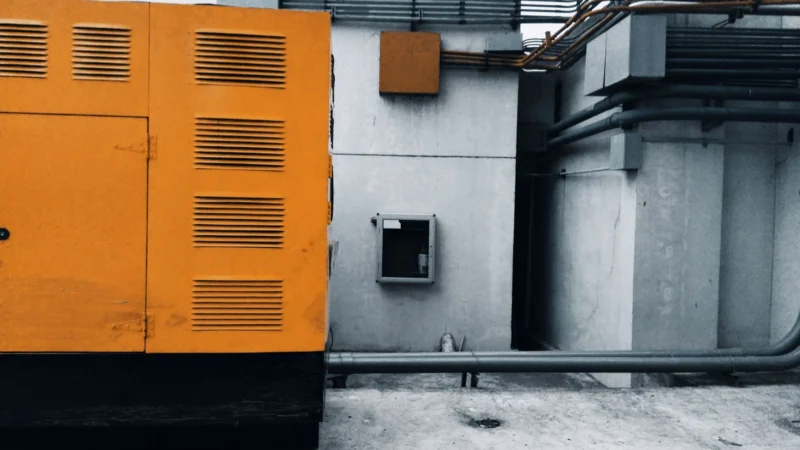
The Kohler 14RESA is a 14 kW air-cooled home standby generator that Kohler sold through the 2010s as a generator-only unit, without a transfer switch in the box. It has since been replaced by the Kohler 14RCA, but thousands of 14RESA units are still on duty outside American homes.
If you own one, or you are looking at a house that has one, you probably want facts, not sales talk. How much can it run? How much gas does it burn? What does it need each year? And what do you buy when it finally wears out?
This guide answers those questions from Kohler’s own paperwork. Ratings and fuel figures come from Kohler’s specification sheet. The service schedule comes from Kohler’s operation manual. We have not tested this generator, and we say so wherever a detail could not be confirmed.
Kohler 14RESA at a glance
A 14 kW standby generator with a 725 cc V-twin
Figures come from Kohler specification sheet G4-210 and operation manual TP-6804.
Quick answer
The Kohler 14RESA is a discontinued 14 kW air-cooled standby generator rated at 14 kW and 58.3 amps on propane, or 12 kW and 50 amps on natural gas. It uses the Kohler CH740 engine and the RDC2 controller, and it was sold without a transfer switch. The 14RESAL is the same generator packaged with a 100-amp RXT switch. Change the oil every year or 100 hours. When it needs replacing, the current Kohler 14RCA has the same ratings and engine family.
How we put this guide together
We have not tested this generator. Ratings, fuel use and sound levels come from Kohler specification sheet G4-210, which covers the 14 kW and 20 kW RESAL models and shares its generator data with the RESA versions. Maintenance intervals come from Kohler operation manual TP-6804 (June 2015), which names the 14RESA directly. Figures for the 14RCA come from Kohler’s current product pages. All were checked in October 2026. Your own nameplate and manual take priority.
In this guide
- What Is the Kohler 14RESA?
- Kohler 14RESA Specs at a Glance
- What Can a 14RESA Power?
- Fuel Use: Natural Gas and Propane
- The RDC2 Controller
- Choosing a Transfer Switch for a 14RESA
- The 14 kW Service Schedule
- Cold Weather Accessories
- Keep It, Repair It or Replace It?
- Replacement Options for the Kohler 14RESA
- Common Mistakes 14RESA Owners Make (and the Fix)
- Pro Tips From Kohler’s Paperwork
- Real-Life Scenarios: Keep It or Replace It?
- Kohler 14RESA FAQ
- Your Kohler 14RESA Checklist
What Is the Kohler 14RESA?
The 14RESA is a permanently installed standby generator. It sits outside on its own base, connects to your natural gas line or propane tank, and starts by itself when utility power fails. An automatic transfer switch moves the house onto generator power and back again when the grid returns.
It belongs to a family of four closely related models.
| Model | Size | Transfer switch | Controller |
|---|---|---|---|
| 14RESA | 14 kW | Not included | RDC2 |
| 14RESAL | 14 kW | RXT 100-amp with load center, included | DC2 |
| 20RESA | 20 kW | Not included | RDC2 |
| 20RESAL | 20 kW | RXT 200-amp, included | DC2 |
So the letters tell the story. RES is the residential standby line. A marks this generation. An L on the end means a transfer switch came in the box. No L means the generator was sold alone, and the installer chose the switch.
That choice is the main reason dealers liked the 14RESA. A home with 200-amp service, or one that needed a service-entrance rated switch, could be matched with the right switch instead of the bundled 100-amp one.
Kohler 14RESA Specs at a Glance
| Spec | Kohler 14RESA | What it means for you |
|---|---|---|
| Rating on propane (LP) | 14 kW, 58.3 amps | The most it can deliver on propane |
| Rating on natural gas | 12 kW, 50 amps | About 14% less on natural gas |
| Voltage | 120/240 V, single phase, 60 Hz | Standard household power |
| Engine | Kohler CH740, V-twin, 725 cc | A Command PRO engine with hydraulic valve lifters |
| Engine power | 23.6 hp on LP, 20.5 hp on natural gas | At 3,600 rpm |
| Controller | Kohler RDC2 | Runs the generator and a Kohler RXT transfer switch |
| Sound level | 63 dB(A) exercise, 67 dB(A) full speed | Measured at 7 meters with no load |
| Size | 48 x 26.2 x 29 inches | Length, width and height |
| Fuel inlet | 1/2 inch NPT | Pipe size is set by the run length |
| Battery | 12 volt, group 51, 500 CCA minimum | Bought separately |
| Battery charger | Built in, 2.5 amps | Keeps the battery topped up |
| Warranty when new | 5 years or 2,000 hours | Limited warranty |
Kohler’s spec sheet lists a shipping weight of about 470 pounds for the 14 kW package with its transfer switch. We could not confirm a separate weight for the generator alone, so we have left it out.
The engine
The CH740 is a Kohler Command PRO V-twin. The spec sheet lists hydraulic valve lifters, which means no routine valve adjustments, plus full-pressure lubrication with an oil filter. It is the same engine family Kohler uses in its current 14 kW model.
The enclosure
Kohler built this generation with a polymer enclosure that it describes as corrosion-proof. The spec sheet says it stays impact-resistant down to minus 30°F. The base is polymer too, so the unit does not need a poured concrete pad, though it still needs a level, well-drained spot.
Ratings change with altitude and heat
Standby ratings assume normal conditions. Kohler’s spec sheets tell installers to reduce the rating by 4% for every 1,000 feet above 500 feet of elevation. Hot weather reduces it further. At 5,500 feet, a 14RESA on natural gas makes closer to 9.6 kW than 12.
What Can a 14RESA Power?
Fourteen kilowatts is an essentials-plus size. It is not a whole-home generator for a large house, but it covers what most families need to live normally.
On propane, 58.3 amps at 240 volts will usually carry:
- Lighting and outlets throughout the house.
- The refrigerator and a freezer.
- A gas furnace and its blower.
- A well pump or a sump pump.
- A microwave and small kitchen appliances.
- One central air conditioner, in most cases.
That last point deserves a note. Kohler’s spec sheet makes a specific claim for this model: with its PowerBoost technology, the 14 kW generator can start and run a 5-ton air conditioner without dropping power to other appliances. That is a strong claim for a generator of this size, and it is Kohler’s own.
What it cannot do is run everything at once. An electric range, an electric dryer, an electric water heater and the air conditioner together will exceed 58 amps. On natural gas the ceiling is lower still, at 50 amps.
Tip: think in amps, and know your fuel
Your loads add up in amps. On propane the 14RESA has 58.3 amps to give. On natural gas it has 50. If yours runs on natural gas, plan around 12 kW, not 14. That gap is about the size of a water heater element.
Our Generator Size Calculator adds up your loads, and our guide to what size generator you need explains running and starting watts.
Fuel Use: Natural Gas and Propane
Kohler’s spec sheet gives fuel use at four load levels and during the weekly exercise.
| Load | Natural gas | Propane vapor | Propane, liquid |
|---|---|---|---|
| Weekly exercise | 60 cubic feet per hour | 30 cubic feet per hour | About 0.8 gallons per hour |
| 25% | 93 cubic feet per hour | 45 cubic feet per hour | About 1.2 gallons per hour |
| 50% | 124 cubic feet per hour | 60 cubic feet per hour | About 1.6 gallons per hour |
| 75% | 163 cubic feet per hour | 75 cubic feet per hour | About 2.1 gallons per hour |
| 100% | 193 cubic feet per hour | 81 cubic feet per hour | About 2.2 gallons per hour |
What that means on propane
Most homes run a standby generator at a quarter to half load for most of an outage. On the 14RESA that is roughly 1.2 to 1.6 gallons of propane an hour, or about 30 to 40 gallons a day if it runs around the clock.
Propane tanks are filled to about 80%. A 500-gallon tank therefore holds about 400 gallons, which is roughly 10 days at half load. A 250-gallon tank holds about 200 gallons, or about 5 days. A 120-gallon tank is only good for two to three days.
What that means on natural gas
On natural gas there is no tank to run dry, but the supply has to keep up. At full load the 14RESA needs 193 cubic feet per hour, which is about 193,000 Btu per hour. Your gas meter and regulator must be able to deliver that on top of your furnace, water heater and range.
The spec sheet lists a required supply pressure of 5 to 11 inches of water column for natural gas and 7 to 11 inches for propane. Pipe size depends on the length of the run. An undersized gas line is one of the most common reasons a standby generator stumbles under load, so have a gas fitter confirm yours. Our guide to natural gas home generators explains meters and pipe sizing.
The RDC2 Controller
The 14RESA uses Kohler’s RDC2 controller. It manages the generator and, when paired with a Kohler RXT transfer switch, the switch as well.
- A two-line backlit display that shows status, voltage, frequency, battery voltage and run hours.
- Buttons for OFF, AUTO and RUN, plus arrow and select buttons for the menus.
- A built-in battery charger rated at 2.5 amps.
- Fault messages in plain words, with warnings that clear themselves and shutdowns that need a reset.
- A maintenance timer that reminds you when service is due.
- Setup prompts. The manual notes that the RDC2 asks you to set the date, the time and the exerciser whenever the battery is connected.
The weekly exercise
Kohler’s manual says to run the generator without load once a week for 20 minutes. The default exercise is an unloaded cycle with full system diagnostics: about 10 minutes at reduced speed, 3 minutes at full speed and 5 minutes of cooldown. It is the quiet mode, at 63 dB(A).
Clearing a fault on the RDC2
The manual’s rule is to find and correct the cause first. Then press OFF to reset the controller, and press AUTO to return to automatic mode. Write the message down before you clear it.
Choosing a Transfer Switch for a 14RESA
Because the 14RESA came without a switch, yours could have one of several. Look at the nameplate on the switch itself.
| Switch type | How it works | Best for |
|---|---|---|
| 100-amp switch with load center | Moves a set of chosen circuits to the generator | Essential-circuit backup, the classic 14 kW setup |
| 200-amp standard switch | Moves the whole panel, installed after the main breaker | Homes that want every circuit available, with care over load |
| 200-amp service-entrance switch | Replaces the main disconnect | Homes where the switch must sit at the meter |
Kohler’s spec sheet says the RXT switch is designed for use only with Kohler generators that have the RDC2 or DC2 controller. With an RXT, the RDC2 can run a loaded exercise that transfers the house, and it reports switch faults on the generator’s display.
A whole-house switch on a 14 kW generator needs thought. The generator can only supply 50 to 58 amps, so large appliances have to be managed. Kohler offered a load control module for this purpose, which lets big loads take turns.
Leave the switch to a professional
A transfer switch is connected to utility power, and parts of it stay live even with the generator off. Do not open it. Installation, repair and replacement are jobs for a Kohler dealer or a licensed electrician, with a permit where your area requires one. Gas piping belongs to a licensed gas fitter. Keep working carbon monoxide alarms inside your home.
The 14 kW Service Schedule
Kohler’s operation manual has a separate schedule for the 14 kW models. Intervals are in running hours or calendar time, whichever comes first.
| Item | Interval | Who does it |
|---|---|---|
| Check the oil level | Every 8 hours of running, or before use | Owner |
| Exercise the generator | Weekly | Automatic |
| Check for exhaust leaks and obstructions | Weekly | Owner |
| Check the propane tank level | Weekly | Owner |
| Check battery charger operation | Monthly | Owner |
| Inspect flexible fuel lines and connections | Quarterly | Owner. Repairs by a gas fitter |
| Change the engine oil | Yearly or every 100 hours | Owner or dealer |
| Replace the oil filter | Yearly or every 200 hours | Owner or dealer |
| Service the air cleaner | At 150 hours and 300 hours | Owner or dealer |
| Service the spark plugs | Yearly or every 300 hours | Owner or dealer |
| Clean and tighten the battery terminals | Yearly | Owner |
| Check the crankcase breather hose | Yearly or every 500 hours | Owner or dealer |
| Tighten control and power wiring connections | Yearly | Dealer or electrician |
| Brushes and collector ring | Yearly or every 300 hours | Dealer only |
| Stepper motor coupling and bushing | Every 500 hours | Dealer only |
Notice the difference from the 20 kW models. The 14 kW engine’s oil change interval is 100 hours, not 150. In a long outage, 100 hours arrives in just over four days of continuous running.
Oil and plugs
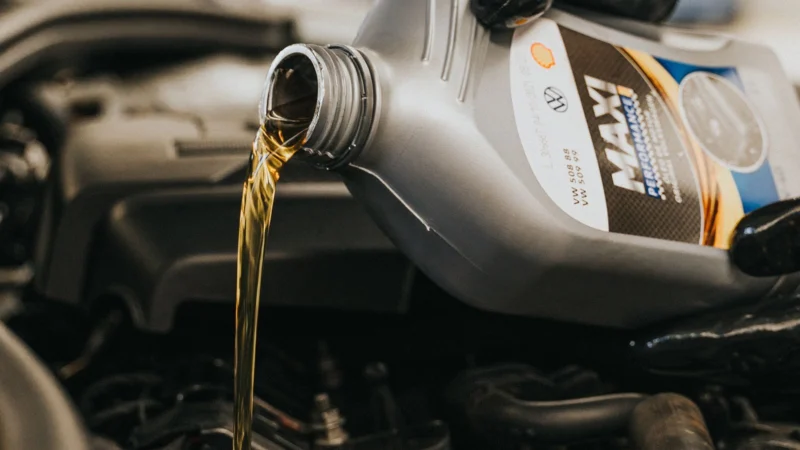
The manual specifies 5W-30 or 10W-30 synthetic oil. It lists the 14 kW engine’s capacity as 1.8 liters, or 1.9 quarts. Kohler’s spec sheet lists 2.0 quarts with filter. Either way, fill to the F mark on the dipstick and no higher.
The spark plug gap is 0.76 mm, or 0.030 inch, and the plugs are tightened to 18 to 22 foot-pounds. The air cleaner is a replaceable high-density paper element.
Before any work, disable the generator in the order the manual gives: press OFF, disconnect utility power to the generator, and remove the battery cables with the negative lead first. For the routine that applies to every generator, see our generator maintenance checklist.
For 14RESA owners
Kohler GM62346-SKP1-QS Maintenance Kit for 12 and 14 kW Residential Generators
A genuine Kohler kit for its 12 and 14 kW residential generators. Kohler’s listing says it includes the recommended air and oil filters and the correct amount of oil.
- Part numberGM62346-SKP1-QS
- Generator sizes12 and 14 kW residential
- IncludesAir filter, oil filter, oil
- BrandKohler
- UseRoutine service
- Stock on listingIn stock when checked
- Why it works: one box covers a routine service, in the right quantities for this engine.
- Who it is best for: 14RESA and 14RESAL owners who change their own oil, and anyone who wants a spare kit on the shelf.
- What it solves: a mid-outage oil change. At 100 hours, a long outage can use up the interval in days.
- Keep in mind: confirm the engine model and the kit number against your own nameplate and manual before you order.
As an Amazon Associate we earn from qualifying purchases. Details come from the Amazon listing, checked October 2026.
Cold Weather Accessories
Kohler’s spec sheet lists accessories for cold climates. A 120-volt carburetor heater is recommended for reliable starting below 32°F, and a battery heater was also offered. If your winters are hard and your generator has neither, ask a Kohler dealer.
Keep snow clear of the air inlets and the exhaust outlet. The manual warns that blocked cooling air can cause overheating and severe damage.
Keep It, Repair It or Replace It?
A 14RESA is now a generator in its second decade. That is not old for a well-kept standby unit, but it is time to think ahead.
Reasons to keep it
- The engine design is still current. Kohler’s present 14 kW model uses the same CH740 engine.
- Service kits are still sold.
- The expensive work is done. The gas line, wiring, pad location and permits are already in place.
Reasons to plan a replacement
- The warranty has run out. Major repairs are at your cost.
- Electronics age. A failed controller or alternator on an older unit can cost a large share of a new generator.
- Your home may have grown. A second air conditioner, a heat pump or an EV charger can push you past 12 to 14 kW.
Rule of thumb: oil, filters, plugs and a battery are always worth buying for a 14RESA. A failed controller, alternator or engine is the moment to price a new unit before you approve the repair.
Replacement Options for the Kohler 14RESA
Kohler’s current air-cooled line has a direct successor. The 14RCA keeps the same ratings and engine. The 20RCA is the step up.
| Feature | Kohler 14RESA | Kohler 14RCA | Kohler 20RCA |
|---|---|---|---|
| Rating on LP | 14 kW | 14 kW | 20 kW |
| Rating on NG | 12 kW | 12 kW | 18 kW |
| Amps on LP | 58.3 | 58 | 83 |
| Engine | CH740, 725 cc | CH740, 725 cc | CH1000, 999 cc |
| Enclosure | Polymer | Aluminum | Aluminum |
| Sound, weekly exercise | 63 dB(A) | 63 dB(A) | 64 dB(A) |
| Sound, full speed | 67 dB(A) | 67 dB(A) | 69 dB(A) |
| Natural gas at half load | 124 cfh | 124 cfh | 161 cfh |
| Status | Discontinued | Current model | Current model |
The 14RCA is close to a like-for-like swap. The fuel demand at half load is identical, so an existing gas line that suited the 14RESA is a natural fit. Kohler also lists the 14RCA as suitable for off-grid use.
Ask your dealer one question before you order. The RXT transfer switch is designed for Kohler generators with the RDC2 or DC2 controller, and the current models use the RDC2. Ask whether your existing switch can stay. If it can, you may need only the generator.
We could not find the Kohler 14RCA for sale on Amazon when we checked. Kohler names several online retailers on its website, and a certified dealer can supply and install one. Two related systems were listed on Amazon.
Kohler step-up
Kohler 20RCAL-200SELS 20 kW Standby Generator with 200-Amp Transfer Switch
If your home has outgrown 14 kW, this is Kohler’s next air-cooled size. The package includes an RXT 200-amp, service-entrance rated automatic transfer switch.
- Rating20 kW on LP, 18 kW on NG
- EngineKohler CH1000, 999 cc V-twin
- Transfer switchRXT 200-amp, service-entrance rated
- Sound64 dB(A) exercise, 69 dB(A) full speed
- Warranty on listing5-year limited
- Response time10 seconds
- Why it works: 83 amps on propane, against 58 on the 14RESA, gives real room for a second large appliance.
- Who it is best for: homes that have added an air conditioner, a heat pump or other big loads since the 14RESA went in.
- What it solves: shutdowns and dimming lights when large loads start together.
- Keep in mind: a bigger generator needs more gas. At half load it uses 161 cubic feet of natural gas an hour, against 124. Have your meter, regulator and pipe size checked. Stock was limited when we looked.
As an Amazon Associate we earn from qualifying purchases. Specs come from Kohler’s product page and the Amazon listing, checked October 2026.
Same size, other brand
Generac 14 kW Whole Home Generator with Transfer Switch and Cellular Monitoring
A current 14 kW air-cooled standby generator from Generac, sold with a transfer switch. Generac rates it at 14 kW on both propane and natural gas.
- Rating14 kW on LP and on NG
- EngineGenerac G-Force 800
- Natural gas at half load189 cubic feet per hour
- Propane at half load1.76 gallons per hour
- Weight391 lb
- Warranty on listing5-year limited
- Why it works: it holds its full 14 kW rating on natural gas, where the Kohler 14 kW models are rated at 12.
- Who it is best for: natural gas homes that want every kilowatt, and buyers with a good Generac dealer nearby.
- What it solves: the 2 kW drop that a Kohler 14 kW unit has on natural gas.
- Keep in mind: changing brands means a new transfer switch and new control wiring, and Generac’s own figures show higher natural gas use at half load than the Kohler. Remote monitoring needs a Mobile Link subscription.
As an Amazon Associate we earn from qualifying purchases. Specs come from Generac’s product pages and the Amazon listing, checked October 2026.
For the full current range, see our guide to Kohler generators for home use.
Common Mistakes 14RESA Owners Make (and the Fix)
Pro Tips From Kohler’s Paperwork
- Reset the maintenance timer on the RDC2 after each service, through the run time menu.
- Set the clock after a battery change. The RDC2 prompts for date, time and exerciser when the battery is reconnected.
- Know your derating. Expect about 4% less output for every 1,000 feet above 500 feet.
- Keep a spare kit. A long outage can reach 100 hours quickly.
- Photograph both nameplates, on the generator and on the switch.
- Ask about load control if you have a whole-house switch on a 14 kW unit.
- Have a dealer check the brushes. The schedule lists them yearly or every 300 hours, and it is a dealer-only job.
Real-Life Scenarios: Keep It or Replace It?
These are typical situations. They are examples to help you decide, not reports from real customers.
🔧 The reliable original
Your 14RESA has had a service every year and passes its weekly exercise.
Keep it. Fit a fresh battery, hold a spare kit and add a carburetor heater if winters are cold.
Verdict: keep it
🧾 The failed controller
A dealer has quoted a large sum for a controller or alternator repair.
Price a 14RCA first. Ask whether your existing RXT switch can be reused.
Verdict: compare with a 14RCA
🏗️ The bigger house
You have added central air to the second floor and an EV charger in the garage.
Your loads have outgrown 12 to 14 kW. Move up a size and have the gas supply checked.
Verdict: step up to 20 kW
Kohler 14RESA FAQ
How many watts is a Kohler 14RESA?
Kohler rates it at 14 kW, or 14,000 watts, and 58.3 amps on propane. On natural gas it is rated at 12 kW and 50 amps. Both ratings are at 120/240 volts, single phase.
What is the difference between the Kohler 14RESA and the 14RESAL?
They are the same generator. The 14RESA was sold without a transfer switch and has the RDC2 controller. The 14RESAL was packaged with a 100-amp RXT transfer switch with a load center and has the DC2 controller.
What engine does the Kohler 14RESA have?
The Kohler CH740, a 725 cc V-twin Command PRO engine with hydraulic valve lifters. The spec sheet lists 23.6 horsepower on propane and 20.5 horsepower on natural gas.
How often should I change the oil in a Kohler 14RESA?
Kohler's service schedule for 14 kW models says every year or every 100 hours of running, whichever comes first, with the oil filter every year or 200 hours. Use 5W-30 or 10W-30 synthetic oil.
How much propane does a Kohler 14RESA use?
The spec sheet lists 60 cubic feet of propane vapor per hour at half load and 81 at full load. That is about 1.6 gallons of liquid propane per hour at half load and 2.2 at full load.
What replaced the Kohler 14RESA?
The current equivalent is the Kohler 14RCA, or the 14RCAL when sold with a transfer switch. It keeps the 14 kW propane and 12 kW natural gas ratings and the CH740 engine, with an aluminum enclosure.
Your Kohler 14RESA Checklist
- Photograph the nameplates on the generator and on the transfer switch.
- Confirm the controller is in AUTO with no fault message.
- Know your fuel: 12 kW on natural gas, 14 kW on propane.
- Change the oil every year or 100 hours, and the filter on schedule.
- Service the air cleaner and spark plugs on schedule.
- Check the battery age and fit a group 51, 500 CCA replacement when due.
- Leave the weekly exercise switched on.
- Keep the propane tank topped up before storm season.
- Add a carburetor heater if winters are hard where you live.
- Book a dealer visit once a year.
- Get a replacement quote before approving any major repair.
The bottom line
A serviced Kohler 14RESA is still a capable essentials generator. Respect its 100-hour oil interval, keep the battery fresh, and remember it is a 12 kW machine on natural gas. When the time comes, the 14RCA is a near like-for-like replacement.
As an Amazon Associate we earn from qualifying purchases.
Sources: Kohler specification sheet G4-210 for the 14 kW and 20 kW RESAL generators; Kohler operation manual TP-6804 (6/15) for the 14/20RESA and 14/20RESAL; Kohler’s official product pages for the 14RCA and 20RCA; Generac’s product pages for its 14 kW standby generator; Amazon listings for the Kohler GM62346 maintenance kit, Kohler 20RCAL-200SELS and Generac 14 kW generator. All checked October 2026.