A Generac propane generator is any Generac generator set up to run on liquid propane, and that covers two very different machines: permanent home standby units fed from a large tank, and portable dual fuel models fed from a barbecue-size cylinder. Both give you backup power from a fuel that never goes stale. They differ hugely in how much fuel they use and how long they run.
Propane is the usual choice where there is no natural gas line. It is also popular with portable owners who are tired of stale gasoline and gummed-up carburetors.
The question that matters most is simple: how long will my propane last? This guide answers it with real numbers. You will find Generac’s propane ratings for every air-cooled standby size, tables that turn tank size into days of run time, the Generac portables that run on propane, and the hookup and cold weather points that catch people out. Fuel figures come from Generac’s own product pages. We have not tested these generators.
Generac propane generators at a glance
Full rated power on propane, if the tank is big enough
Fuel figures are from the specification tables on generac.com. Run times are our calculations from them.
Quick answer
Generac home standby generators make their full rated power on propane: 22 kW from the 22 kW model, where the same unit makes 21 kW on natural gas. At half load, a 22 kW Generac burns about 2.45 gallons of propane an hour, so a 500-gallon tank lasts roughly a week of nonstop running. Generac’s dual fuel portables run from 20-pound cylinders for a few hours at a time. Keep the tank above 30%, because Generac warns that low propane can affect fuel pressure and starting.
How we put this guide together
We have not tested these generators. Standby ratings and fuel use come from the specification tables on Generac’s product pages. Portable figures come from Generac’s product pages and Amazon listings. The low-tank warning comes from a Generac support article. Propane energy content is from the US Energy Information Administration. Run-time tables are our own arithmetic from those figures, and real results depend on your load and the weather. All sources were checked in October 2026.
In this guide
- Why Choose Propane for a Generac?
- Generac Standby Generators on Propane
- How Long Will Your Tank Last?
- What a Propane Standby Installation Needs
- Generac Portable Generators That Run on Propane
- Propane in Cold Weather
- Four Generac Propane Options
- Standby or Portable: Which Generac Propane Setup Fits?
- Common Mistakes With a Generac Propane Generator (and the Fix)
- Pro Tips for Propane Backup
- Real-Life Scenarios: Which Setup Would You Choose?
- Generac Propane Generator: FAQ
- Your Generac Propane Checklist
Why Choose Propane for a Generac?
Propane has four real advantages as a generator fuel.
- It does not go stale. Gasoline starts to break down within months. Propane keeps for years in a sealed tank.
- It is stored on your property. A natural gas line can be shut off after an earthquake or damaged in a flood. A full propane tank is yours whatever happens to the mains.
- It burns clean. There is no carburetor varnish and less carbon in the engine.
- A Generac standby unit makes full power on it. Most sizes are rated higher on propane than on natural gas.
It has drawbacks too.
- You have to get it delivered. In a widespread disaster, deliveries can be delayed.
- It holds less energy per gallon than gasoline. The US Energy Information Administration puts propane at about 91,450 Btu per gallon. Gasoline holds roughly a third more.
- The tank is a real installation. A standby generator needs a large tank, placed at required distances from buildings.
- Cold weather reduces vapor. A small tank struggles to supply a big engine when it is very cold.
Generac Standby Generators on Propane
Generac’s current air-cooled home standby generators come in seven sizes. Every one can be set up for propane.
Propane ratings compared with natural gas
| Model size | Rating on propane | Rating on natural gas | Difference |
|---|---|---|---|
| 10 kW | 10 kW | 10 kW | None listed |
| 14 kW | 14 kW | 14 kW | None listed |
| 18 kW | 18 kW | 17 kW | 1 kW more on propane |
| 22 kW | 22 kW | 21 kW | 1 kW more on propane |
| 24 kW | 24 kW | 22.5 kW | 1.5 kW more on propane |
| 26 kW | 26 kW | 24 kW | 2 kW more on propane |
| 28 kW | 28 kW | 25 kW | 3 kW more on propane |
The gap grows with size. On the 28 kW model, propane is worth an extra 3 kW, which is about the draw of an electric water heater element. If you are choosing between sizes and you will run on propane, you can count on the number in the model name.
How much propane each size uses
| Model size | Propane at half load | Propane at full load | Gallons per day at half load |
|---|---|---|---|
| 10 kW | 0.94 gallons per hour | 1.6 gallons per hour | About 23 |
| 14 kW | 1.76 gallons per hour | 2.92 gallons per hour | About 42 |
| 18 kW | 1.65 gallons per hour | 2.87 gallons per hour | About 40 |
| 22 kW | 2.45 gallons per hour | Not listed | About 59 |
| 24 kW | 2.45 gallons per hour | 3.71 gallons per hour | About 59 |
| 26 kW | 2.05 gallons per hour | 3.95 gallons per hour | About 49 |
| 28 kW | 2.23 gallons per hour | 3.97 gallons per hour | About 54 |
These are Generac’s published figures. You will notice they do not rise in a straight line with size. Generac lists the 26 and 28 kW units with lower half-load fuel use than the 22 and 24.
Half load is the useful column. Few homes run a standby generator flat out. Most spend an outage somewhere between a quarter and half of the rating, with peaks when the air conditioner or the well pump starts.
How Long Will Your Tank Last?
This is the heart of the matter. Two facts set the answer.
Tanks are filled to about 80%. Propane expands as it warms, so space is left at the top. A “500-gallon” tank holds about 400 gallons when the delivery driver has finished.
You should not run it to empty. Generac’s support guidance says that when the propane level drops below about 30%, fuel pressure can be affected and the generator may fail to start. So the propane you can count on is the part between 80% and 30%, which is half the tank’s nominal size.
The table below uses the full 80% fill, to show the most you could get. The practical figure, stopping at 30%, is a little under two thirds of each number.
| Tank size | Usable at 80% fill | 10 kW | 14 kW | 22 or 24 kW | 28 kW |
|---|---|---|---|---|---|
| 120 gallons | 96 gallons | About 4 days | About 2 days | About 1.5 days | About 2 days |
| 250 gallons | 200 gallons | About 9 days | About 5 days | About 3.5 days | About 4 days |
| 500 gallons | 400 gallons | About 18 days | About 9.5 days | About 7 days | About 7.5 days |
| 1,000 gallons | 800 gallons | About 35 days | About 19 days | About 14 days | About 15 days |
A worked example
Say you have a 22 kW Generac and a 500-gallon tank, filled last month to 80%. You have also used some for cooking and heating, and the gauge reads 60%.
- Find the gallons in the tank. 60% of 500 is 300 gallons.
- Subtract the reserve. Generac warns about levels below 30%, which is 150 gallons. That leaves 150 gallons to use.
- Find your hourly use. At half load a 22 kW unit burns 2.45 gallons an hour.
- Divide. 150 divided by 2.45 is about 61 hours.
- Convert to days. That is about two and a half days of nonstop running.
Two and a half days is less than most people expect from a 500-gallon tank. The lesson is clear. A propane generator shares its tank with the rest of the house, and the gauge reading before the storm matters more than the size painted on the tank.
Tip: fill up before the season, not during it
Top up the tank at the start of hurricane or winter storm season. After a major storm, every propane customer in the region calls at once and roads may be blocked. Generac also offers a propane tank monitor that reports the level through its Mobile Link app, which removes the walk out to the gauge.
Stretching a tank
- Shed big loads. An electric water heater or dryer can double your fuel use while it runs.
- Raise the thermostat in summer. Air conditioning is usually the largest load.
- Rest the generator at night if the weather allows and nothing critical is running. Check with your installer how to do this safely.
- Fix the load, not the generator. Fuel use follows the load. A lightly loaded 22 kW unit uses far less than the half-load figure.
Our guide to how much fuel a generator uses explains the link between load and consumption.
What a Propane Standby Installation Needs
The tank
For a standby generator, the propane supplier sizes the tank. They look at the generator’s full-load demand, your other propane appliances and your coldest winter temperature. A tank has to do two jobs: hold enough fuel, and boil off vapor fast enough to feed the engine.
That second job is why a generator can stall on a tank that still has fuel in it. Liquid propane turns to vapor at the surface. A big engine draws vapor quickly, the liquid chills, and vapor production falls. Bigger tanks and fuller tanks have more surface and more warmth to draw on.
Pressure and regulators
Generac’s product pages list a required propane pressure of 10 to 12 inches of water column at the generator. Regulators at the tank and near the house step the tank pressure down to that level. They have to be sized for the generator’s flow.
The fuel setting
A Generac standby unit runs on natural gas or propane, and it has to be told which. Generac’s support articles explain that the fuel type is set at installation. On Guardian series units, a controller setting and the fuel jet have to match. On the newer models, the installer sets it through Generac’s app. A wrong setting causes hard starting and poor running, so leave it to the installer.
Propane safety basics
Propane is heavier than air. A leak sinks and collects in low places such as basements and window wells. If you smell gas, do not operate switches or anything that could spark. Leave the area and call your propane supplier or the fire department from a safe distance. Tanks and cylinders belong outdoors. A licensed gas fitter must do the piping and leak testing. A generator on any fuel produces carbon monoxide, so keep the unit at the required distance from openings and fit carbon monoxide alarms in your home.
Our articles on propane powered generators and Generac standby generators cover tank placement, piping and sizing in more detail.
Generac Portable Generators That Run on Propane
Generac also sells portable generators that can burn propane. They are called dual fuel when they run on gasoline or propane, and tri fuel when natural gas is a third option.
| Model | Type | Running watts on gasoline | Running watts on propane | Notes |
|---|---|---|---|---|
| iQ3800 Dual Fuel | Inverter | 3,000 | 2,700 | Quiet inverter, 107 lb, LP hose included |
| iQ5200 Dual Fuel | Inverter | 3,900 | 3,900 on the listing | Up to 11 hours on a 20-lb cylinder at half load, per Generac |
| GP7500E Dual Fuel | Open frame | 7,500 | 6,800 | 420 cc engine, electric start |
| GP9500E Tri Fuel | Open frame | 9,500 | 8,550 | Also 7,000 running watts on natural gas |
Notice the pattern. On most models, propane gives about 10% less power than gasoline. That is normal for dual fuel engines, and it is the opposite of the standby units, which are built around gaseous fuel in the first place. Plan your loads around the propane figure if propane is what you will use.
How long does a cylinder last?
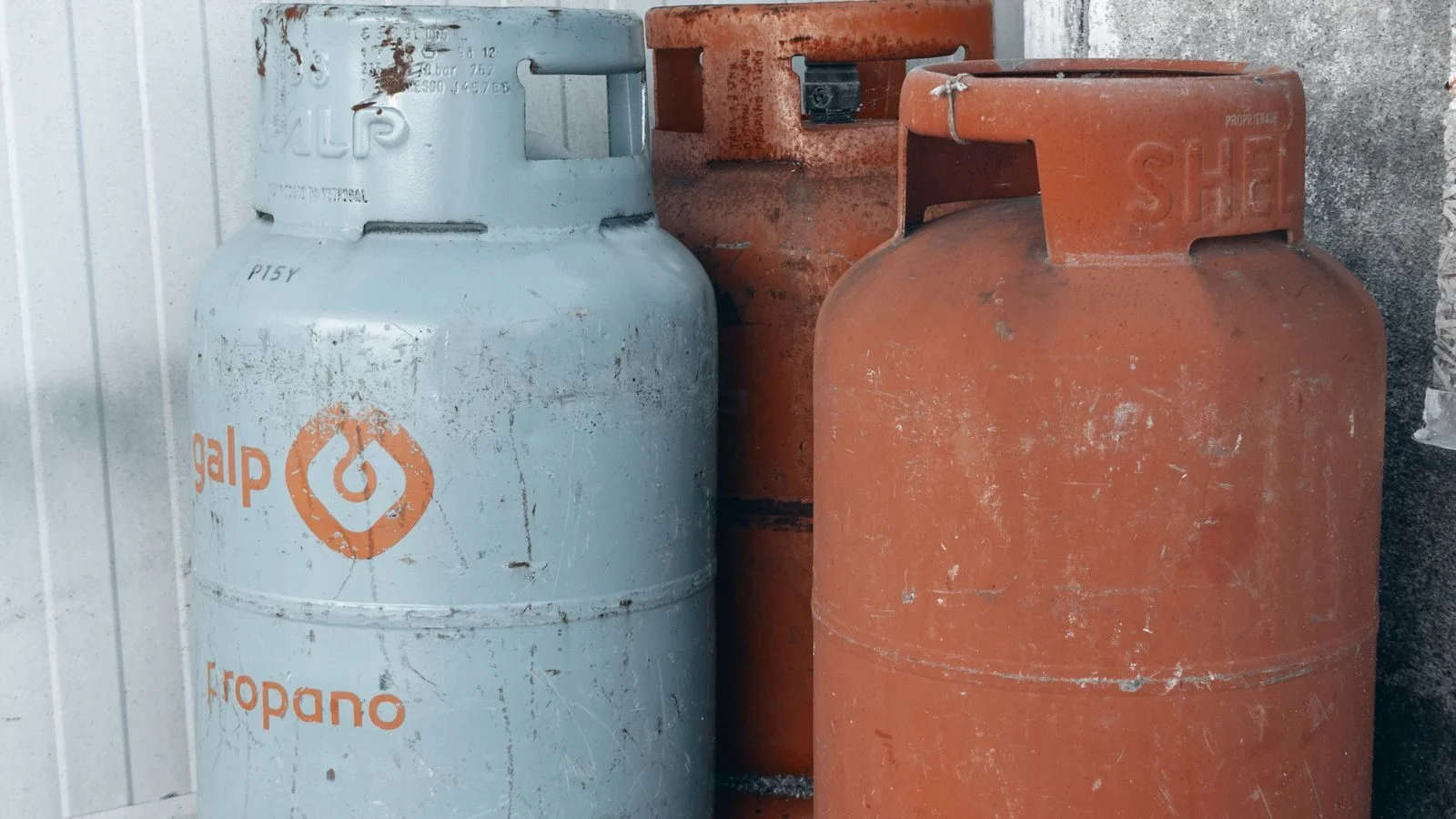
Portable generators use the same 20-pound cylinder as a gas grill. A full one holds about 4.7 gallons.
Generac gives a few run times. It lists the iQ5200 at up to 11 hours on a 20-pound cylinder at half load. Its listing for the 9,500-watt tri fuel model gives up to 6 hours on a 20-pound cylinder at a quarter load.
Those two figures show the range. A small inverter sips fuel. A large open-frame generator can empty a barbecue cylinder in an afternoon. For a home outage of several days, most owners keep several cylinders, or step up to 30, 40 or 100-pound cylinders.
| Cylinder | Propane held | Typical use |
|---|---|---|
| 20 lb | About 4.7 gallons | Grill size. Easy to carry and exchange |
| 30 lb | About 7 gallons | RV size |
| 40 lb | About 9.4 gallons | A useful step up for generators |
| 100 lb | About 23.6 gallons | Long runs. Heavy, and filled where it stands or by a dealer |
Our guide to portable propane generators has run-time tables by cylinder size.
Propane in Cold Weather
Propane stays liquid in the cylinder and boils off as vapor. Boiling takes heat, and the heat comes from the tank walls and the air around them.
In cold weather there is less heat to take. Three things follow.
- Small cylinders frost over. A 20-pound cylinder feeding a large generator in freezing weather can get so cold that vapor pressure drops and the engine starves, even with fuel left.
- Low tanks perform worse. Less liquid means less surface to boil from.
- Bigger is better. A 100-pound cylinder or a large tank copes far better than a small one.
For standby units, Generac sells cold weather kits with heaters for the battery and the oil. They help the engine start. They do not solve a tank that cannot make vapor. That is a tank sizing matter for your propane supplier.
Four Generac Propane Options
We have not tested these products. Specs come from Generac’s product pages and the Amazon listings.
Whole-home standby
Generac 22 kW Whole Home Generator with Transfer Switch and Cellular Monitoring
A 22 kW air-cooled standby generator sold with a transfer switch. On propane it makes its full 22 kW rating.
- Rating22 kW on LP, 21 kW on NG
- Propane at half load2.45 gallons per hour
- Propane pressure10 to 12 in. water column
- EngineGenerac G-Force 1000
- Weight451 lb
- Warranty on listing5-year limited
- Why it works: it starts automatically, runs from your home tank and needs no refueling by hand.
- Who it is best for: propane homes that want the whole house backed up.
- What it solves: outages when you are away, and the chore of refilling cylinders.
- Keep in mind: at half load it uses about 59 gallons a day. A 500-gallon tank is the realistic minimum, and a 1,000-gallon tank is better if propane also heats your home. Stock was limited when we checked.
As an Amazon Associate we earn from qualifying purchases. Specs come from Generac’s product pages and the Amazon listing, checked October 2026.
Large portable
Generac GP9500E Tri Fuel Portable Generator with EFI and Electric Start (12,500 Starting Watts)
A large open-frame generator that runs on gasoline, propane or natural gas. The listing gives 8,550 running watts on propane, and says one dial switches fuel without shutting down.
- Running watts9,500 gas, 8,550 propane, 7,000 NG
- Starting watts12,500
- Run time on LPUp to 6 hours at 25% load on a 20-lb cylinder
- Outlets30 A and 50 A at 120/240 V, plus GFCI duplex
- StartElectric, with recoil backup
- Warranty on listing3-year residential
- Why it works: propane for storage life, gasoline for maximum power and natural gas for unlimited run time, all in one machine.
- Who it is best for: homeowners who want to run essentials through a transfer switch and keep their fuel options open.
- What it solves: being stuck with one fuel when that fuel runs out.
- Keep in mind: a generator this size empties a 20-pound cylinder quickly. Plan on larger cylinders. It weighs about 220 pounds and must run outdoors, far from doors and windows.
As an Amazon Associate we earn from qualifying purchases. Specs come from the Amazon listing, checked October 2026.
Quiet inverter
Generac iQ3800 Dual Fuel Portable Inverter Generator with Electric Start
A quiet inverter generator that runs on gasoline or propane. The listing gives 2,700 running watts on propane and includes a 4-foot LP hose.
- On gasoline3,000 running, 3,800 peak watts
- On propane2,700 running, 3,400 peak watts
- Power qualityUnder 3% THD
- Engine212 cc OHV
- Weight107 lb
- Outlets20 A GFCI, 30 A locking, USB
- Why it works: an inverter throttles down at light load, so a cylinder lasts much longer than on an open-frame unit.
- Who it is best for: RV owners, and homes that only need the refrigerator, lights and electronics.
- What it solves: noise and stale gasoline. Clean inverter power also suits electronics.
- Keep in mind: 2,700 watts will not run central air or a well pump. The listing describes it as EPA-compliant for 49 states, so check the rules where you live.
As an Amazon Associate we earn from qualifying purchases. Specs come from the Amazon listing, checked October 2026.
Longer run time
Flame King 100 lb Steel Propane Cylinder with POL Valve
A 100-pound, 23-gallon steel cylinder. It holds about five times as much as a grill cylinder, which suits a portable generator in a long outage.
- Capacity100 lb, about 23 gallons
- ValvePOL
- Approval on listingDOT
- Empty weight70 lb
- Size14.7 in wide, 48.7 in tall
- ShipsEmpty
- Why it works: more liquid means longer runs and better vapor supply in cold weather.
- Who it is best for: owners of large dual fuel portables who expect outages of several days.
- What it solves: changing 20-pound cylinders every few hours.
- Keep in mind: it ships empty and weighs about 170 pounds when full. It has a POL valve, so you need the right hose and regulator for your generator. Store and use it outdoors, upright and secured.
As an Amazon Associate we earn from qualifying purchases. Details come from the Amazon listing, checked October 2026.
Standby or Portable: Which Generac Propane Setup Fits?
| Point | Standby on a home tank | Portable on cylinders |
|---|---|---|
| Starts automatically | Yes | No |
| Typical power | 10 to 28 kW | About 2,700 to 8,550 running watts on propane |
| Fuel supply | 250 to 1,000 gallon tank | 20 to 100 lb cylinders |
| Refueling | Delivery truck | You swap or refill cylinders |
| Run time between refills | Days to weeks | Hours to a day or two |
| Installation | Permits, pad, gas fitter, electrician | A manual transfer switch or inlet, fitted by an electrician |
| Best for | Frequent or long outages, or being away from home | Occasional outages when someone is home |
Our guide to Generac portable generators for home use compares the portable range, and dual fuel generators explains how the two fuels differ.
Common Mistakes With a Generac Propane Generator (and the Fix)
Pro Tips for Propane Backup
- Ask for automatic delivery. Many suppliers will keep the tank above a set level.
- Learn your gauge. It reads in percent, not gallons. Multiply by the tank size.
- Weigh a cylinder to check it. The empty weight is stamped on the collar. Anything above that is fuel.
- Keep the regulator vent clear of snow, ice and insect nests.
- Test on propane. If you own a dual fuel portable, run it on propane before you need it, with the hose you plan to use.
- Note the dates on cylinders. They have to be requalified after a set number of years before a dealer will refill them.
- Size up when in doubt. A larger tank costs more once and gives you days more run time every time.
Real-Life Scenarios: Which Setup Would You Choose?
These are typical situations. They are examples to help you decide, not reports from real customers.
🏡 The rural all-propane home
Propane already heats the house, and outages can last a week after ice storms.
A standby unit on a 1,000-gallon tank gives a real margin, because the furnace and the generator both draw on it in winter.
Choice: standby with a large tank
🏠 The suburban home with a grill
Outages are short and rare. You want the fridge, the furnace fan and the internet.
A dual fuel inverter and two or three 20-pound cylinders cover a day or two.
Choice: small dual fuel inverter
🌀 The storm-coast family
You lose power for several days most years and someone is always home.
A large tri fuel portable on 100-pound cylinders, through a transfer switch, runs the essentials at far lower cost than a standby system.
Choice: large portable with big cylinders
Generac Propane Generator: FAQ
Do Generac generators run on propane?
Yes. Generac's home standby generators run on either natural gas or liquid propane, set at installation. Generac also sells dual fuel and tri fuel portable generators that run on propane from a cylinder.
How much propane does a 22 kW Generac use?
Generac's specification table lists 2.45 gallons per hour at half load for the 22 kW air-cooled model. That is about 59 gallons a day of nonstop running at half load.
How long will a 500-gallon propane tank run a Generac generator?
A 500-gallon tank holds about 400 gallons when full. At half load, that is about 18 days for a 10 kW unit, 9.5 days for a 14 kW unit and 7 days for a 22 kW unit. Keeping a reserve above 30% reduces those figures by more than a third.
Is a Generac more powerful on propane or natural gas?
Standby models are rated the same or higher on propane. The 22 kW model makes 22 kW on propane and 21 kW on natural gas, and the 28 kW model makes 28 and 25. Portable dual fuel models are the other way round: they make less on propane than on gasoline.
What size propane tank do I need for a Generac standby generator?
Your propane supplier should size it. As a guide, a 250-gallon tank suits the smallest units for short outages, a 500-gallon tank is a common choice for 14 to 22 kW units, and a 1,000-gallon tank suits large generators or homes that also heat with propane.
Why will my Generac not start when the propane tank is low?
Generac's support guidance says that when the propane level falls below about 30%, fuel pressure can be affected and the engine may crank without starting. Refill the tank, and call a dealer if the problem continues.
Your Generac Propane Checklist
- Decide between a standby unit on a tank and a portable on cylinders.
- Use the propane rating when you size the generator.
- Have the propane supplier size the tank for full load and winter cold.
- Remember the usable range is roughly 80% down to 30%.
- Check the gauge before each storm season and top up.
- Have a licensed gas fitter install and leak-test the line.
- Let the installer set the fuel type.
- Keep cylinders outdoors, upright and secured.
- Test a dual fuel portable on propane before you need it.
- Fit carbon monoxide alarms on every level of your home.
The bottom line
A Generac on propane gives you full rated power from a fuel that keeps for years. The limit is never the generator. It is the tank. Size it generously, keep it full and know your gallons per hour.
As an Amazon Associate we earn from qualifying purchases.
Sources: Generac product pages and specification tables for its air-cooled home standby generators and portable generators (generac.com); Generac support articles on overcrank faults, fuel selection and Mobile Link fuel monitoring; US Energy Information Administration for the energy content of propane; Amazon listings for the Generac 22 kW standby generator, GP9500E Tri Fuel, iQ3800 Dual Fuel and Flame King 100 lb cylinder. All checked October 2026.