The Kohler 30RESA is a 30 kW liquid-cooled home standby generator, built around a four-cylinder GM engine and sold for large homes that an air-cooled unit could not carry. It is an older model now, replaced in Kohler’s range by the 30RCLA, but plenty are still installed.
A 30 kW liquid-cooled generator is a different animal from the 14 and 20 kW air-cooled units most homes have. It has a radiator, coolant, hoses and a car-type engine. It weighs over half a ton. And at full load it drinks gas at a rate that many home gas meters cannot supply.
This guide explains the 30RESA in plain English. You will find the full ratings, what the machine can run, exactly how much fuel it uses, what liquid cooling means for upkeep, and how to think about repair or replacement. The figures come from Kohler’s own specification sheet. We have not tested this generator.
Kohler 30RESA at a glance
A 30 kW liquid-cooled standby generator for large homes
Figures come from Kohler specification sheet G4-167 for the 30RESA.
Quick answer
The Kohler 30RESA is a discontinued 30 kW liquid-cooled standby generator. Kohler rates it at 30 kW and 125 amps on propane, or 27 kW and 112 amps on natural gas. It uses a GM 1.6 liter four-cylinder engine turning at 3,600 rpm and Kohler’s ADC 2100 controller. At full load it needs 450 cubic feet of natural gas an hour, so the gas meter and piping must be sized for it. Kohler’s current 30 kW model is the 30RCLA.
How we put this guide together
We have not tested this generator. Every specification here comes from Kohler specification sheet G4-167 for the 30RESA, dated September 2010. Figures for current Kohler models come from Kohler’s product pages. Both were checked in October 2026. We could not obtain the 30RESA operation manual, so we do not quote service intervals. For those, use the manual that came with your generator or ask a Kohler dealer.
In this guide
- What Is the Kohler 30RESA?
- Kohler 30RESA Specs at a Glance
- What Can a 30RESA Power?
- Fuel Use: The Number That Surprises Owners
- The ADC 2100 Controller
- Upkeep on a Liquid-Cooled Generator
- Placement, Noise and Size
- Keep It, Repair It or Replace It?
- Replacement Options for the Kohler 30RESA
- Common Mistakes With a 30RESA (and the Fix)
- Pro Tips for 30RESA Owners
- Real-Life Scenarios: Keep It or Replace It?
- Kohler 30RESA FAQ
- Your Kohler 30RESA Checklist
What Is the Kohler 30RESA?
The 30RESA is a permanently installed standby generator for homes. Like smaller standby units, it sits outdoors, runs on natural gas or propane and starts automatically when utility power fails.
What sets it apart is its size and its cooling. Kohler’s spec sheet describes it as a residential gas generator, approved for outdoor installation in stationary standby applications served by a reliable utility source. It lists these as standard:
- A factory-installed sound enclosure with acoustic insulation, an internal silencer and lockable door latches.
- A low-profile, pitched roof to shed water.
- Hinged, removable doors for service access.
- A four-cylinder, four-cycle engine with electronic controls for fuel and spark.
- An electronic governor that holds frequency steady.
- Kohler’s ADC 2100 digital controller.
- UL 2200 listing and an EPA-certified engine.
- A five-year limited warranty when new.
What “liquid-cooled” means
Small standby generators are air-cooled. A fan blows air across fins on the engine, the way a lawn tractor engine is cooled.
The 30RESA is liquid-cooled, like a car. Coolant circulates through the engine block, carries the heat to a radiator, and a fan pushes air through the radiator. Liquid cooling controls temperature far more evenly. That is why the largest home generators use it: a big air-cooled engine struggles to shed its heat on a hot day.
Kohler 30RESA Specs at a Glance
| Spec | Kohler 30RESA | What it means for you |
|---|---|---|
| Rating on propane (LP) | 30 kW, 125 amps | Enough for most large homes |
| Rating on natural gas | 27 kW, 112 amps | About 10% less on natural gas |
| Voltage | 120/240 V, single phase, 60 Hz | Standard household power |
| Engine | GM 1.6 L overhead cam, 4 cylinders, 98 cubic inches | A car-type engine |
| Engine speed | 3,600 rpm | Faster than most liquid-cooled generators |
| Maximum engine power | 52.0 brake horsepower | At 3,600 rpm |
| Alternator | Kohler, 2-pole, brush type | Voltage regulated to within 1.5% |
| Peak motor starting | 41 kVA at 240 volts | A measure of how well it starts big motors |
| Controller | Kohler ADC 2100 | LED display with fault diagnostics |
| Oil capacity with filter | 3.7 quarts | Full-pressure lubrication |
| Cooling system capacity | 3.0 gallons | Radiator and engine together |
| Battery | 12 volt, 525 CCA recommended | Bought separately |
| Sound level | 68 dB(A) average at 23 feet, no load | With the sound enclosure |
| Size | 72.8 x 36.2 x 36.8 inches | About six feet long |
| Wet weight | 1,046 lb | With fluids and enclosure |
The engine
The spec sheet lists a GM 1.6 liter overhead-cam engine with an aluminum cylinder head, a cast iron crankshaft and five main bearings. Kohler notes high-silicon pistons for durability and electronic ignition.
One detail is worth understanding. The 30RESA runs at 3,600 rpm. Most liquid-cooled home generators, including Kohler’s current ones, run at 1,800 rpm. A lower engine speed generally means less noise and less wear per hour. The 30RESA’s higher speed let Kohler use a smaller engine and a compact two-pole alternator, which kept the unit’s size down.
Ratings change with altitude and heat
The spec sheet gives a general derating guide: 1.5% for every 1,000 feet above 3,300 feet of elevation, and 2% for every 10°F above 70°F. That is gentler than the guide for Kohler’s air-cooled units, which is one advantage of liquid cooling at altitude.
What Can a 30RESA Power?
Thirty kilowatts is a true whole-house size. On propane the generator supplies 125 amps at 240 volts, and 112 amps on natural gas.
To put that in context, a typical 20 kW air-cooled generator supplies about 83 amps. The 30RESA has half as much again. That is enough for a large home with:
- Two central air conditioners, or a large heat pump.
- An electric range and oven.
- An electric dryer and water heater, within reason.
- A well pump and a pool pump.
- All the lighting, refrigeration and electronics of normal life.
The 41 kVA motor starting figure matters here. Large motors, such as air conditioner compressors, draw several times their running current for a moment as they start. The motor starting figure describes how much of that surge the generator can supply while keeping its voltage up.
There are still limits. A 200-amp service can ask for more than 125 amps if everything electric runs at once. Homes with 400-amp service, electric heat or an EV charger usually need load management even with a 30 kW generator.
Tip: on natural gas, plan around 27 kW
The 3 kW gap between the propane and natural gas ratings is about 13 amps. If your 30RESA runs on natural gas, size your loads against 112 amps, not 125.
Our Generator Size Calculator adds up your loads, and our guide to whole-house generators explains load management.
Fuel Use: The Number That Surprises Owners
A bigger generator burns more fuel, and the 30RESA’s figures are worth reading carefully.
| Load | Natural gas | Propane vapor | Propane by weight | Propane, liquid |
|---|---|---|---|---|
| 25% | 225 cubic feet per hour | 90 cubic feet per hour | 10.5 lb per hour | About 2.5 gallons per hour |
| 50% | 300 cubic feet per hour | 120 cubic feet per hour | 14.0 lb per hour | About 3.3 gallons per hour |
| 75% | 375 cubic feet per hour | 150 cubic feet per hour | 17.5 lb per hour | About 4.1 gallons per hour |
| 100% | 450 cubic feet per hour | 180 cubic feet per hour | 21.0 lb per hour | About 4.9 gallons per hour |
On natural gas: check the meter
At full load the 30RESA needs 450 cubic feet of natural gas an hour, which is about 450,000 Btu per hour. That is several times what a typical gas furnace uses.
Many homes have a gas meter and service line that were sized for a furnace, a water heater and a range. Adding 450,000 Btu per hour can exceed what the meter can pass. If it does, the generator starves under heavy load, and other gas appliances can be affected too. A gas utility can usually fit a larger meter. That request should be made before a generator of this size is installed, and it is worth checking on an existing installation that has never run well under load.
The spec sheet lists a 3/4 inch NPT fuel inlet and a required supply pressure of 7 to 11 inches of water column. The pipe from the meter must be sized for the flow and the distance. A gas fitter works this out from standard tables.
On propane: check the tank
At half load the 30RESA burns about 3.3 gallons of propane an hour. Running around the clock, that is close to 80 gallons a day.
| Tank size | Usable propane | Run time at half load |
|---|---|---|
| 250 gallons | About 200 gallons | About 2.5 days |
| 500 gallons | About 400 gallons | About 5 days |
| 1,000 gallons | About 800 gallons | About 10 days |
A 250-gallon tank is marginal for a generator of this size. There is a second reason to choose a large tank. Propane has to boil off as vapor before the engine can use it, and a small tank cannot make vapor fast enough for a big engine in cold weather. Ask your propane supplier to size the tank for the generator’s full-load demand at your lowest winter temperature.
Our guide to propane powered generators explains tank sizing in more detail.
The ADC 2100 Controller
The 30RESA uses Kohler’s ADC 2100, short for Advanced Digital Control. It is an older and simpler controller than the RDC2 found on later Kohler home generators.
According to the spec sheet:
- It has an LED display, not a text screen. The display shows run time hours, crank cycle status and diagnostics.
- It has a master switch with three positions: RUN, OFF/RESET and AUTO.
- It reports faults, including high engine temperature, low oil pressure, overcrank, overspeed, over and under frequency, over and under voltage, and high and low battery voltage.
- It regulates voltage digitally, to within 1.5% from no load to full load.
- It accepts a remote two-wire start and stop signal, which is how a transfer switch tells the generator to run.
- Its electronics are potted and sealed against corrosion and vibration.
In daily life the switch stays on AUTO. If the generator shuts down on a fault, the display shows a code. Write it down before you move the switch to OFF/RESET. The code is the first thing a technician will ask for.
Because the ADC 2100 starts on a simple two-wire signal, the 30RESA was installed with a separate automatic transfer switch that has its own controls. Look at the nameplate on your switch for its model and amp rating.
Key insight: on a liquid-cooled generator, a high temperature shutdown is a message, not a nuisance. Never reset it and walk away. Check the coolant level when the engine is cold, look for a blocked radiator, and call a dealer if it happens again.
Upkeep on a Liquid-Cooled Generator
A liquid-cooled generator needs everything an air-cooled one needs, plus care of the cooling system. We do not have the 30RESA’s operation manual, so we give the tasks here and leave the intervals to your manual.
| Task | Air-cooled generator | Liquid-cooled generator such as the 30RESA |
|---|---|---|
| Engine oil and filter | Yes | Yes. The 30RESA holds 3.7 quarts with filter |
| Air filter | Yes | Yes. A dry-type element |
| Spark plugs | Yes, two | Yes, four |
| Battery | Yes | Yes. 525 CCA recommended |
| Coolant level and condition | No | Yes. The system holds 3.0 gallons |
| Radiator and hoses | No | Yes. Keep the radiator clean and check hoses for cracks |
| Drive belts | Usually no | Yes. Check tension and wear |
| Weekly exercise | Yes | Yes |
The cooling system
- Check the coolant level in the overflow bottle when the engine is cold. Never open a hot radiator cap.
- Use the coolant type and mix your manual specifies. The mix sets both freeze and boil protection.
- Keep the radiator clear. Leaves, cottonwood fluff and grass clippings block airflow. The spec sheet lists 5,000 cubic feet per minute of cooling air, so even a partial blockage matters.
- Squeeze the hoses. A hose that feels soft, swollen or cracked is due for replacement.
- Look for leaks at hose clamps and the water pump.
Oil, filters and plugs
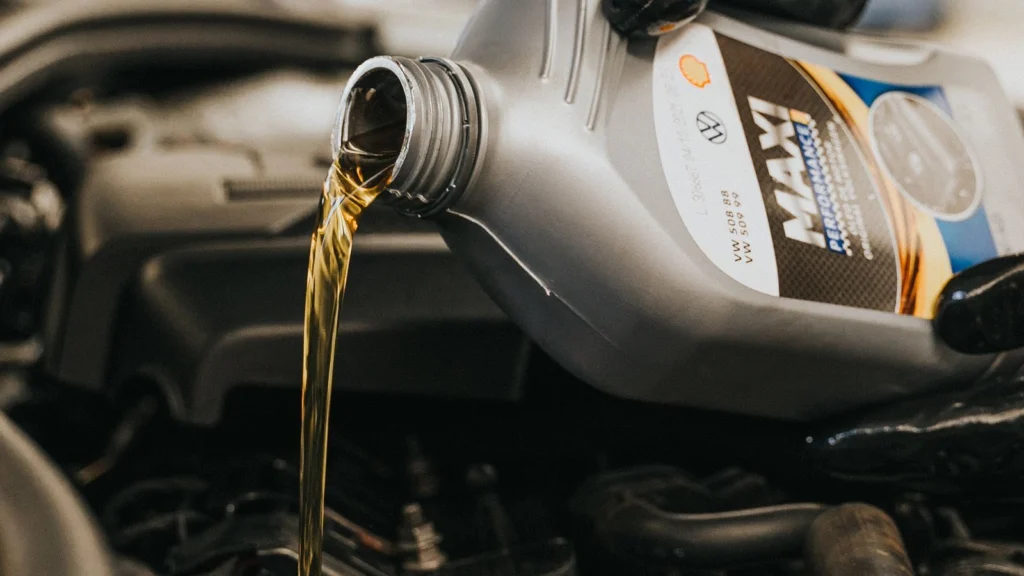
The engine has full-pressure lubrication with a cartridge oil filter. Use the oil grade and change interval in your manual. A generator that runs for days in an outage reaches its hour-based interval quickly, so keep oil and a filter on the shelf.
The battery
The spec sheet recommends a 12-volt battery with 525 cold cranking amps. The engine also has its own 70-amp charging alternator. A weak battery is the most common reason any standby generator fails to start, so replace it on age and keep the terminals clean and tight.
For the general routine that applies to every generator, see our generator maintenance checklist.
Service and repairs: know your limits
A 30 kW generator is connected to your home’s electrical service and gas supply and can start by itself. Before any work, move the master switch to OFF, disconnect the battery with the negative cable first, and let the engine cool. Hot coolant is under pressure and can scald. Owners can check fluids, keep the radiator clean and replace a battery. Electrical faults, the transfer switch, gas pressure and anything inside the alternator belong to a Kohler dealer or a licensed professional. Keep working carbon monoxide alarms in your home.
Placement, Noise and Size
The 30RESA is about six feet long, three feet wide and three feet tall, and it weighs 1,046 pounds with fluids. It needs a proper base and enough room for the service doors to open on both sides.
Kohler lists the sound level as 68 dB(A) on average at 23 feet with no load, with the sound enclosure. That is in the same range as Kohler’s air-cooled 20 kW models at full speed. Under load it will be louder.
Where a generator may sit is set by the installation instructions and local code. Fire codes generally require distance from doors, windows and other openings, so exhaust cannot be drawn indoors. If you are replacing a 30RESA, do not assume a new model can go in exactly the same spot. Check the new unit’s clearances.
Keep It, Repair It or Replace It?
The spec sheet we used is dated 2010, so a 30RESA is likely to be well over a decade old.
Reasons to keep it
- It is paid for and installed. On a system this size, the gas service, pad, wiring and switch are a large part of the total cost.
- The engine is a common automotive type. Service items such as plugs, belts, hoses and filters are ordinary parts.
- A well-kept liquid-cooled generator has a long working life.
Reasons to plan a replacement
- The warranty ended long ago.
- The controller is an older generation. Electronic parts for older controllers can be hard to source. Ask your dealer about availability before you need one.
- It runs at 3,600 rpm. Current liquid-cooled models run at 1,800 rpm, which is quieter.
- No remote monitoring. Current Kohler generators can report to an app.
- Get the facts first. Note the run hours, the model and serial numbers, and any fault code.
- Ask for a written repair estimate that lists parts and labor.
- Ask about parts supply for the controller and the alternator.
- Get a quote for a replacement, including installation.
- Check whether the existing transfer switch and gas line can be reused.
- Compare the repair cost with the replacement cost, and remember the new unit comes with a new warranty.
Replacement Options for the Kohler 30RESA
Kohler’s current home range has both air-cooled and liquid-cooled choices near this size.
| Feature | Kohler 30RESA | Kohler 26RCA | Kohler 24RCLA | Kohler 48RCLC |
|---|---|---|---|---|
| Cooling | Liquid | Air | Liquid | Liquid |
| Rating on LP | 30 kW | 26 kW | 24 kW | 48 kW |
| Rating on NG | 27 kW | 24 kW | 21 kW | 48 kW |
| Engine speed | 3,600 rpm | 3,600 rpm | 1,800 rpm | 1,800 rpm |
| Sound at full speed | 68 dB(A) average, no load | 67 dB(A) | 61 dB(A) | 61 dB(A) |
| Weight | 1,046 lb | 625 lb | 1,260 lb | 1,690 lb |
| Status | Discontinued | Current | Current | Current |
Kohler’s direct 30 kW successor is the 30RCLA, a liquid-cooled model in the same family as the 24RCLA. We did not find its full figures on Kohler’s site when we checked, so it is not in the table. Ask a Kohler dealer for its spec sheet.
Two points stand out.
The air-cooled 26RCA comes close. At 26 kW on propane and 24 kW on natural gas, it delivers 109 amps on propane. If your real loads are below that, it is a much smaller, lighter and cheaper installation than another liquid-cooled unit.
A current liquid-cooled model is quieter. Kohler lists the 24RCLA and 48RCLC at 61 dB(A) at full speed, against 68 for the 30RESA with no load.
We could not find Kohler’s liquid-cooled models for sale on Amazon. A system of this size is normally quoted, supplied and installed by a dealer. Two large air-cooled packages were listed.
Closest Kohler on Amazon
Kohler 26RCAL-200SELS 26 kW Standby Generator with 200-Amp Transfer Switch
Kohler’s most powerful air-cooled home generator, sold with a 200-amp automatic transfer switch. It is rated at 26 kW on propane and 24 kW on natural gas.
- Rating26 kW on LP, 24 kW on NG
- Amps on LP109
- EngineKohler CH1006, 999 cc V-twin
- Transfer switch200-amp automatic, included
- Sound56 dB(A) exercise, 67 dB(A) full speed
- Weight625 lb
- Why it works: it covers most of what a 30 kW unit does, in a package that weighs 400 pounds less and has no cooling system to maintain.
- Who it is best for: 30RESA owners whose measured loads stay under about 100 amps.
- What it solves: the cost and complexity of replacing one liquid-cooled generator with another.
- Keep in mind: it is 4 kW smaller on propane and 3 kW smaller on natural gas. Have a dealer do a load calculation before you step down in size. Stock was limited when we checked.
As an Amazon Associate we earn from qualifying purchases. Specs come from Kohler’s product page and the Amazon listing, checked October 2026.
Largest air-cooled alternative
Generac 28 kW Whole Home Generator with Transfer Switch and Cellular Monitoring
Generac’s largest air-cooled home standby generator, sold with a transfer switch. Generac rates it at 28 kW on propane and 25 kW on natural gas.
- Rating28 kW on LP, 25 kW on NG
- EngineGenerac G-Force 1000
- Natural gas at full load297 cubic feet per hour
- Propane at full load3.97 gallons per hour
- Weight524 lb
- Warranty on listing5-year limited
- Why it works: it is the nearest air-cooled unit to 30 kW, and its full-load natural gas demand is about a third lower than the 30RESA’s.
- Who it is best for: homes that need close to 30 kW and have a good Generac dealer nearby.
- What it solves: a gas meter or pipe that struggles to feed 450 cubic feet an hour.
- Keep in mind: changing brands means a new transfer switch and control wiring. Remote monitoring needs a Mobile Link subscription. Only one was in stock when we checked, with more on the way.
As an Amazon Associate we earn from qualifying purchases. Specs come from Generac’s product pages and the Amazon listing, checked October 2026.
Home safety
Kidde Carbon Monoxide Alarm with 10-Year Sealed Battery and Digital Display
A battery-powered carbon monoxide alarm with a digital display. Any engine running near a home is a reason to have CO alarms on every level.
- Power10-year sealed lithium battery
- DisplayDigital, updates every 15 seconds
- Alarm85 dB
- SensorElectrochemical
- MemoryPeak level
- BrandKidde
- Why it works: it needs no wiring and keeps working when the power is out.
- Who it is best for: every home with a standby generator.
- What it solves: exhaust gas reaching living space without anyone noticing.
- Keep in mind: an alarm is a backup. If it sounds, get everyone outside and call for help.
As an Amazon Associate we earn from qualifying purchases. Details come from the Amazon listing, checked October 2026.
For the full current range, see our guides to Kohler generators and Kohler generators for home use.
Common Mistakes With a 30RESA (and the Fix)
Pro Tips for 30RESA Owners
- Keep the doors clear. The enclosure has hinged, removable doors on purpose. Leave room to open them.
- Clean the radiator each spring and fall. Blow debris out from the engine side.
- Write the fault code down before you touch the master switch.
- Log every run. Note the hours after each outage, so oil changes are not missed.
- Check your derating. Above 3,300 feet, expect about 1.5% less output for each extra 1,000 feet.
- Ask the gas utility for your meter’s capacity. It is printed on the meter in cubic feet per hour.
- Test before the season. Move the switch to RUN before winter and before storm season, and let it warm up fully.
Real-Life Scenarios: Keep It or Replace It?
These are typical situations. They are examples to help you decide, not reports from real customers.
🔧 The cared-for original
Your 30RESA has modest hours, a service history and starts every week.
Keep it. Refresh the coolant, hoses, belt and battery as your manual advises, and keep spare filters.
Verdict: keep it
⛽ The generator that bogs down
It runs fine with light loads but stumbles when both air conditioners start.
Before blaming the generator, have the gas meter size, pressure and pipe run checked.
Verdict: check the fuel supply first
🧾 The big repair quote
A dealer has found a failed controller, and parts are hard to get.
Price a current model. If your real loads are under about 100 amps, an air-cooled 26 kW may be enough.
Verdict: compare with a new unit
Kohler 30RESA FAQ
How many watts is a Kohler 30RESA?
Kohler rates it at 30 kW, or 30,000 watts, and 125 amps on propane. On natural gas it is rated at 27 kW and 112 amps. Both ratings are at 120/240 volts, single phase.
What engine is in the Kohler 30RESA?
A GM 1.6 liter overhead-cam four-cylinder engine with an aluminum head. The spec sheet lists 52.0 brake horsepower at 3,600 rpm. It is liquid-cooled and uses electronic ignition.
How much natural gas does a Kohler 30RESA use?
The spec sheet lists 225 cubic feet per hour at 25% load, 300 at half load, 375 at 75% and 450 at full load. Your gas meter and piping must be able to supply the full-load figure.
How much propane does a Kohler 30RESA use?
It uses 14.0 pounds of propane per hour at half load and 21.0 at full load. That is about 3.3 gallons per hour at half load and 4.9 at full load.
Is the Kohler 30RESA air-cooled or liquid-cooled?
Liquid-cooled. It has a radiator and a cooling system that holds 3.0 gallons, like a car engine. Kohler's air-cooled home generators stop at 26 kW.
What replaced the Kohler 30RESA?
Kohler's current 30 kW home generator is the 30RCLA, a liquid-cooled model that runs at 1,800 rpm. Depending on your loads, the air-cooled 26RCA or the liquid-cooled 24RCLA may also suit.
Your Kohler 30RESA Checklist
- Photograph the nameplates on the generator and the transfer switch.
- Keep the master switch on AUTO.
- Check oil and coolant levels with the engine cold.
- Keep the radiator, the air inlets and the doors clear.
- Inspect hoses and the drive belt for cracks and wear.
- Replace the battery on age, with 525 CCA or more.
- Know your fuel: 27 kW on natural gas, 30 kW on propane.
- Confirm that the gas meter and piping can supply 450 cubic feet an hour.
- On propane, keep a 500 or 1,000 gallon tank topped up.
- Write down any fault code before resetting.
- Get a replacement quote before approving a major repair.
The bottom line
The Kohler 30RESA is a serious whole-house generator that rewards car-style care and a properly sized fuel supply. Look after the cooling system, check the gas meter, and compare repair with replacement before any large bill.
As an Amazon Associate we earn from qualifying purchases.
Sources: Kohler specification sheet G4-167 for the 30RESA (September 2010); Kohler’s official product pages for the 26RCA, 24RCLA and 48RCLC (kohlerhomeenergy.rehlko.com); Generac’s product pages for its 28 kW standby generator; Amazon listings for the Kohler 26RCAL-200SELS, Generac 28 kW generator and Kidde carbon monoxide alarm. All checked October 2026.